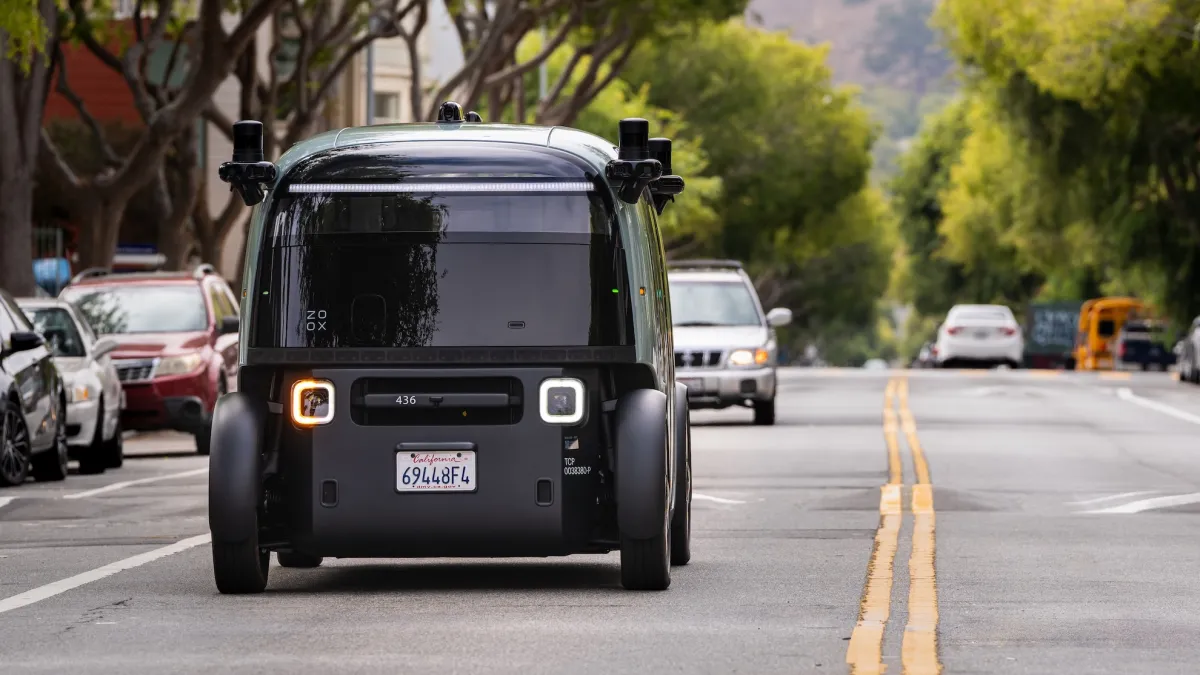

Amazon’s autonomous vehicle subsidiary, Zoox, issued a voluntary recall on Tuesday affecting 332 of its robotaxis due to concerns about its automated driving system. The recall centers around software flaws that caused vehicles to occasionally drift into opposing lanes near intersections or improperly stop within crosswalks. While no accidents have been reported as a direct result of the issue, the company proactively addressed the problem to enhance the safety of its autonomous vehicles.
The affected vehicles, operating in limited public ride programs in San Francisco and Las Vegas, were running software versions between March 13 and December 18. Zoox identified the issue through internal data monitoring and has already deployed updates to correct the problematic maneuvers. This latest recall underscores the ongoing challenges in developing and deploying fully self-driving technology.
Zoox Recall Details: Addressing Autonomous Driving System Errors
The National Highway Traffic Safety Administration (NHTSA) filing details the initial identification of the issue on August 26th, when a Zoox vehicle made a wide right turn, briefly entering the opposing lane. Subsequent data analysis revealed 62 similar instances between that date and December 5th. These incidents, while not resulting in collisions, prompted Zoox to investigate and implement corrective measures.
According to a Zoox spokesperson, the problematic behaviors stemmed from the vehicle’s attempts to navigate complex intersection scenarios. The system sometimes prioritized avoiding blocking the intersection, even if it meant momentarily stopping in a crosswalk. In other cases, the vehicle’s turning radius was miscalculated, leading to a wider-than-expected turn and a partial lane intrusion.
Software Updates and Proactive Safety Measures
Zoox released an initial software update on November 7th and a further refinement in mid-December, aiming to resolve the identified issues. The company states these updates successfully address the root causes of the incorrect maneuvers. This proactive approach to software updates is becoming increasingly common in the robotaxi industry, as companies prioritize safety and continuous improvement.
The company emphasized its commitment to transparency and safety as the driving force behind the voluntary recall. “We want to be open with the public and regulators about how we are constantly refining and improving our technology,” a Zoox statement read. This willingness to self-report and address potential safety concerns is viewed favorably by regulators and the public alike.
This recall is not an isolated incident for Zoox. Earlier in 2023, the company issued multiple software recalls. In March, a recall addressed unexpected hard braking, following reports of collisions with motorcyclists. May saw two further recalls focused on improving the system’s ability to predict the actions of other road users, a critical component of safe self-driving car operation.
These previous recalls highlight the iterative nature of developing autonomous systems. The complexity of real-world driving environments necessitates continuous testing, data analysis, and software refinement. Each recall provides valuable learning opportunities for Zoox and the broader autonomous vehicle industry.
The NHTSA is currently reviewing the details of the latest recall. The agency has been increasing its scrutiny of autonomous vehicle technology, particularly regarding safety protocols and incident reporting. This increased oversight is expected to continue as more autonomous vehicles are deployed on public roads.
The incident also raises broader questions about the safety standards for autonomous vehicles. While human drivers are prone to errors, the expectation is that self-driving systems will operate with a higher degree of precision and predictability. Achieving this level of safety requires robust testing, validation, and ongoing monitoring.
The development of autonomous driving technology is also heavily reliant on data collection and analysis. Zoox, like other companies in the field, uses vast amounts of data from its vehicles to identify potential issues and improve its algorithms. The ability to effectively process and interpret this data is crucial for ensuring the safety and reliability of driverless technology.
Looking ahead, Zoox will continue to monitor the performance of its vehicles and deploy software updates as needed. The company is also working closely with NHTSA to address any remaining concerns. The timeline for full resolution and regulatory approval remains uncertain, but the industry will be watching closely for further developments and the impact on the wider deployment of autonomous vehicles. Further testing and validation will be key to building public trust and ensuring the safe integration of these vehicles into existing transportation systems.
The ongoing dialogue between Zoox and the NHTSA will likely shape future regulations and best practices for the autonomous vehicle industry. The agency’s assessment of the recall and its effectiveness will be a significant factor in determining the next steps for Zoox and other companies developing similar technologies.