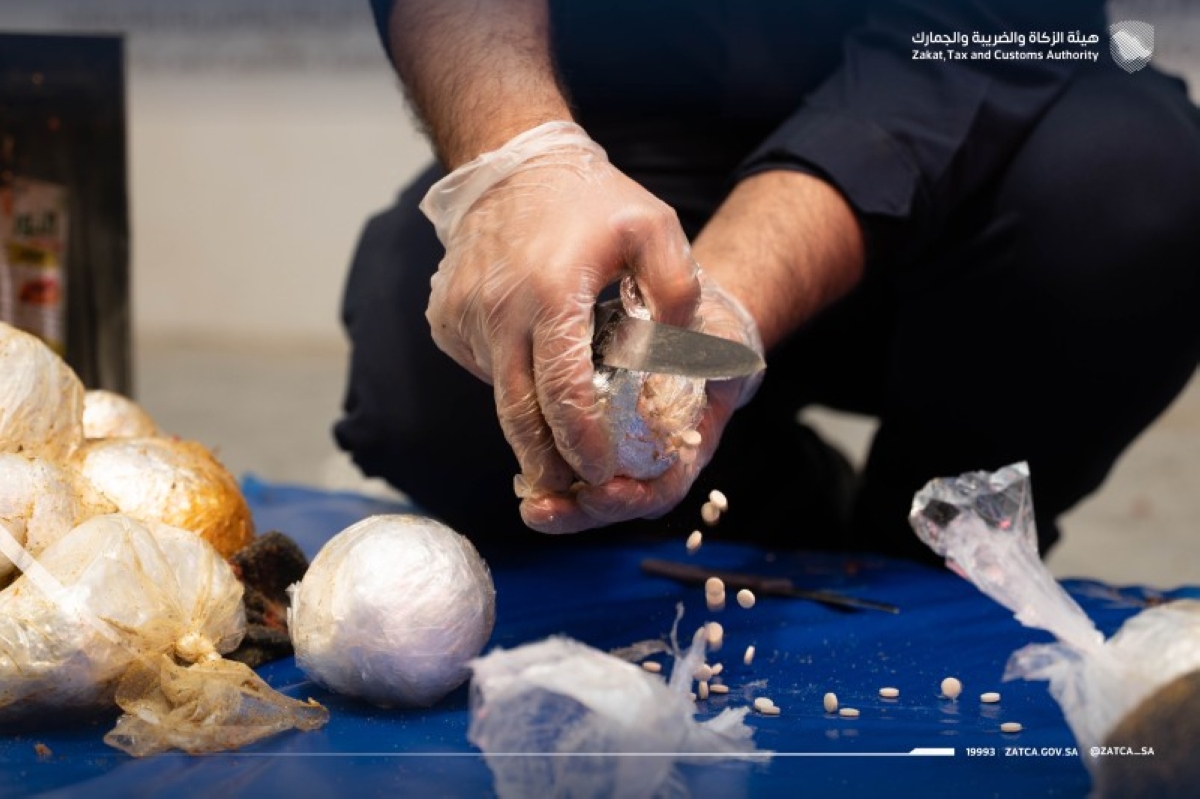

Saudi Arabia’s Zakat, Tax and Customs Authority (ZATCA) recently intercepted two significant drug smuggling operations, seizing a large quantity of amphetamine pills and cocaine. The hauls, discovered at Duba Port and Prince Mohammed bin Abdulaziz International Airport, highlight ongoing efforts to combat illicit narcotics trafficking into and through the Kingdom. Authorities have detained four individuals in connection with the cases.
The seizures occurred within the past week, according to a statement released by ZATCA. The first shipment, containing 52,352 Captagon pills, was found concealed within wooden panels arriving at Duba Port. Simultaneously, customs officials at Prince Mohammed bin Abdulaziz International Airport discovered 3.8 kilograms of cocaine hidden in a passenger’s luggage.
Increased Vigilance in Saudi Arabia’s Fight Against Drug Smuggling
Saudi Arabia maintains some of the strictest drug laws globally, with severe penalties for trafficking and possession. The country’s geographic location, serving as a transit point between major drug-producing regions and consumer markets, makes it particularly vulnerable to smuggling attempts. These recent interdictions demonstrate ZATCA’s dedication to preventing the flow of illegal substances.
ZATCA spokesperson Hammoud Al-Harbi emphasized the authority’s commitment to tightening customs controls on both imports and exports. This is aligned with one of ZATCA’s primary strategic goals: bolstering security and safeguarding society by minimizing narcotics smuggling and the introduction of other prohibited items. Furthermore, the agency coordinates closely with the General Directorate of Narcotics Control to apprehend those involved in receiving the smuggled goods within Saudi Arabia.
Details of the Duba Port Seizure
The discovery at Duba Port involved a thorough inspection of incoming cargo. Customs officers identified inconsistencies in the wooden panels, leading to the uncovering of the concealed Captagon pills. The specific origin and intended destination of the pills are currently under investigation, according to ZATCA.
Details of the Airport Interception
At Prince Mohammed bin Abdulaziz International Airport, the cocaine was detected during routine baggage screening. Advanced scanning technology played a crucial role in alerting officials to the hidden contraband. The passenger attempting to smuggle the cocaine was immediately detained for questioning and further investigation.
The Kingdom’s efforts to curb drug trafficking aren’t limited to border controls. Saudi Arabia also actively participates in international collaborations aimed at disrupting drug supply chains. These partnerships frequently involve sharing intelligence and coordinating enforcement activities with other nations and organizations involved in combating illegal drug trade. Additionally, a significant focus is placed on domestic awareness campaigns designed to educate the public about the dangers of drug abuse and the consequences of involvement in illicit activities.
ZATCA actively solicits public assistance in identifying and reporting suspected smuggling activities. Individuals can provide information confidentially through the dedicated security hotline (1910), email ( [email protected]), or an international number (+9661910). The authority offers financial rewards for information that leads to successful seizures and arrests, incentivizing community involvement.
The recent seizures of Captagon and cocaine represent a continuing pattern of attempted breaches of Saudi customs regulations. The Captagon trade, while originating and primarily consumed in the Middle East, has seen increased attempts at international smuggling. Cocaine, typically sourced from South America, presents a different logistical challenge for traffickers hoping to reach European and Asian markets via the Arabian Peninsula. The motivations behind these criminal enterprises often lie in the high profitability of the illicit substance market.
The close cooperation between ZATCA and the General Directorate of Narcotics Control is a key aspect of Saudi Arabia’s anti-narcotics strategy. This collaboration allows for a coordinated response, ensuring that both the smugglers and the intended recipients are brought to justice. The focus on dismantling entire smuggling networks, rather than solely intercepting shipments, is designed to have a more lasting impact.
Looking ahead, ZATCA is expected to implement further technological upgrades at ports of entry and airports to enhance detection capabilities. The authority will also likely continue its stringent enforcement measures and international partnerships to address the evolving tactics of drug smugglers. The effectiveness of these measures will be closely monitored, with adjustments made as necessary to stay ahead of emerging threats. The outcome of the investigations into the origins and networks involved in the recent seizures will also provide valuable insights for future prevention efforts.
Increased scrutiny on financial transactions linked to potential smuggling activities is another area for anticipated development. While a timeline is not currently available, further details on these efforts are expected to be announced by ZATCA in the coming months.