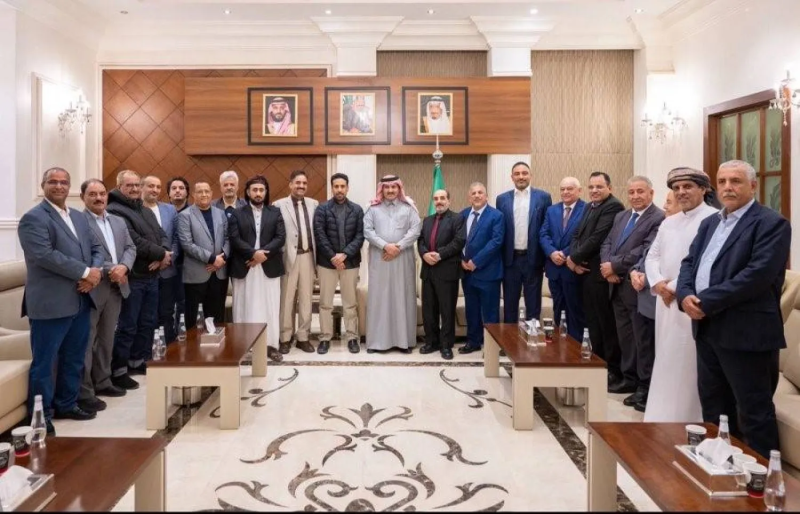

RIYADH – Saudi Ambassador to Yemen Mohammed Al-Jaber held talks with a delegation from the Southern Transitional Council (STC) in Riyadh on Thursday, focusing on recent political developments and the future of the Yemen conflict. Discussions centered on the STC’s recent actions and their impact on the broader southern cause, as Saudi Arabia continues to play a mediating role in the country’s complex political landscape. The meeting underscored the importance of unity and coordination amongst southern groups.
The meeting took place as preparations continue for a comprehensive dialogue on the Southern Issue, scheduled to be hosted in Riyadh in the coming months. Key objectives of the dialogue, as outlined by Saudi officials, include achieving a sustainable political solution for the south while maintaining a unified Yemen and supporting regional stability.
Saudi Arabia Seeks Unity in Yemen’s Southern Movement
Ambassador Al-Jaber reportedly emphasized the need for the STC to prioritize unified action and avoid steps that could weaken their position or hinder efforts to address shared challenges within Yemen. According to sources familiar with the discussions, concerns were raised regarding certain decisions made under the direction of Aidarus al-Zubaidi, head of the STC, that were perceived as detrimental to the southern cause.
The Saudi-led Coalition, which has been supporting the internationally recognized Yemeni government since 2015, aims to establish security and stability and ultimately end the ongoing conflict. The coalition views a cohesive southern front as crucial for achieving these goals. The meeting with the STC reflects Saudi Arabia’s intensifying efforts to steer Yemen towards a lasting peace.
Addressing Recent Tensions
The Southern Transitional Council, advocating for autonomy or independence for southern Yemen, previously engaged in armed clashes with forces loyal to the government of President Abdrabbuh Mansur Hadi. These conflicts highlighted deep divisions within the anti-Houthi camp and complicated peace efforts.
Recent months have seen attempts at power-sharing and de-escalation, although underlying tensions remain. The upcoming dialogue, scheduled for Riyadh, is seen as a crucial opportunity to address these grievances and forge a more unified path forward for southern Yemen. Close monitoring of the dialogue’s success will be vital for long term peace.
The Southern Dialogue Conference
Saudi Arabia’s commitment to sponsoring a comprehensive Southern dialogue was reaffirmed during the meeting. This dialogue seeks to create a realistic and sustainable framework for addressing the issues faced by the people of the south, taking into account both national and regional considerations.
Mohammed Al-Ghaithi, a member of the STC Presidency, described the meeting as “fruitful”. He stated that the discussions focused on the importance of prioritizing the public interest and avoiding actions that could fracture the southern ranks. The STC leadership expressed its appreciation for Saudi Arabia’s role in facilitating the dialogue.
Al-Ghaithi further indicated that the STC received assurances from the Saudi side regarding their commitment to the southern cause and to ensuring a secure future for the region. These commitments are reportedly aligned with a broader political vision that promotes peace, encourages conflict resolution, and aims to establish stability throughout Yemen.
The political situation in Yemen remains highly volatile, with the Houthi movement controlling large parts of the country and a humanitarian crisis unfolding. The ongoing war has created a complex web of alliances and rivalries, making it difficult to achieve a comprehensive peace agreement. The Gulf Cooperation Council (GCC) has been instrumental in mediating negotiations between the warring parties, but progress has been slow.
The international community has repeatedly called for a ceasefire and a return to negotiations. The United Nations has been working to facilitate a political settlement, but the conflicting interests of the various parties involved have hampered these efforts. The Yemen peace process is heavily reliant on regional cooperation and a willingness from all sides to compromise.
The Saudi-led coalition intervened in Yemen in 2015 to restore the government of President Hadi after it was ousted by the Houthis. The conflict has resulted in a devastating humanitarian crisis, with millions of people facing starvation and disease. The coalition has faced criticism for its conduct of the war, including allegations of indiscriminate bombing and restrictions on humanitarian access.
The STC’s emergence as a significant political force in southern Yemen has added another layer of complexity to the conflict. The group’s demands for autonomy or independence are seen by some as a threat to the unity of Yemen, while others argue that it is a legitimate expression of the aspirations of the southern people. The future of southern Yemen will likely be a key determinant of the overall outcome of the Yemeni civil war.
Looking ahead, the success of the Riyadh dialogue will be a critical indicator of whether a lasting political solution is achievable in Yemen. While the STC and Saudi Arabia have expressed optimism, significant challenges remain, including reconciling competing interests and addressing deep-seated grievances. The start of the dialogue is expected within the next six to eight weeks, but the timeline could be subject to change depending on ongoing preparations and consultations. Analysts will be closely watching for signs of flexibility and compromise from all parties involved.