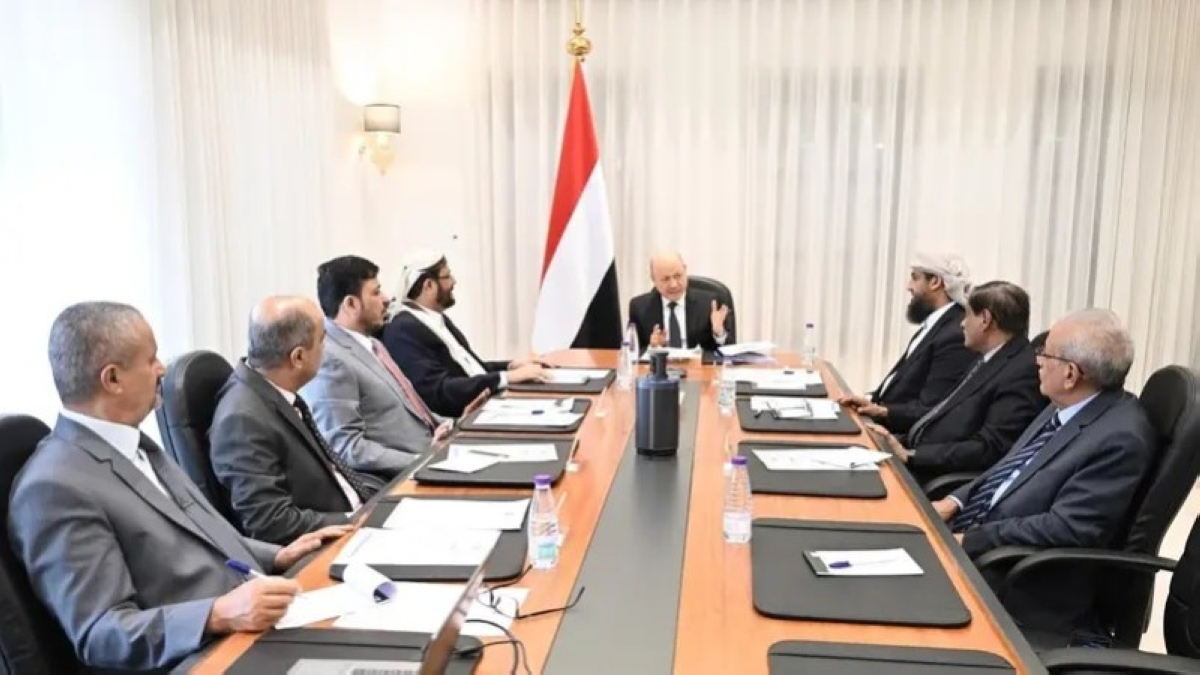

RIYADH – A joint Saudi-Emirati military team recently visited Aden, Yemen, to address escalating tensions and work towards restoring stability in the eastern provinces of Hadramawt and Al-Mahra. The visit, welcomed by the Yemeni Presidency, signals a renewed effort by regional powers to de-escalate conflict and support the internationally recognized government amidst concerns over unilateral actions by the Southern Transitional Council (STC). The situation in Yemen remains volatile, with ongoing efforts to achieve a lasting political resolution.
The delegation’s arrival follows a period of unrest in Hadramawt, where the STC launched an offensive in early December, displacing local forces and raising fears of a broader power struggle. According to a source at the Yemeni Presidential Office, Saudi Arabia is leading the de-escalation efforts, emphasizing its commitment to Yemen’s security and the improvement of living conditions for its citizens.
Addressing Instability in Eastern Yemen
The primary goal of the Saudi-Emirati team is to rectify recent unilateral actions taken by the STC, particularly the withdrawal of forces brought in from outside Hadramawt and Al-Mahra. These actions are viewed by Riyadh as a violation of existing agreements designed to govern the transitional period in Yemen. The Yemeni government seeks to reassert its authority and ensure local administrations can operate without external interference.
Concerns Over the Southern Transitional Council
Saudi Arabia has repeatedly expressed its rejection of the STC’s attempts to consolidate control over Hadramawt Governorate. Officials in Riyadh believe such moves undermine the legitimate government and threaten the broader political process. This stance reflects a concern that the STC’s actions mirror those of the Houthi militias, who have long been accused of destabilizing the country.
The Yemeni Presidency emphasized that further escalation could jeopardize recent gains in the peace process, divert attention from the fight against the Houthis, and worsen the already dire humanitarian situation. The ongoing conflict has created one of the world’s largest humanitarian crises, with millions of Yemenis facing starvation and disease.
The consultations in Aden focused on enabling the Yemeni government and local authorities to fulfill their constitutional duties. This includes ensuring the exclusive powers of these entities are respected and that any actions taken align with established legal and political frameworks. The situation is complicated by the presence of various armed groups and the historical grievances of different regions within Yemen.
Additionally, the Saudi-led efforts are aimed at strengthening the unity of the Presidential Leadership Council (PLC) and the Yemeni government. The PLC was formed in 2022 to provide a collective leadership structure, but internal divisions have hampered its effectiveness. A cohesive PLC is seen as crucial for negotiating a comprehensive peace agreement with the Houthis.
Meanwhile, the international community continues to call for a ceasefire and a return to negotiations. The United Nations has been actively involved in mediation efforts, but progress has been slow. The conflict in Yemen has regional implications, with Saudi Arabia and Iran backing opposing sides.
The Saudi delegation, headed by Maj. Gen. Mohammed Al-Qahtani, arrived in Hadramawt to directly engage with local leaders and assess the security situation. The Hadhramawt Tribal Alliance (HTA), largely displaced by the STC offensive, remains a key player in the region and its concerns are being addressed during the consultations. The situation highlights the complex interplay between local tribal dynamics and national political ambitions.
In contrast to the STC’s unilateral actions, Saudi Arabia has consistently advocated for a political solution to the conflict. Riyadh views a stable and unified Yemen as essential for regional security and has pledged to continue supporting efforts to achieve a lasting peace. The ongoing support includes humanitarian aid and economic assistance.
The Yemeni government has expressed its commitment to prioritizing political solutions and working closely with Saudi Arabia, the UAE, and other regional and international partners. This collaboration is seen as vital for countering the Houthi threat, which is reportedly backed by the Iranian regime. The issue of external interference remains a significant obstacle to peace.
The current situation underscores the fragility of the transitional phase in Yemen and the challenges of implementing power-sharing agreements. The political landscape is further complicated by the presence of multiple actors with competing interests. The success of the Saudi-Emirati initiative will depend on its ability to address these underlying issues and build trust among the various stakeholders.
Looking ahead, the outcome of the consultations between the Saudi-Emirati team and Yemeni officials will be closely watched. The next critical step will be the implementation of any agreements reached, including the withdrawal of unauthorized forces and the restoration of local authority. The timeline for these actions remains uncertain, and the potential for renewed clashes cannot be ruled out. The international community will likely continue to exert pressure on all parties to prioritize a peaceful resolution to the conflict in Yemen and address the growing humanitarian crisis.