


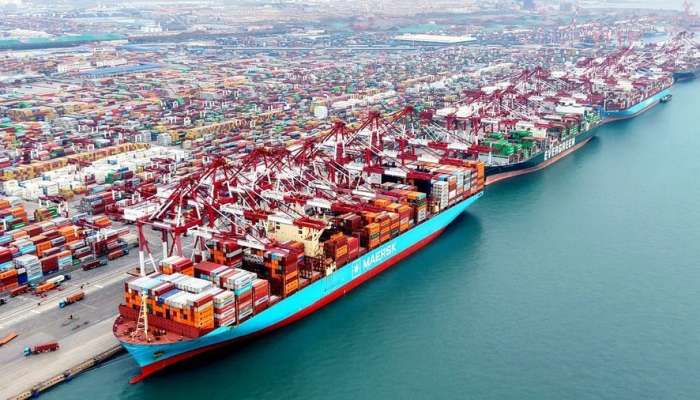

The year 2025 has presented a challenging global economic landscape, marked by sluggish momentum in many regions. However, China’s economic growth has stood in stark contrast, demonstrating remarkable resilience and defying widespread doubts. While facing significant headwinds, China has not only maintained a steady course but has also emerged as a beacon of stability, prompting international institutions to reassess their projections and acknowledge the country’s unique strengths.
China’s Defiant Growth in a Turbulent Global Economy
Despite predictions of a slowdown, China’s economy has proven surprisingly robust. Institutions like the World Bank, the International Monetary Fund (IMF), the Asian Development Bank, and the OECD have all revised their 2025 growth forecasts for the country upwards. Kristalina Georgieva, the IMF’s managing director, specifically highlighted China’s “remarkable resilience” in the face of substantial global shocks.
With a reported 5.2% GDP growth in the first three quarters of the year, China is on track to meet its full-year target of around 5%. This performance is particularly noteworthy given the exceptional external pressures the world’s second-largest economy has endured, including ongoing trade tensions and a complex geopolitical environment.
Prioritizing Domestic Demand: A Shift in Strategy
A key differentiator in China’s success has been its strategic focus on bolstering internal demand rather than relying heavily on exports. Unlike other manufacturing powerhouses that might aggressively pursue export expansion during periods of domestic weakness, China has prioritized “managing its own affairs.” This deliberate approach has proven crucial in navigating the global headwinds.
China’s vast domestic market – exceeding 1.4 billion people, with nearly 190 million registered business entities and a rapidly expanding middle class – provides a solid foundation for sustained growth. As researcher Zhang Zhanbin of the Party School of the Communist Party of China Central Committee points out, this “super-sized market” offers companies ample opportunities to thrive even amidst trade uncertainties, acting as a powerful stabilizer for the overall economy.
The Rise of New Consumption Patterns
Beyond sheer size, the nature of consumption within China is evolving. New trends are emerging, driving fresh demand and contributing to economic dynamism. The popularity of amateur sports leagues like the Su Super League, attracting millions of viewers, demonstrates a growing appetite for domestic entertainment.
Similarly, the viral success of designer toys like Labubu, both within China and internationally, underscores the consumer enthusiasm for emerging cultural products. Deloitte’s Zhang Tianbing notes a broader shift towards spending on services, with Chinese consumers increasingly valuing emotional connection, cost-effectiveness, and long-term sustainability over conspicuous consumption and purely low-cost options.
Policy Support and Expanding Retail Sales
Chinese policymakers have actively reinforced this positive momentum through a series of pro-consumption measures. A 500-billion-yuan (approximately $71.07 billion USD) relending facility has been established to stimulate service consumption and support the elderly care sector. Furthermore, a nationwide initiative funded by ultra-long special treasury bonds is facilitating consumer goods trade-in programs.
These efforts are yielding results. Official data reveals a 4% year-on-year expansion in China’s retail sales of consumer goods during the first 11 months of 2025. Service consumption has outpaced overall retail growth, with culture, sports, telecommunications, and information services all experiencing double-digit sales increases. This highlights the growing importance of the service sector in China.
Innovation as the Engine of Future Growth
Looking ahead, experts agree that China’s future economic trajectory will be increasingly dependent on domestic demand. Mara Warwick, World Bank Division Director for China, Mongolia, and Korea, emphasizes this point. However, underpinning this reliance on internal consumption is a long-term strategy centered on technological innovation.
Early in 2025, some economists predicted a “lost decade” scenario for China, mirroring Japan’s experience. Concerns revolved around an unpredictable policy environment and potential supply chain disruptions. By the end of the year, this narrative had been decisively overturned. China has not only maintained its position as the world’s leading manufacturing hub but has also enhanced its dynamism and indispensability.
Investing in R&D and Cultivating Talent
This resilience is largely attributed to sustained investment in research and development (R&D). In 2024, China’s R&D expenditure accounted for 2.69% of its economic output, exceeding that of the European Union. Initiatives like the “AI Plus” guidelines are accelerating the integration of artificial intelligence across various industries. A national venture capital guidance fund is strategically channeling capital into emerging and high-growth sectors.
Crucially, China is also investing heavily in talent. The country boasts nearly 20 million scientists and engineers, and graduates over 5 million students annually in STEM fields – a global leader. Recognizing the importance of attracting international expertise, China has introduced a new K visa specifically for young foreign science and technology professionals, a move contrasting with tightening immigration policies in many other nations. This focus on technological advancement is key.
Renewed Foreign Investment and Global Leadership
China’s innovation wave is attracting renewed interest from foreign investors. Approximately one-third of new foreign direct investment into China is now directed towards high-tech sectors. The KraneShares China Overseas Internet ETF, a major Chinese Stocks ETF listed in the U.S., has seen a $2.3 billion influx of capital this year and is poised for its best annual performance since 2021.
For multinational corporations, a presence in China is no longer solely about accessing its market; it’s about leveraging Chinese innovation to enhance their global competitiveness. Companies like Porsche and AstraZeneca have established significant R&D centers in China, demonstrating their commitment to tapping into the country’s technological prowess. Xu Yang, president of Danfoss China, highlights how China’s advancements in areas like data centers and shipbuilding are creating new growth opportunities for the company.
In conclusion, China’s economic growth in 2025 has been a remarkable story of resilience and strategic adaptation. By prioritizing domestic demand, fostering innovation, and investing in talent, the country has not only weathered global headwinds but has also positioned itself for continued success in the years to come. This performance underscores China’s evolving role in the global economy and its increasing importance as a driver of future growth. For investors and businesses alike, understanding these dynamics is crucial for navigating the complexities of the 21st-century marketplace.