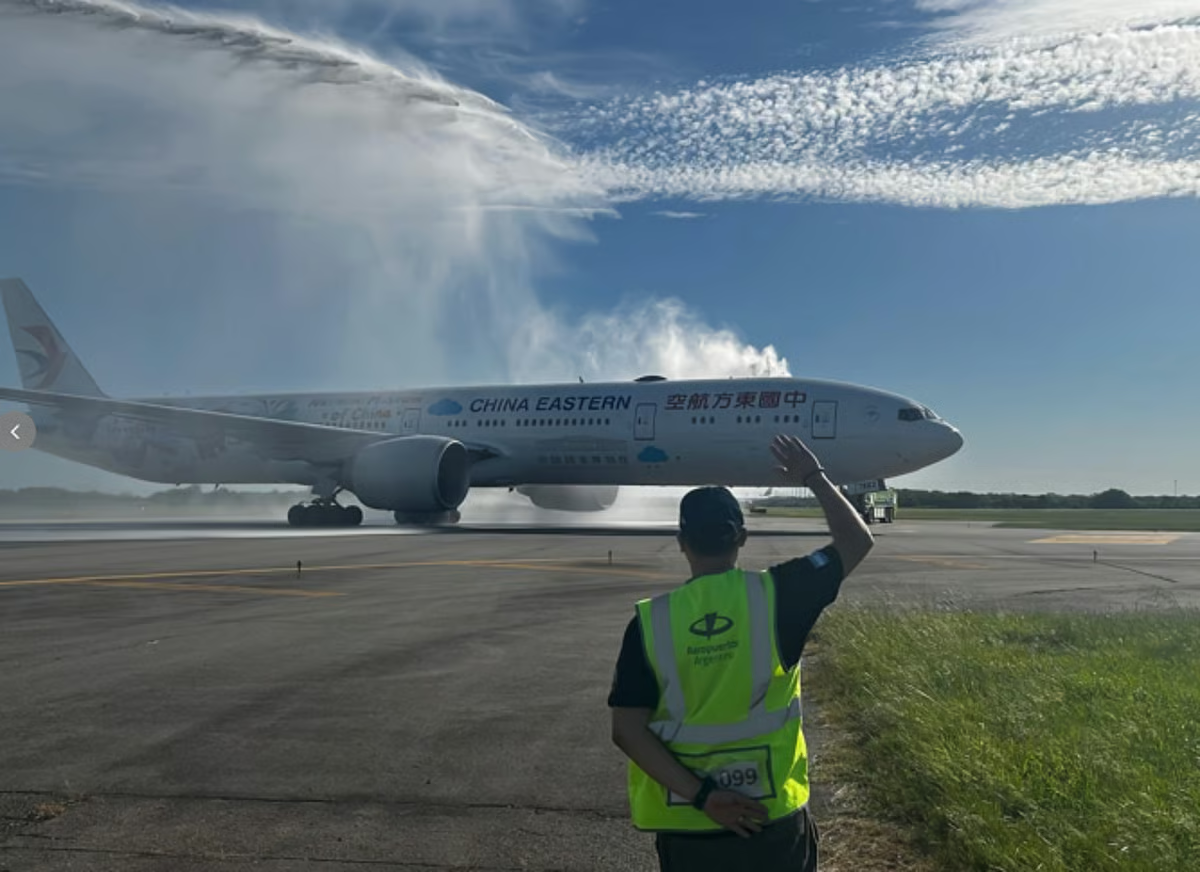

The competition for the title of “world’s longest flight” is intensifying, with a new route launched by China Eastern Airlines recently surpassing Singapore Airlines’ longstanding record. This shift highlights a growing trend among airlines to push the boundaries of long-haul travel, catering to demand for direct connections between distant global hubs. The race for ultra-long-distance routes is driven by passenger preference and advancements in aircraft technology.
China Eastern’s new service between Shanghai and Mexico City clocks in at approximately 19 hours and 53 minutes, exceeding the 19-hour duration of Singapore Airlines’ flight from New York to Singapore. Australian carrier Qantas is also preparing to enter this arena with its “Project Sunrise” initiative, aiming for non-stop flights to London and New York from Sydney as early as 2027. This escalating competition is reshaping the landscape of international air travel.
The Rise of Ultra-Long-Haul Flights
Airlines have been steadily increasing the length of their routes over the past decade, fueled by demand for quicker travel times and the development of more fuel-efficient, long-range aircraft like the Airbus A350 and Boeing 787. Passengers often prioritize the convenience of a single flight, even if it means a significantly longer time in the air, over the hassle of multiple connections. This is particularly true for business travelers and those connecting to destinations beyond the initial hub.
However, operating these flights presents considerable challenges. These include managing crew fatigue, ensuring sufficient onboard resources, and addressing potential medical emergencies during extended periods. Airlines must also carefully analyze route profitability, considering fuel costs and passenger load factors.
Current Longest Flight Contenders
Currently, Singapore Airlines holds the record for the longest flight by distance, covering 15,349 kilometers (9,537 miles) between New York (JFK) and Singapore (SIN) on its Airbus A350-900ULR. This aircraft is specifically configured for ultra-long-range operations, featuring a reduced passenger capacity and increased fuel storage.
Xiamen Airlines operates the second-longest flight, connecting New York (JFK) with Fuzhou (FOC) in China, spanning 11,388 kilometers (7,077 miles) and lasting around 19 hours and 20 minutes, utilizing the Boeing 787-9. Qantas currently offers a Perth to London Heathrow (LHR) route covering 14,499 kilometers (7,829 nautical miles) with a flight time of approximately 17 hours and 50 minutes, also on the Boeing 787-9.
Qantas’ “Project Sunrise” and the Future of Long-Haul
Qantas’ “Project Sunrise” represents a significant investment in the future of long-haul travel. The airline plans to introduce flights from Sydney (SYD) to London (LHR) and New York (JFK) with projected flight times exceeding 20 hours. These routes will rely on the acquisition of Airbus A350-1000 aircraft, equipped with advanced cabin features designed to enhance passenger comfort during extended journeys.
The planned London–Sydney service, exceeding 10,500 miles, is described by Qantas as a pivotal moment in aviation. According to Qantas, the project involved extensive research into minimizing the effects of jet lag and optimizing crew rest schedules. The airline is also exploring innovative cabin designs, including dedicated wellness zones and improved sleep accommodations.
The success of “Project Sunrise” hinges on several factors, including the finalization of aircraft orders and the negotiation of favorable operating agreements. Additionally, passenger demand for these ultra-long-haul routes will be crucial in determining their long-term viability. The airline industry is also closely monitoring fuel price fluctuations, which can significantly impact the profitability of these flights.
Impact on Airline Networks and Passenger Experience
The expansion of ultra-long-haul travel is likely to have a ripple effect on existing airline networks. Airlines may need to re-evaluate their hub-and-spoke models, potentially shifting towards more point-to-point routes. This could lead to increased competition and a greater emphasis on direct connections.
For passengers, these flights offer the convenience of avoiding layovers, but also require careful consideration of the extended travel time. Airlines are responding by investing in enhanced in-flight entertainment, improved food and beverage options, and more comfortable seating arrangements. The focus is on creating a more pleasant and sustainable travel experience for passengers undertaking these epic journeys.
The development of new aircraft technologies, such as more efficient engines and lighter materials, is also playing a key role in enabling these longer flights. These advancements reduce fuel consumption and increase range, making previously unfeasible routes commercially viable. Furthermore, improvements in air traffic management systems are helping to optimize flight paths and minimize delays.
The increasing popularity of premium economy and business class cabins on these routes also reflects a willingness among passengers to pay a premium for enhanced comfort and space. Airlines are capitalizing on this trend by offering more luxurious amenities and personalized services to attract high-value travelers. The demand for international flights is clearly driving innovation in cabin design.
Looking ahead, the next key milestone will be Qantas’ final decision on the Airbus A350-1000 order, expected by the end of 2024. The airline will also need to secure regulatory approvals and finalize crew training programs before launching “Project Sunrise” flights in 2027. While the future of ultra-long-haul travel appears promising, uncertainties remain regarding global economic conditions and potential disruptions to the aviation industry. The ongoing development of sustainable aviation fuels will also be a critical factor in ensuring the long-term environmental viability of these routes.