
The European Union is moving forward with a contentious plan to utilize approximately €210 billion in frozen Russian Central Bank assets for the financial and military support of Ukraine. This unprecedented move, intended as a form of reparations, follows concerns that direct negotiations between the United States and Russia could undermine European interests and Ukraine’s position. The EU aims to channel these funds into a loan program for Ukraine, contingent on Russia ultimately compensating the country for war damages.
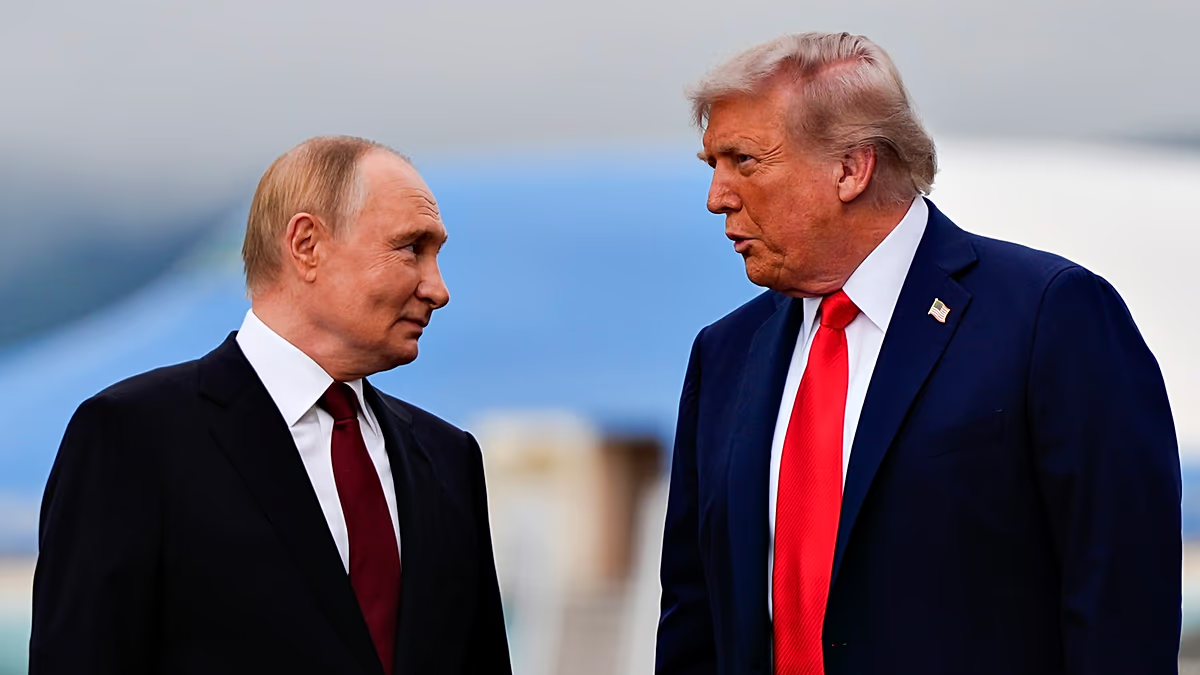
The initiative gained momentum after a leaked draft proposal for a post-war framework – reportedly crafted by US and Russian officials – revealed terms perceived by many European leaders as overly advantageous to Moscow. This perceived sidelining spurred the EU to solidify its control over the crucial asset pool.
EU Seeks Control of Russian Assets for Ukraine Reparations
The European Commission, led by Ursula von der Leyen, has presented the legal framework to allow the transfer of funds. This includes a proposal to legally prohibit the return of these sovereign assets to Russia. The move is intended to provide Ukraine with a reliable source of financial aid for 2026 and 2027, and potentially beyond, while simultaneously increasing the pressure on Russia to de-escalate the conflict.
According to the Commission, the loan would be repaid only after Russia ceases its aggression against Ukraine and agrees to financially compensate Kyiv for the destruction caused by the war. This structure is designed to incentivize a just resolution to the conflict.
Overriding Unanimity: Article 122 and Potential Vetoes
A key element of the EU’s strategy involves invoking Article 122 of the EU treaties, which allows for action during economic emergencies. This is significant because Article 122 only requires a qualified majority vote, potentially circumventing the usual unanimity requirement that could be blocked by reluctant member states, such as Hungary.
The proposed ban on releasing the assets would be subject to annual review. Release would only occur if Russia’s actions no longer pose a substantial risk to the European economy and if Moscow has made full reparations to Ukraine without negatively impacting the EU’s financial stability. Opening the path to such a release requires a new qualified majority.
Meanwhile, the United States has reportedly been lobbying some EU member states to block the reparations loan, as reported by Bloomberg. This underscores the differing viewpoints on how to address the financial consequences of the conflict.
Several EU scholars suggest the Commission has already exhausted the flexibility offered within the existing treaty framework. The success of this initiative now hinges on political alignment among member states. A critical eleventh-hour meeting is scheduled for Friday evening and will include the Belgian Prime Minister, German Chancellor, and European Commission President, addressing Belgium’s role as the primary custodian of the assets.
Von der Leyen emphasized that the proposed loan is designed to strengthen Ukraine’s negotiating position, stating that it sends “a very clear message also to Russia that the prolongation of the war on their side comes with a high cost for them.” She added that the plan would help secure Ukraine’s financial future and its ability to withstand Russia’s aggression. The broader geopolitical impact of this potential asset seizure is expected to be substantial, potentially influencing future international sanctions regimes.
The concept of leveraging frozen assets for restitution isn’t entirely new; historical precedents exist, though not on this scale. However, the scale of these assets and the political complexities surrounding their use creates a unique challenge for the EU. International law surrounding state responsibility for armed conflict is also a key consideration in this debate, and the EU must build a solid legal argument to withstand potential challenges.
The debate over the use of these sanctioned funds is likely to continue, with the EU facing both internal divisions and external pressure. Observers will be closely watching the outcome of Friday’s meeting and whether a consensus can be reached to move forward with this significant step in supporting Ukraine. The future of Ukraine’s financial stability, and the message sent to Russia, depend on it.
Stay informed about the evolving dynamics of this situation and explore further insights into the implications of using frozen Russian assets for Ukraine’s recovery.