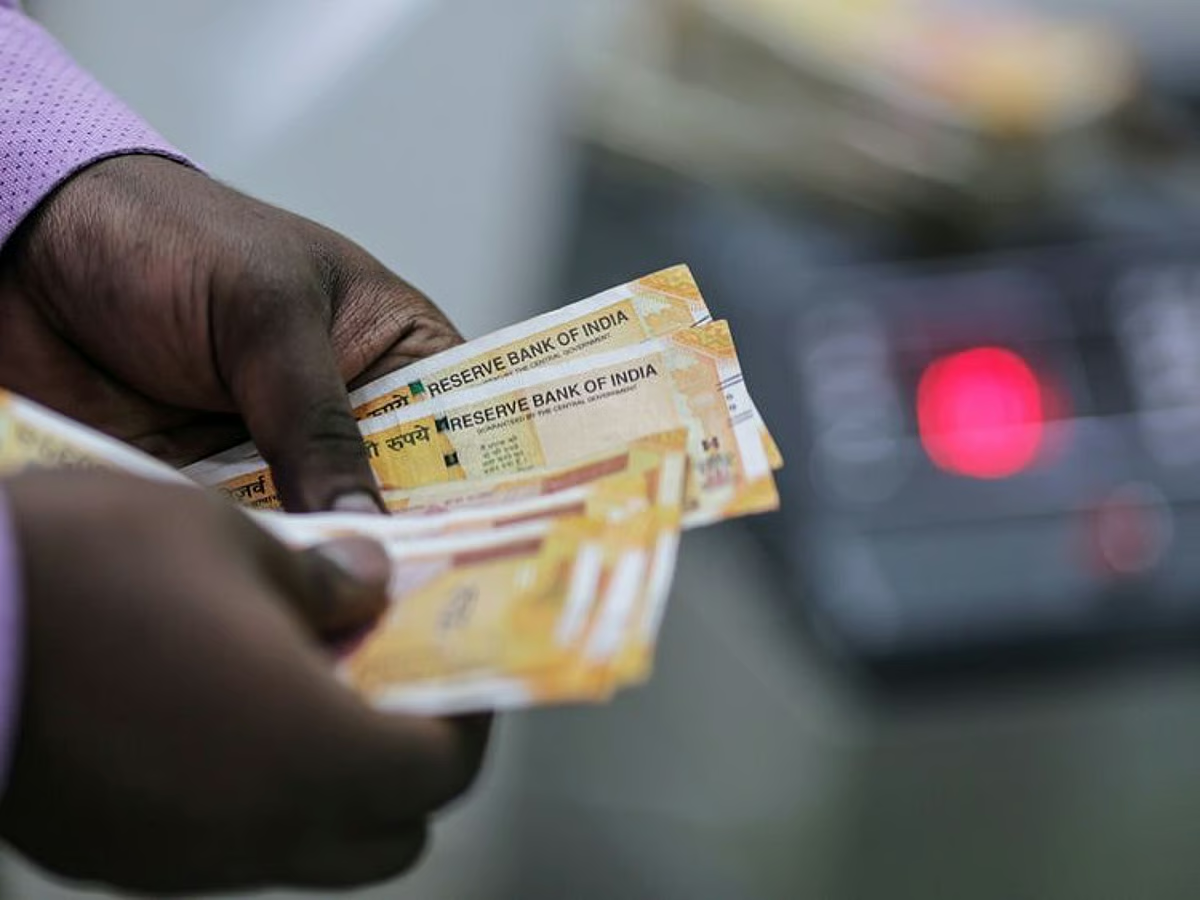

For many expatriate workers in the United Arab Emirates, sending money home to family is a regular financial practice. Recent exchange rates, with the Indian Rupee reaching approximately ₹24.3 per UAE Dirham, are prompting discussions about whether December presents a particularly advantageous time to send money to India. This favourable rate, observed in early December, represents a significant gain for remitters compared to rates seen earlier in the year.
The current exchange rate is impacting the purchasing power of remittances. The stronger Dirham allows individuals to convert their UAE earnings into a larger amount of Rupees, effectively increasing the value of the money sent home. This timing coincides with holiday seasons in both the UAE and India, potentially increasing remittance volumes.
Why is ₹24.3 a Good Rate to Send Money to India?
The exchange rate between the UAE Dirham and the Indian Rupee is consistently observed by millions of residents. The Dirham is pegged to the US dollar, and fluctuations in the dollar’s value against the Rupee directly affect the exchange rate. A rate of ₹24.3 per Dirham signifies a stronger Dirham relative to the Rupee, meaning more Rupees are received for each Dirham exchanged.
Generally, a higher exchange rate benefits those sending money from the UAE to India. According to data from the State Bank of India, the Rupee has experienced moderate volatility throughout 2023, but currently remains comparatively weaker. This creates a window of opportunity for remitters to maximize the value of their transfers.
Factors Influencing the Exchange Rate
Several economic factors contribute to the dynamic exchange rate. These include India’s economic growth, inflation rates, and the overall global risk sentiment. Geopolitical events and changes in international oil prices also play a role, as the UAE’s economy is heavily reliant on oil revenue.
The US Federal Reserve’s monetary policy decisions also impact the Dirham-Rupee rate, due to the peg with the dollar. Changes in US interest rates often lead to corresponding adjustments in capital flows, thereby influencing currency valuations. Furthermore, currency converter tools demonstrate the immediate impact of rate shifts.
Impact on Remittance Flows
Remittances to India are a crucial component of the country’s economy. The Reserve Bank of India (RBI) reported that remittances to India reached $100.13 billion in fiscal year 2022-23. These funds contribute significantly to household income, consumption, and investment, particularly in rural areas.
The favorable exchange rate is expected to encourage increased funds transfer activity in December. Many expatriates time their remittances to coincide with festivals, educational expenses, or medical needs. The current rate provides an added incentive to send more money now rather than later. However, experts caution against attempting to perfectly “time” the market, as exchange rates are inherently unpredictable.
Alternatives to Traditional Bank Transfers
While traditional bank transfers remain a popular method for sending money, alternative options are gaining traction, offering potentially faster and more cost-effective solutions. These include money transfer operators like Western Union and MoneyGram, as well as digital platforms.
Fintech companies specializing in cross-border payments have emerged, often leveraging technology to reduce transaction fees and improve speed. Some platforms offer competitive exchange rates and convenient online or mobile access. These options often involve comparing fees and exchange rates before finalizing a transaction, with transparency being key.
Regulatory Framework and Remittances
Both the UAE and India have established regulatory frameworks to govern cross-border remittances. The UAE Central Bank oversees financial institutions to ensure compliance with anti-money laundering (AML) and counter-terrorism financing (CTF) regulations.
In India, the RBI regulates inward remittances under the Foreign Exchange Management Act (FEMA). These regulations aim to facilitate legitimate inflows while preventing illicit financial activities. The government has also been exploring ways to streamline the remittance process and reduce costs for remitters. Changes in RBI guidelines can influence the ease and cost of remittances.
Looking Ahead
The current favorable exchange rate is a positive development for expatriates seeking to maximize their remittances. Whether it will be sustained throughout December or beyond remains uncertain. Analysts are closely monitoring global economic trends, including oil prices and the performance of major economies, to predict potential shifts in currency valuations.
The next key indicator to watch will be the upcoming monetary policy decisions by the US Federal Reserve and the Reserve Bank of India. These decisions are likely to influence investor sentiment and capital flows, subsequently impacting the Dirham-Rupee exchange rate. Remitters should continue to stay informed about current market conditions and compare options before making any decisions.
The long-term outlook for remittances remains positive, driven by continued employment opportunities for Indians in the Gulf region and the ongoing need for financial support from family members abroad. The specific exchange rate, however, will continue to be subject to market forces and economic developments.