


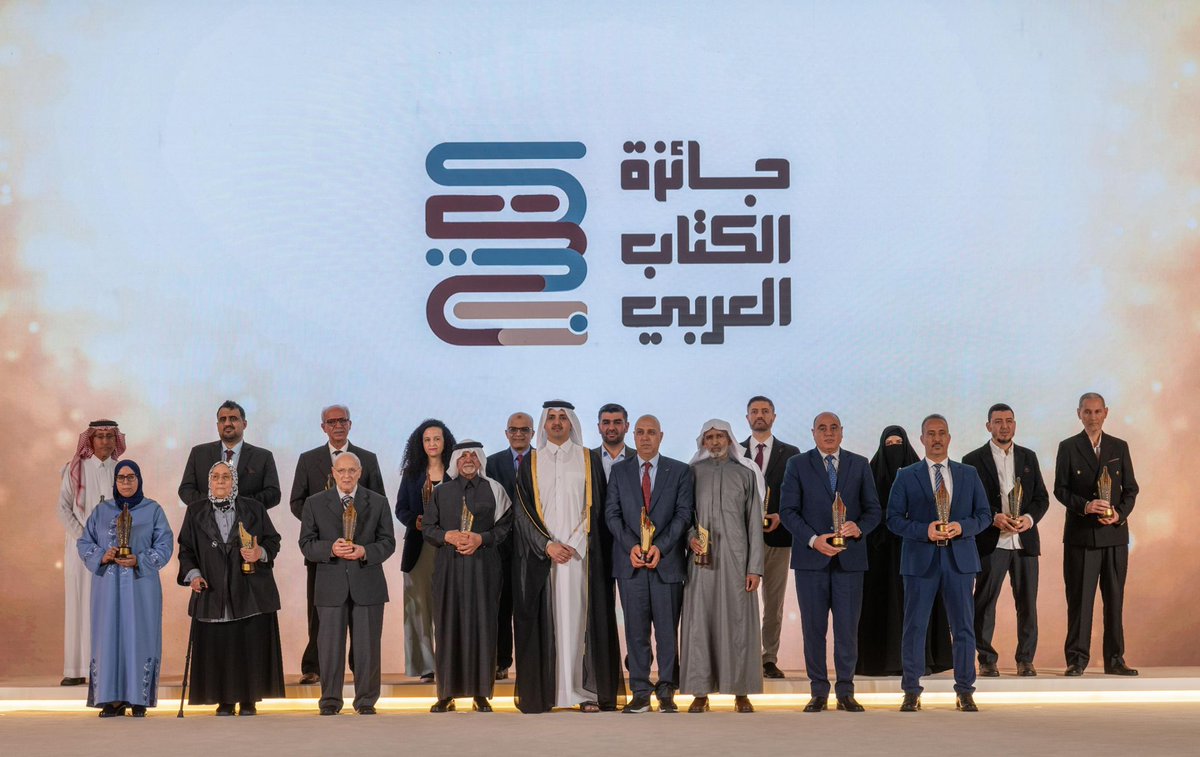

Doha, Qatar – The State of Qatar celebrated intellectual achievement this week with the third annual Arab Book Award, recognizing outstanding contributions to Arabic literature and scholarship. The awards were presented Tuesday evening at the Grand Hyatt Hotel, honoring researchers, publishers, and institutions dedicated to the advancement of the Arab book industry. The ceremony underscored Qatar’s commitment to fostering cultural exchange and preserving Arab heritage.
The event, attended by dignitaries, scholars, and media representatives from across the Arab world, highlighted the growing importance of Arabic language publications and the individuals who contribute to their creation. The Arab Book Award, launched in March 2023, received over 1,000 submissions from 41 countries, demonstrating a vibrant and active literary community.
Recognizing Excellence in Arabic Literature
The Arab Book Award encompasses several categories, acknowledging diverse fields of study within Arabic scholarship. This year’s awards focused on areas including linguistic and literary studies, historical research, Sharia sciences, social and philosophical studies, and textual criticism. Institutional achievements were also recognized, celebrating organizations that actively support the Arab publishing ecosystem.
Category Winners and Recognition
In Linguistic and Literary Studies, Abdullah Al Rashid took first place for work focused on Arab heritage up to the 10th century AH. Nasser Al Rabat and Ahmed Mahmoud Ibrahim both received second place honors in Historical Studies, which centered on Arab and Islamic history between the 6th and 12th centuries AH. Awards were also presented in Sharia Sciences, with Ahmed Sanoubar receiving second place and Muhammad Anas Sarmini receiving an encouragement award.
Sawsan Al-Otaibi was recognized in Social and Philosophical Studies, while Yasser Al-Dumyati won for his encyclopedia in the category of dictionaries and textual criticism. Additionally, several prominent scholars – Dr. Kian Ahmed Hazem, Dr. Muhammad Suhail Taqoush, Dr. Mohammed Saleh Al Musfir, Mukhtar Al Ghouth, Muqbil Al Tam A Ahmadi, and Dr. Nadia Mustafa – received awards for their overall achievements. The Juma Al Majid Center, Dar Al Ihyaa Publishing, and Dar Kunooz Al Maarefa were honored for their institutional contributions.
According to Dr. Hassan Al Naama, Secretary-General of the Award, the initiative serves as a vital bridge for intellectual exchange and a beacon for literature, science, and art. He emphasized the importance of recognizing the efforts of writers and scholars who contribute to the cultural landscape.
Qatar’s Role in Promoting Arab Culture
The ceremony highlighted Qatar’s broader efforts to promote Arabic language and culture on an international stage. Professor Mohammed Saleh Al Mesfer of Qatar University noted the award’s role in preserving Arab cultural and intellectual heritage and raising awareness of cultural identity. He also pointed to the importance of the award in enhancing the status of Arabic books regionally and internationally.
The event included a film showcasing key moments from the award’s third edition, including scientific seminars and field visits to Egypt, Saudi Arabia, and Kuwait. These initiatives demonstrate a commitment to fostering dialogue and collaboration within the Arab book sector. The award’s organizers also emphasized the importance of supporting publishing houses and encouraging continued scholarly work.
The Qatar National Commission for Education, Culture, and Science provided support for the event. The award’s success is seen as a positive step towards strengthening the Arab literary community and promoting a greater appreciation for Arabic language and intellectual traditions. Related efforts to support cultural heritage are ongoing throughout the region.
Looking ahead, organizers are expected to announce details regarding the fourth edition of the Arab Book Award in the coming months, including the specific focus areas for each category and the submission deadline. The continued growth and impact of the award will likely depend on sustained funding and ongoing collaboration with regional and international institutions.