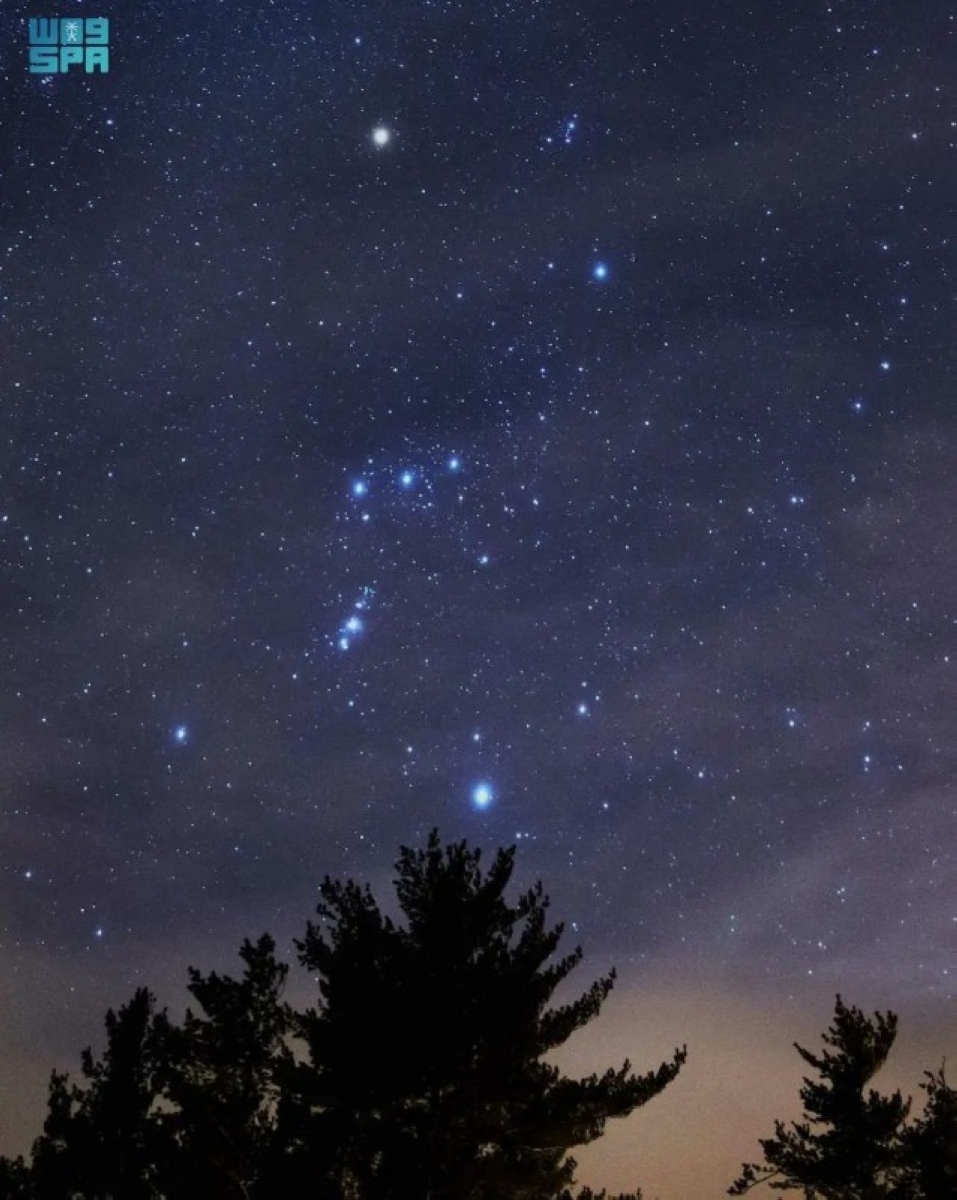

JEDDAH — Observers across the Northern Hemisphere are reporting noticeably brighter and more defined stars during winter nights, a phenomenon particularly evident in December, January, and February. The Jeddah Astronomical Society attributes this increased stellar clarity to Earth’s position relative to the Milky Way galaxy. This seasonal effect offers a unique viewing experience for both amateur and experienced stargazers.
The clearer winter skies are being observed across Saudi Arabia and globally, with reports coming in from various astronomical societies and individual observers. The effect is visible to the naked eye, requiring no special equipment for appreciation. Experts suggest optimal viewing conditions are found away from significant light pollution.
Why Winter Nights Showcase Brighter Stars
The reason for this enhanced visibility lies in the direction Earth is facing during the winter months. According to Majed Abu Zahra, president of the Jeddah Astronomical Society, our planet’s night side points toward the outer regions of the Milky Way’s spiral arm, where our Sun is located. These areas contain a comparatively lower density of stars.
Reduced Background Light
This lower stellar density translates to reduced background light in the night sky. With less ambient light scattering, individual stars appear more prominent and sharply defined. The contrast between the stars and the darkness of space is significantly increased.
Contrast with Summer Skies
In contrast, during summer months – particularly June, July, and August – Earth faces toward the center of the Milky Way. This region is the most densely populated with stars in our galaxy. The combined light from billions of stars creates a brighter background glow, diminishing the visibility of individual stars.
However, the increased overall brightness doesn’t necessarily mean more stars are visible. It simply means the light from those stars is diffused, making it harder to distinguish them individually. This effect is similar to trying to see details in a photograph that is overexposed.
Understanding the Milky Way’s Structure
The Milky Way galaxy is vast, spanning approximately 100,000 light-years in diameter. Its center is located roughly 25,000 to 28,000 light-years from Earth. However, observing the galactic core directly in visible light is challenging due to dense interstellar dust that obscures the view.
Our Solar System resides within a smaller spiral arm called the Orion Arm. This arm is about 3,500 light-years wide and 10,000 light-years long. Earth is positioned near the inner edge of the Orion Arm, roughly halfway along its length. This location influences our perspective when viewing the galaxy.
Constellation Visibility
The winter sky also benefits from the prominence of constellations like Gemini. These constellations feature bright stars that are located within the same spiral arm as our Solar System, further contributing to the striking celestial display. Observing constellations can be a helpful way to navigate the night sky and identify specific stars.
Additionally, the cooler, drier air often associated with winter months contributes to clearer atmospheric conditions, enhancing visibility. Stable air reduces atmospheric turbulence, resulting in sharper images of celestial objects. This is a key factor for astronomy enthusiasts.
The Jeddah Astronomical Society notes that light pollution remains a significant obstacle to optimal stargazing. Even with the favorable conditions of winter, artificial light from cities and towns can wash out the fainter stars. Seeking out dark sky locations is recommended for the best viewing experience.
Looking ahead, astronomers will continue to monitor and study the seasonal variations in stellar visibility. Further research may reveal additional factors influencing the clarity of the night sky. The upcoming months will offer continued opportunities for observing this phenomenon, though atmospheric conditions and lunar cycles will play a role in the quality of viewing. The next significant event to watch for will be the potential for increased meteor activity in the coming weeks.