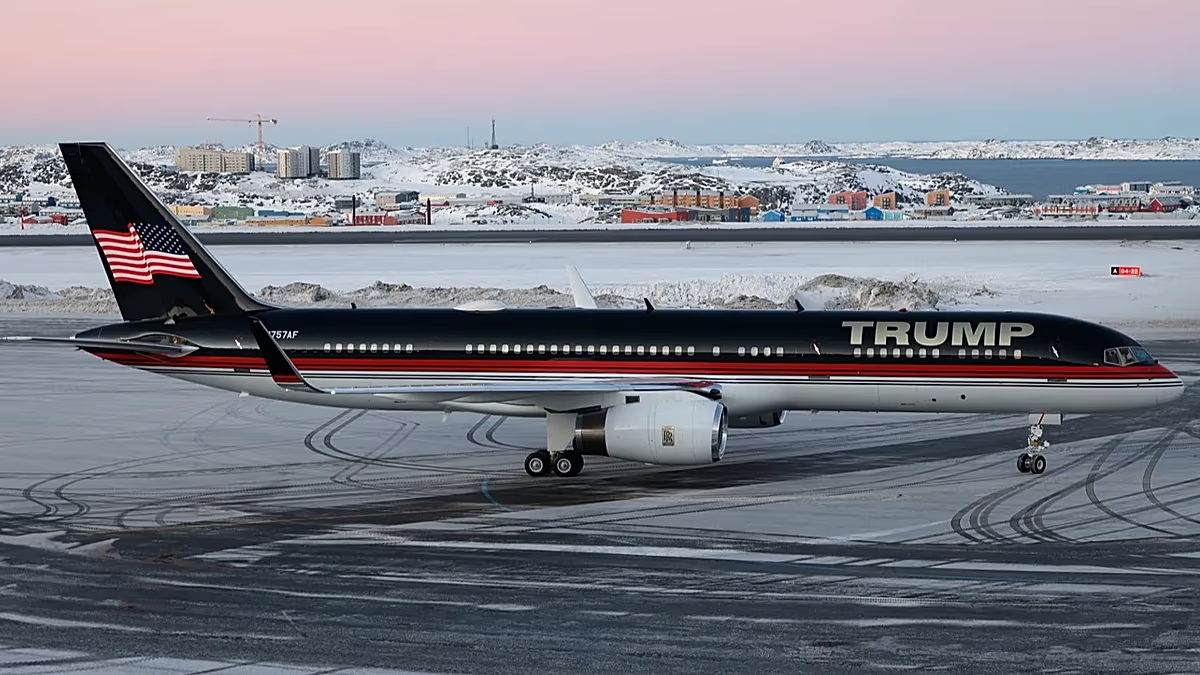

Following a recent US intervention in Venezuela, former President Donald Trump has renewed his controversial calls to annex Greenland, sparking a sharp rebuke from Danish Prime Minister Mette Frederiksen. The escalating tension centers on the strategically important island, a self-governing territory within the Kingdom of Denmark, and raises concerns about transatlantic relations and the future of the NATO alliance. Trump’s renewed interest in Greenland comes as he cites national security concerns and potential resource opportunities.
Frederiksen issued her strongest statement to date on Sunday, demanding that the US cease its attempts to acquire Greenland. “It makes absolutely no sense to talk about the US needing to take over Greenland,” she stated, emphasizing that the US has no legal right to annex any part of the Danish Kingdom. The Greenlandic Prime Minister, Jens-Frederik Nielsen, also criticized the linkage of Greenland to the Venezuela situation as disrespectful.
Why Does Trump Want Greenland?
Trump’s desire to acquire Greenland isn’t new. He first publicly explored the possibility during his previous term, and recently appointed former Louisiana Governor Jeff Landry as a special envoy to pursue the issue. Landry expressed his honor to serve in a “volunteer position to make Greenland a part of the US” on social media.
The primary justification offered by Trump centers on national security. He argues that Greenland’s strategic location in the Arctic Ocean, amidst increasingly important shipping routes, is vital to US interests. Additionally, the opening of Arctic shipping lanes due to global warming is expected to further increase Greenland’s geopolitical significance.
The US already maintains a significant defense presence in Greenland, operating the Pituffik Space Base, which focuses on missile detection and space surveillance, with approximately 150 personnel stationed there. However, experts suggest that Trump’s motivations extend beyond existing security arrangements. Ian Lesser, a distinguished fellow at the German Marshall Fund of the US, believes the administration is heavily focused on potential natural resources, including mineral and energy reserves.
European Reactions and Solidarity
The Danish government is leading the European response, firmly rejecting Trump’s proposals. French Foreign Ministry Spokesman Pascal Confavreux voiced strong support for Denmark, stating, “Greenland belongs to Greenland’s people and to Denmark’s people. It is up to them to decide what they wish to do. Borders cannot be changed by force.”
Swedish Prime Minister Ulf Kristersson also pledged his country’s support for Denmark, asserting that only Denmark and Greenland have the right to determine their territories. The European Union previously denounced similar US proposals last year, reinforcing a unified stance against annexation.
However, Lesser notes that while a forceful takeover is unlikely, the possibility cannot be entirely dismissed, particularly in light of recent US actions. He suggests that the pressure from the US could lead to concessions from Denmark, granting the US greater access to the territory through commercial or diplomatic agreements.
Potential Impact on NATO
Frederiksen highlighted Denmark’s membership in NATO and the collective security guarantee it provides in her response to Trump. She urged the US to cease its threats against a long-standing ally. This situation raises concerns about the cohesion of the NATO alliance, as tensions between members could undermine its fundamental principles.
While disagreements among NATO allies are not unprecedented – examples include historical tensions between Greece and Turkey – this situation is particularly sensitive, involving a potential challenge to the security of a member state by the alliance’s leading power. Lesser emphasizes that such behavior is “corrosive” to alliance cohesion and could trigger a significant crisis.
Looking ahead, the situation remains fluid. Denmark and Europe are exploring potential avenues for negotiation, focusing on economic and commercial opportunities. However, the US administration’s unpredictable approach and rapid pace of decision-making present challenges. Observers will be closely watching for any further escalation in rhetoric or actions, and the potential for this dispute to reshape transatlantic security dynamics. Stay informed about developments in this evolving geopolitical situation as it unfolds.