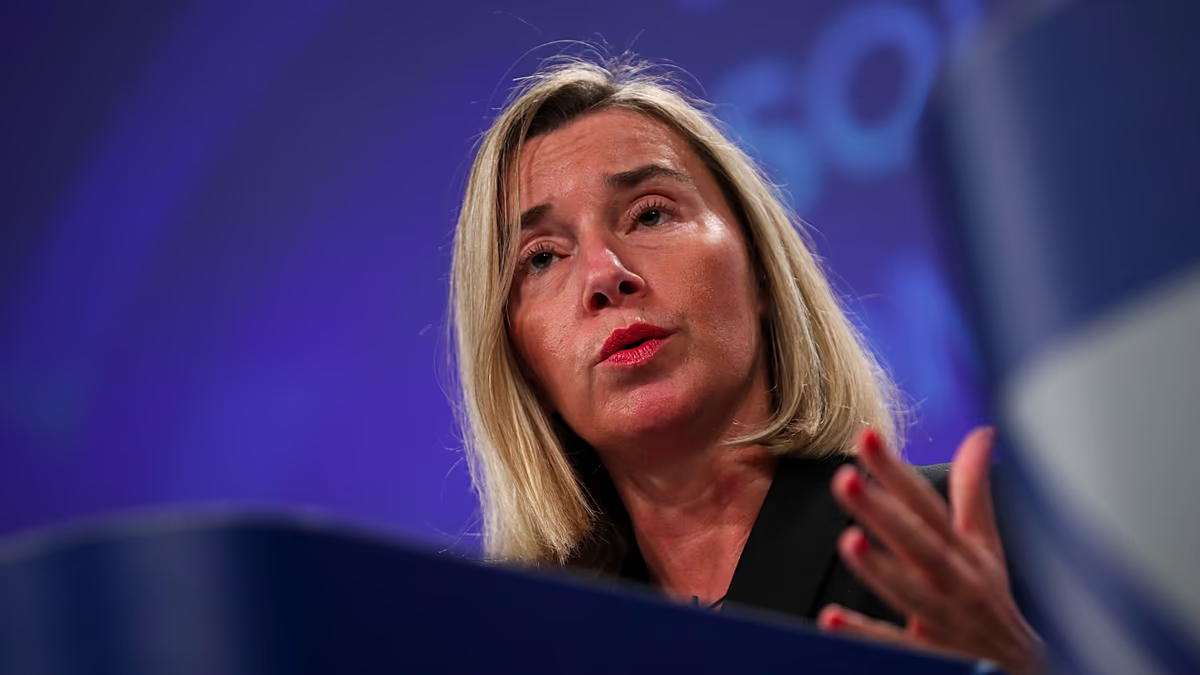

The detention of Federica Mogherini by the European Public Prosecutor’s Office (EPPO) as part of a fraud investigation has sent ripples through political and diplomatic circles in Brussels and Rome. The inquiry centers on potential irregularities in funding while she served as a public official. Mogherini, a prominent figure in European politics, previously held key positions including Italian Foreign Minister and EU High Representative, raising questions about the scope of the Federica Mogherini investigation and its potential impact on current and former EU officials.
The EPPO confirmed the detention, stating it is part of a broader probe into the allocation of European funds. Mogherini is currently the Rector of the College of Europe, a prestigious institution known for training future European leaders and civil servants. Details of the alleged fraud remain limited as the investigation is ongoing, but the EPPO indicated the case involves significant sums of money.
The Political Career of Federica Mogherini
Born in Rome in 1973, Mogherini’s political journey began in her youth. She initially became involved in politics through the Italian Communist Youth Federation in 1988, demonstrating an early commitment to public service. Following the dissolution of the Italian Communist Party, she transitioned to the Italian Democratic Party (PD), where she steadily advanced in her career.
In 2008, Mogherini was elected to the Italian Parliament, focusing on foreign affairs. This role provided a foundation for her later prominence on the international stage. Her subsequent appointment as Foreign Minister in 2014 under Matteo Renzi’s government marked a significant turning point.
From Rome to Brussels: A Rising Diplomat
Renzi swiftly nominated Mogherini for the position of High Representative of the European Union for Foreign Affairs and Security Policy later that same year. The appointment wasn’t without debate; some Baltic states initially voiced concerns regarding her perceived approach to Russia, fearing a softening of the EU’s stance towards Moscow. Nevertheless, she assumed the role in 2014.
As High Representative, Mogherini played a central role in coordinating the EU’s foreign policy, participating in meetings of the European Commission and chairing the EU’s Foreign Affairs Council. She became a key negotiator in the multinational effort to secure the Iran nuclear deal (JCPOA), a landmark agreement aimed at preventing Iran from developing nuclear weapons. More details on the JCPOA can be found on the U.S. Department of State website.
The College of Europe and Recent Scrutiny of Federica Mogherini
After completing her term as High Representative, Mogherini was appointed Rector of the College of Europe in Bruges in 2020. This appointment drew criticism from some quarters questioning her academic qualifications for the leadership role. Concerns were also raised about a potential conflict of interest, given the College’s substantial funding from the European Commission, her former employer.
The College of Europe is widely recognized as an influential institution for those aspiring to careers within the EU bureaucracy, offering networking opportunities and a pathway to positions within European institutions. Annual tuition fees at the College amount to €30,000, according to the institution’s website. It effectively serves as a platform for cultivating the next generation of “eurocrats.”
In a statement released to Euronews, the College of Europe affirmed its “full cooperation with authorities in the interest of transparency and respect for the investigate process.” Attempts to reach Federica Mogherini directly for comment were unsuccessful at the time of publication. The investigation involving Federica Mogherini is likely to prompt broader reviews of funding allocation practices within the EU.
Potential Implications of the Investigation
The EPPO’s actions are being watched closely, as they represent a significant test of the office’s authority and independence. The scope of the Federica Mogherini case and its potential to uncover further irregularities could lead to increased scrutiny of EU funding mechanisms. This action by the EPPO is part of an ongoing effort to combat fraud related to EU funds, a matter of increasing concern for member states. This also signals a potential shift towards greater accountability within European institutions and wider debates about transparency in EU governance.
This is a developing story; further updates will be provided as more information becomes available. Stay tuned to this site for continued coverage of the Federica Mogherini investigation and its implications for the European Union.