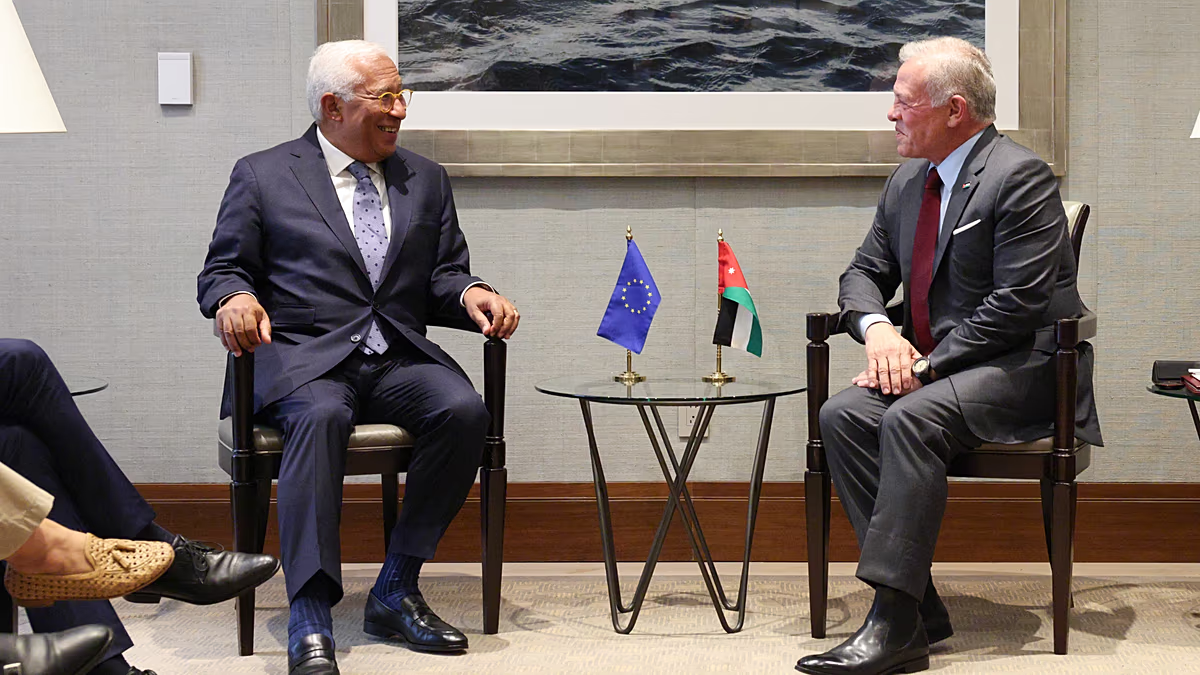

The European Union and Jordan convened for a historic first-ever EU-Jordan summit in Amman on Thursday, bringing together European Commission President Ursula von der Leyen and European Council President António Costa with King Abdullah II. Discussions centered on bolstering the EU-Jordan partnership and tackling pressing regional and global challenges, signaling a deepening of ties between the two entities. The summit aimed to reaffirm Jordan’s critical role as a stability anchor in the Middle East and explore avenues for increased cooperation.
The meeting occurred against a backdrop of escalating conflicts and humanitarian crises, prompting leaders to address issues including the war in Ukraine, security concerns, and ongoing migration flows. This comes a year after the signing of a Strategic and Comprehensive Partnership between the EU and Jordan.
Strengthening the EU-Jordan Partnership Amid Regional Instability
Jordan is considered a strategic partner for the EU due to its relatively stable political environment and consistent support for peace initiatives in the Middle East, particularly the two-state solution. The country’s position as a key player in regional diplomacy was a significant factor in the EU’s decision to hold the summit. According to President Costa, Jordan plays a “pivotal role” in the region.
However, the most prominent discussion point was the Israel-Palestinian conflict. Experts highlight the unique connection Jordan has to the issue. More than half of Jordan’s population is of Palestinian origin, and the Kingdom hosts millions of Palestinian refugees, many of whom have been granted Jordanian citizenship.
The Future of Gaza and Potential Jordanian Role
Discussions reportedly touched on the possibility of a multinational stabilization force for Gaza following a ceasefire. James Moran, associate senior research fellow at the Centre for European Policy Studies (CEPS), suggested that Jordanian troops might be more readily accepted by the Gazan population compared to forces from other nations, given Jordan’s regional standing.
Currently, Jordan has not formally committed to any such force, especially considering Israel’s recent non-compliance with ceasefire agreements. Nevertheless, Moran believes Jordan’s involvement is likely in any long-term peace plan for Palestine, encompassing both humanitarian and security aspects.
Addressing the Syrian Refugee Crisis
The situation in Syria and the return of refugees was another key agenda item. Jordan has been a major host country for Syrian refugees, and approximately 200,000 Syrians have recently returned home from Jordan. The EU may look to Jordan’s approach to encouraging repatriation, as reconstruction efforts in Syria continue. Further cooperation on addressing the root causes of displacement and supporting host communities will likely be explored.
Economic Support and Financial Commitments to Jordan
Jordan’s economic vulnerabilities were also addressed, with leaders acknowledging the ongoing need for international assistance. The EU has already provided substantial financial aid to the country, including €500 million in macro-financial assistance over the past year, according to sources familiar with the matter. The summit likely included discussions about continued economic support and potential new investment opportunities.
The Strategic and Comprehensive Partnership signed last year includes a financial and investment package totaling €3 billion. This substantial commitment underscores the EU’s dedication to supporting Jordan’s economic development and stability, boosting foreign investment and fostering sustainable growth. The EU aims to bolster Jordan’s economic resilience in the face of regional challenges and domestic pressures.
The EU-Jordan summit represents a significant step in solidifying a vital partnership. Further developments regarding the implementation of the €3 billion investment package and Jordan’s potential role in regional stabilization efforts, particularly in Gaza and Syria, will be closely watched. Stay informed about the evolving situation in the Middle East and the ongoing EU-Jordan relations through official EU statements and reputable news outlets like Euronews.