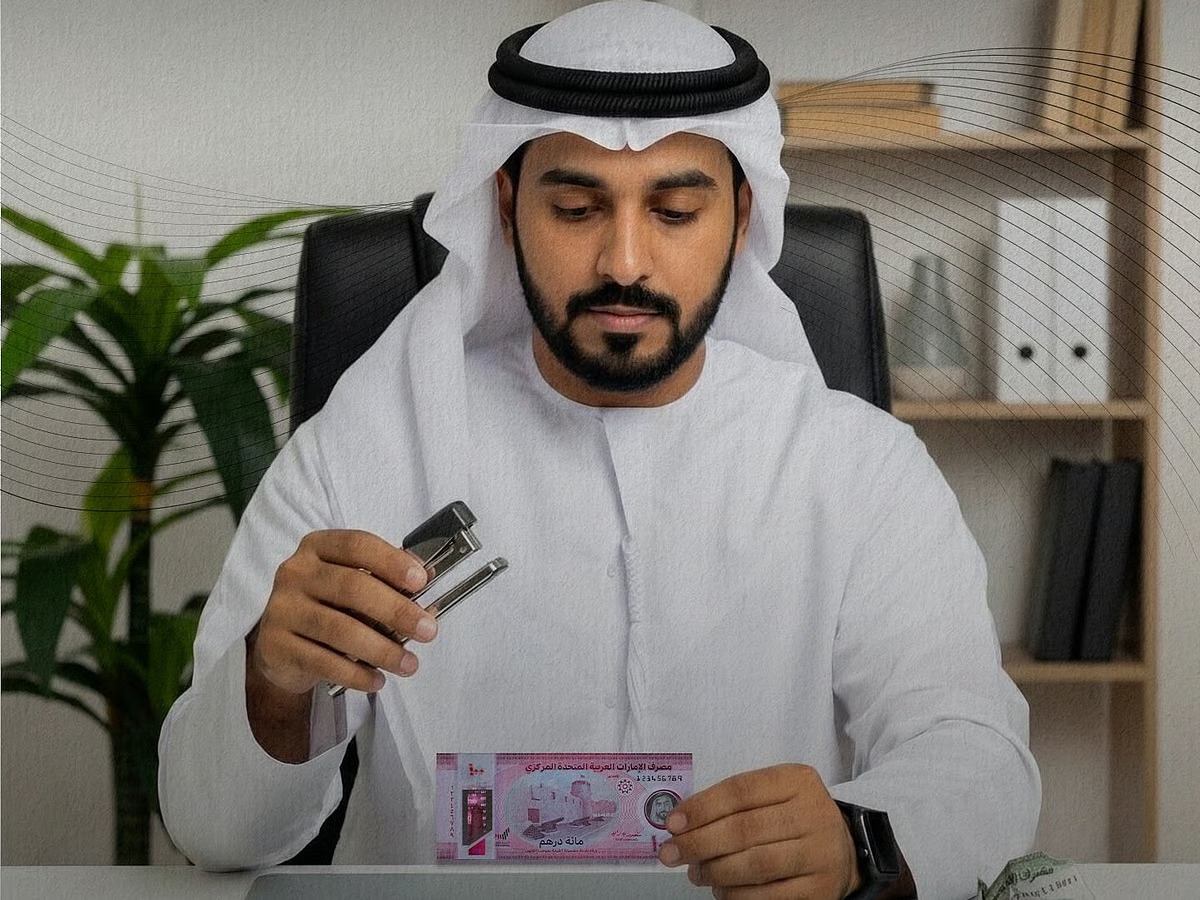

The Central Bank of the UAE (CBUAE) recently issued a public reminder regarding the proper handling and replacement of UAE banknotes. This guidance, shared through social media, underscores the importance of preserving the currency’s condition for both economic stability and the maintenance of national identity. The announcement comes as part of the CBUAE’s ongoing efforts to ensure the integrity of the national financial system and maintain public confidence in the dirham.
The CBUAE’s initiative affects all residents and visitors of the United Arab Emirates, pertaining to the everyday use of the country’s official currency. It’s not a new regulation, but a reinforcement of existing policies related to the care of money and the process for exchanging damaged notes. The guidelines were presented as a means to proactively prevent damage and to clearly define procedures for when damage does occur.
Protecting Your UAE Banknotes: A Guide to Best Practices
The CBUAE advises individuals to adopt several simple practices to ensure the longevity of UAE banknotes. These recommendations primarily focus on preventing physical damage, which can render notes unusable or diminish their value. Proper handling supports the overall health and stability of the monetary system.
Specifically, the central bank urges the public to avoid actions that commonly lead to deterioration. This includes deliberately defacing notes, tearing or otherwise damaging them, and employing rough handling techniques. Such actions can contribute to a higher circulation of substandard currency.
Furthermore, the CBUAE recommends against folding, crumpling, or securing banknotes with staples or other sharp objects. These practices can cause creases, tears, and weaken the paper fibers. Avoiding contact with liquids, excessive heat, and adhesives is also crucial, as these substances can cause irreversible damage.
Compensation for Damaged Currency
Despite preventative measures, banknotes can sometimes become damaged. The CBUAE has established a clear process for replacing damaged or mutilated UAE currency, with compensation amounts tied directly to the extent of the damage. These procedures help to ensure fair treatment for individuals who encounter issues with their notes.
According to the CBUAE, full compensation is provided if two-thirds or more of the original banknote – whether in one piece or combined fragments – remains intact. In this scenario, the holder will receive the full face value of the note.
However, the compensation structure scales with the degree of damage. If a banknote is reduced to between one-third and two-thirds of its original form, the holder is entitled to half of the note’s face value. This acknowledges the partial usability of the remaining portion of the currency.
In contrast, if less than one-third of the banknote is present, no compensation will be offered. This is due to the limited ability to verify its authenticity and the lack of usable material. The CBUAE emphasizes that each case is assessed individually.
Why This Matters: National Identity and Financial Trust
The CBUAE’s emphasis on careful banknote handling extends beyond purely economic considerations. The bank explicitly stated that preserving the appearance of UAE dirhams is vital for upholding national identity. Currency often serves as a symbol of a nation’s sovereignty and cultural heritage.
Additionally, maintaining the quality of banknotes directly contributes to public trust in the financial system. Clean, well-preserved currency is perceived as a sign of economic stability and responsible monetary policy. This perception is crucial for fostering confidence in the national economy.
The call to action by the CBUAE aligns with international best practices. Many central banks worldwide regularly publish guidance on currency handling to minimize damage and ensure the efficient operation of the payment system, including managing cash circulation rates.
It’s important to note that these regulations apply solely to banknotes officially issued by the Central Bank of the UAE. Foreign currency is subject to the regulations of its country of origin. The CBUAE retains the right to individually verify the authenticity of any submitted banknote before processing compensation claims.
Looking forward, the CBUAE is expected to continue monitoring the quality of currency in circulation and assessing the effectiveness of its public awareness campaigns. Potential future developments involve technological advancements in banknote security features and enhanced digital payment infrastructure which could reduce reliance on physical cash. The long-term impact of these evolving trends on the handling and replacement of banknotes remains to be seen.