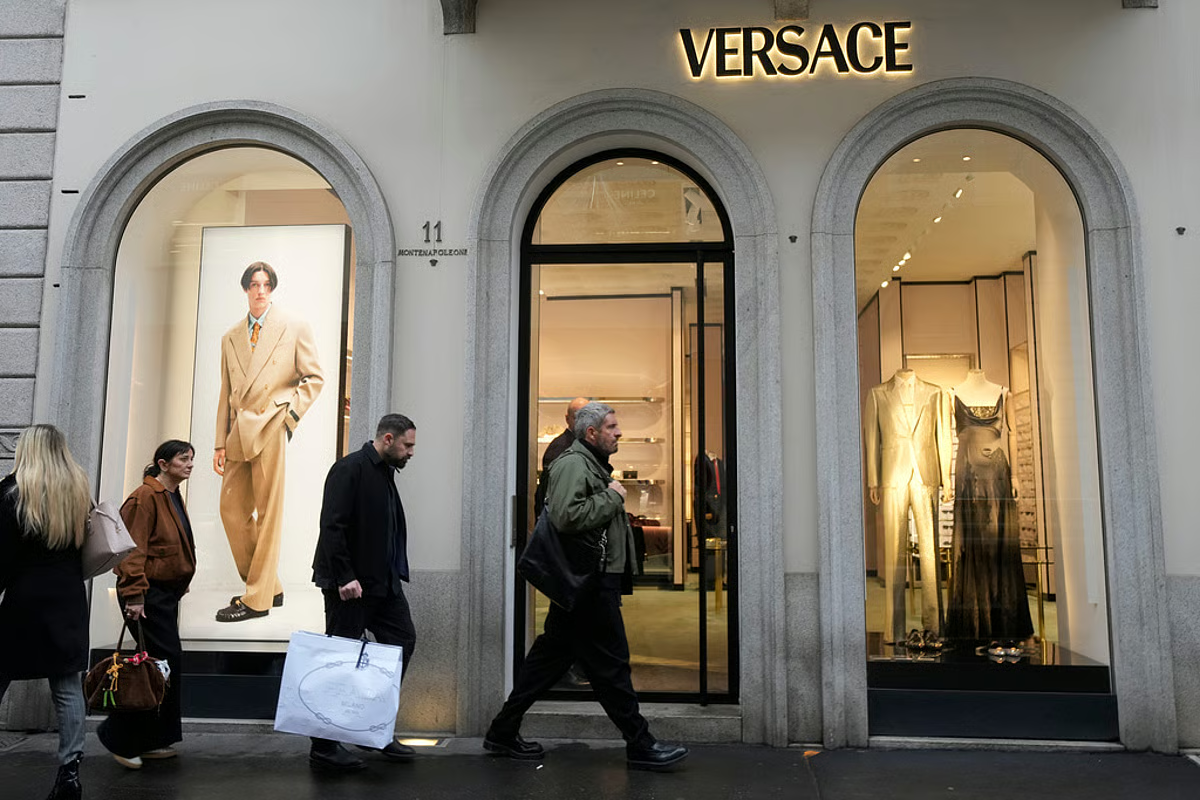

The Prada Group has officially completed its acquisition of luxury fashion house Versace, a deal finalized on November 15, 2025, marking a significant shift in the Milanese luxury landscape. This move ends Versace’s time under Capri Holdings, and positions the brand within a larger portfolio alongside Prada and Miu Miu. The acquisition is expected to reshape strategies around manufacturing, distribution, and brand positioning for both groups.
The transaction, valued at an undisclosed amount, comes after receiving all necessary regulatory approvals. Capri Holdings intends to use the proceeds from the sale to substantially reduce its debt, bolstering its financial stability and providing flexibility for future investments in its remaining brands, Michael Kors and Jimmy Choo. The company anticipates stabilizing its business this year and returning to growth by fiscal 2027.
The Strategic Implications of the Versace Acquisition
The deal highlights a consolidation trend within the luxury sector, driven by the need for scale and operational efficiency. Versace represented approximately 20% of Capri Holdings’ €5.2 billion in revenue for 2024, demonstrating its importance to the group’s overall performance. Now, the brand will contribute roughly 13% to the Prada Group’s projected revenue structure.
However, Capri Holdings noted a softening of Versace’s performance against earlier expectations following a period of acquisitions. This contributed to the decision to divest and refocus on Michael Kors and Jimmy Choo, brands where Capri believes it can achieve greater strategic control and returns.
Manufacturing Synergies and Talent Development
A key motivation for the Prada Group is gaining greater control over its supply chain. Prada has consistently invested in its manufacturing capabilities, and the integration of Versace’s production will further strengthen this advantage. Lorenzo Bertelli, Prada Group marketing director, emphasized the transferable skillset involved in luxury goods manufacturing, stating that techniques are largely consistent across brands.
The Scandicci leather goods factory, already producing for Prada and Miu Miu, will now include Versace’s output. This expansion allows for greater utilization of Prada’s 25-year-old artisan training program, which recruits talent from across Tuscany, Marche, Veneto, and Umbria. The program saw a 28% increase in trainee numbers this year, reaching 152, with a strong hiring rate of 70% within the Prada Group itself.
Investment in the supply chain remains a priority, with €60 million deployed this year and a total of €200 million between 2019 and 2024 for new factories near Siena and Perugia. This underlines Prada’s commitment to vertically integrating its operations.
Contrasting Brand Strategies
The combination of Versace and the Prada Group offers a compelling portfolio contrast that industry analysts believe can be leveraged for growth. While Versace is recognized for its bold, immediate aesthetic and strong visual identity, Prada and Miu Miu are known for curated collections, controlled release cycles, and a focus on appealing to younger demographics.
Experts suggest that consolidating capital, licensing, and manufacturing under the Prada umbrella will allow for a more rationalized approach to budgets and distribution. They highlight that Versace could benefit from the Prada Group’s financial stability and strategic planning, allowing it to move quicker with its ambitious designs.
Future Outlook for the Luxury Brands
The Prada Group does not anticipate significant changes to Versace’s existing executive leadership in the short term. However, Lorenzo Bertelli will assume the role of Executive Chairman, bringing his regulatory expertise, manufacturing oversight, and global marketing experience to the helm of the brand. This leadership shift signals a deepening integration of Versace within the broader Prada structure.
The market will be closely watching how Prada leverages Versace’s distinct brand identity and consumer base. Successful integration will hinge on maintaining the essence of Versace while benefiting from Prada’s operational strengths and financial resources. This deal is expected to influence the competitive dynamics of the global luxury market, particularly within the Italian fashion industry.
Looking ahead, the next phase will involve implementing the planned manufacturing synergies and assessing the impact of the acquisition on the Prada Group’s overall financial performance. The industry will be monitoring Versace’s sales figures and brand momentum in the coming quarters to gauge the success of this strategic move. Further details regarding specific integration plans and potential creative collaborations are anticipated in early 2026.