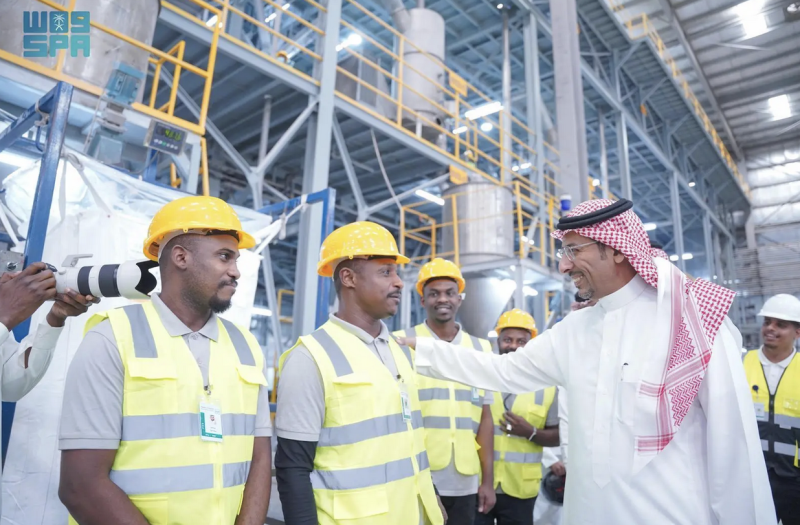

Saudi Arabia has announced the abolishment of the financial levy on expatriate workers in licensed industrial facilities, a move expected to significantly boost the Kingdom’s manufacturing sector. The decision, approved by the Cabinet chaired by Crown Prince Mohammed bin Salman, aims to foster a more competitive environment for businesses and attract further investment. This policy change represents a notable shift in the government’s approach to supporting industrial growth and diversifying the national economy.
Impact of Removing the Expat Levy on Saudi Industrial Growth
The removal of the expat levy, a cost factories have long absorbed, immediately reduces operational expenses for businesses within the industrial sector. This cost had been particularly burdensome for manufacturers reliant on a larger labor force. By alleviating this financial pressure, the government hopes to free up capital for reinvestment in crucial areas like expansion, technological upgrades, and employee development.
According to Minister of Industry and Mineral Resources Bandar Alkhorayef, the decision was difficult but necessary, prioritizing long-term economic growth over short-term revenue generation. The goal is to position Saudi Arabia as a more attractive location for manufacturing, particularly as companies reassess their global supply chains. This aligns with the broader “Vision 2030” initiative, focused on economic diversification away from oil.
Boosting Competitiveness and Investment
Lower production costs are anticipated to improve the competitiveness of Saudi-made products in international markets. This is especially vital as the Kingdom aims to increase non-oil exports and establish itself as a key player in global trade. The Ministry of Industry and Mineral Resources is currently targeting over 800 industrial investment opportunities valued at approximately SR1 trillion (roughly $266 billion USD).
The policy change is intended to send a clear signal to both domestic and foreign investors. Predictable costs and stable policies are critical factors when considering long-term industrial investments. Removing the levy complements a range of existing incentives designed to encourage growth within the Saudi industrial ecosystem. Additionally, this decision underscores the Saudis’ commitment to attracting advanced manufacturing industries.
Localization Goals Remain a Priority
While the levy specifically targeted expatriate workers, government officials have emphasized that this move does not diminish the focus on Saudization – increasing the proportion of Saudi nationals employed across all sectors. The government believes that a thriving industrial sector will ultimately create more and higher-quality employment opportunities for Saudi citizens.
Data indicates positive trends in job creation and localization within the sector. Since 2019, employment in the industrial sector has increased by 74%, reaching 847,000 workers, while the localization rate has risen to 31%. The strategy is to build an industrial base strong enough to both attract skilled foreign labor and absorb and train a growing Saudi workforce.
Recent Industrial Performance and Growth
This levy removal comes on the heels of considerable growth within Saudi Arabia’s industrial sector over the past five years. Between 2019 and the end of 2024, the number of industrial facilities increased from 8,822 to over 12,000, according to official figures. Total industrial investment saw a 35% rise, reaching SR1.22 trillion. Industrial GDP has also expanded substantially, increasing by 56% to exceed SR501 billion.
Saudi Arabia has set ambitious goals for future industrial expansion, aiming to nearly triple industrial GDP to SR895 billion by 2035. This would solidify manufacturing as a cornerstone of the Kingdom’s diversified economy. The government is also prioritizing the development of specialized industrial zones and the attraction of foreign direct investment into key sectors, such as renewable energy and defense manufacturing.
The Broader Context of Global Supply Chains
The timing of this decision aligns with significant changes in global supply chain dynamics. Many companies are actively seeking to diversify their manufacturing locations and reduce reliance on single sources. Saudi Arabia is positioning itself to capitalize on this trend by offering a stable, investment-friendly environment with access to key resources and markets. Supply chain resilience is increasingly important for global businesses, making Saudi Arabia an attractive option.
By easing cost pressures and reinforcing policy support, Saudi Arabia is signaling a long-term commitment to the industrial sector, recognizing its importance for sustainable economic growth and resilience. The message to manufacturers is clear: the Kingdom is committed to supporting their expansion, investment, and global competitiveness. This is a further step in the broader economic transformation Saudi Arabia is undergoing.
Looking ahead, the implementation of this policy change and its impact on investment and employment will be closely monitored. Industry stakeholders will be watching for further developments in supporting regulations and infrastructure projects aimed at accelerating industrial growth. The effectiveness of this measure in attracting high-value manufacturing and achieving the ambitious GDP targets set for 2035 remains to be seen, dependent on ongoing global economic conditions and the Kingdom’s ability to maintain a stable and competitive business environment.