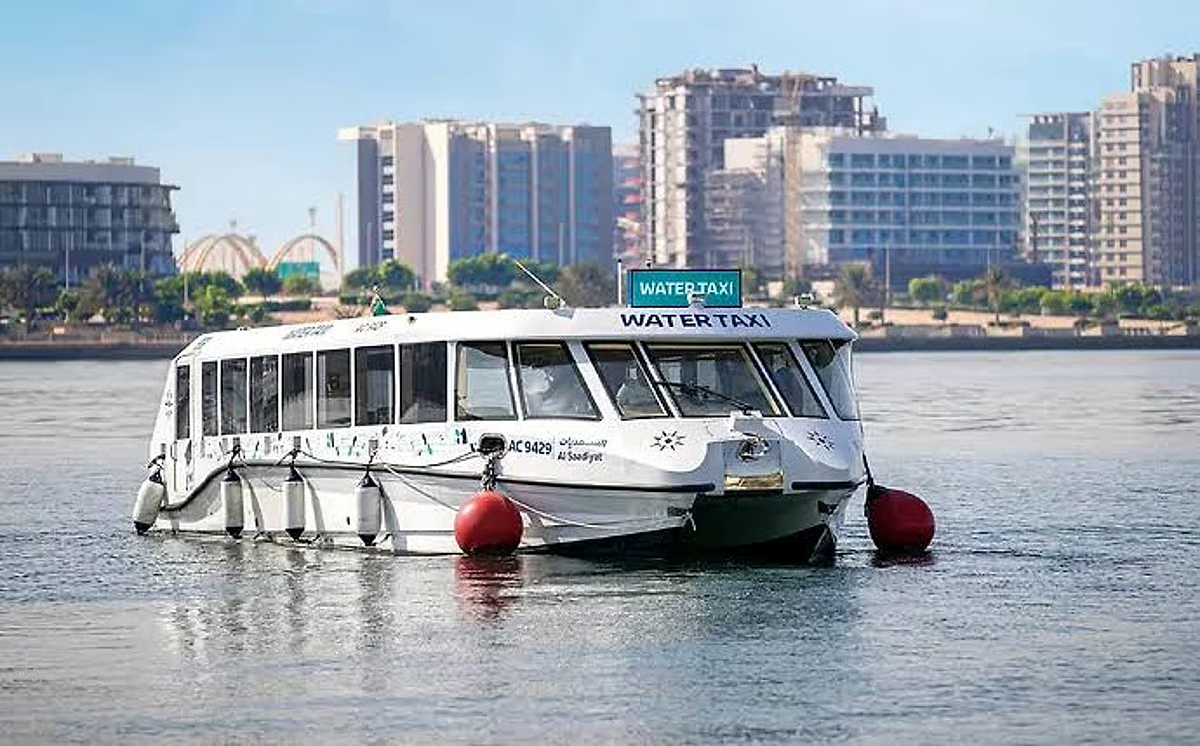

Abu Dhabi has expanded its water taxi service to include a temporary route connecting ADNEC Marina to key locations during the upcoming ADIPEC exhibition, running from November 20th to 23rd. Six daily trips will operate between 8:30 am and 3:30 pm, providing an alternative transportation option for attendees. This expansion builds on existing services launched in 2022, aiming to improve connectivity and offer sustainable transport solutions within the emirate.
The new route is designed to alleviate potential congestion during the ADIPEC energy exhibition, a major event attracting international visitors. The Integrated Transport Centre (ITC), in partnership with Abu Dhabi Maritime, is operating the service. This initiative underscores Abu Dhabi’s commitment to diversifying its transport infrastructure and supporting large-scale events.
Expanding the Abu Dhabi Water Taxi Network
Since its initial launch in late 2022, the Abu Dhabi water taxi service has focused on the Yas Bay area. The ITC and Abu Dhabi Maritime collaborated to establish routes serving destinations around Yas Bay, providing a novel public transport option. The service initially connected high-demand locations like Yas Bay, Yas Marina, and Al Bandar Marina.
Yas Bay and Al Raha Beach Connectivity
The expansion into ADNEC Marina represents a strategic move to cater to specific event needs. The existing service operates on a fixed schedule with one-hour intervals, ensuring consistent availability at each station. This reliability is intended to encourage ridership and integrate the water taxi into daily commutes and leisure activities.
Abu Dhabi Maritime’s Role in Waterway Management
Abu Dhabi Maritime, established in 2020 by the Department of Municipalities and Transport and AD Ports Group, plays a crucial role in regulating Abu Dhabi’s waterways. The authority oversees all commercial and community ports, recreational marinas, and vessels operating within the emirate. This comprehensive oversight is essential for maintaining safety and efficiency on the water.
Additionally, Abu Dhabi Maritime is responsible for developing the emirate’s overall maritime strategy. This includes ensuring compliance with relevant laws and regulations, overseeing vessel registration, and managing marine infrastructure. The organization also focuses on accident investigations and the sharing of critical maritime data and knowledge.
Sustainable Transport and Event Support
The water taxi service is positioned as a sustainable public transport alternative, particularly within the Al Raha area. It aims to reduce reliance on road-based transport and promote environmentally friendly travel options. Furthermore, the service has actively supported major events, such as the 2022 Formula 1 season at Yas Marina Circuit, by providing convenient transportation for attendees.
However, the success of the service relies on continued investment in infrastructure and route expansion. The ITC and Abu Dhabi Maritime are reportedly evaluating potential new stations and routes based on demand and feasibility studies. This ongoing assessment is crucial for maximizing the service’s impact.
The introduction of the ADNEC Marina route demonstrates the flexibility of the water taxi system. It highlights the potential for temporary routes to support large events and address specific transportation challenges. This adaptability is a key advantage of the service compared to more rigid transport options.
Related initiatives, such as the development of additional ferry services and the integration of public transportation options, are also underway in Abu Dhabi. These efforts aim to create a more comprehensive and efficient transport network for residents and visitors. The emirate is also investing in marina infrastructure to support the growth of maritime tourism and commerce.
Looking ahead, the ITC and Abu Dhabi Maritime will likely assess the usage of the ADNEC Marina route following the conclusion of ADIPEC. Data collected during the exhibition will inform decisions regarding the potential for a permanent extension of the service or the implementation of similar routes for future events. The long-term viability of the service will depend on sustained ridership and continued investment in the emirate’s maritime transport infrastructure.