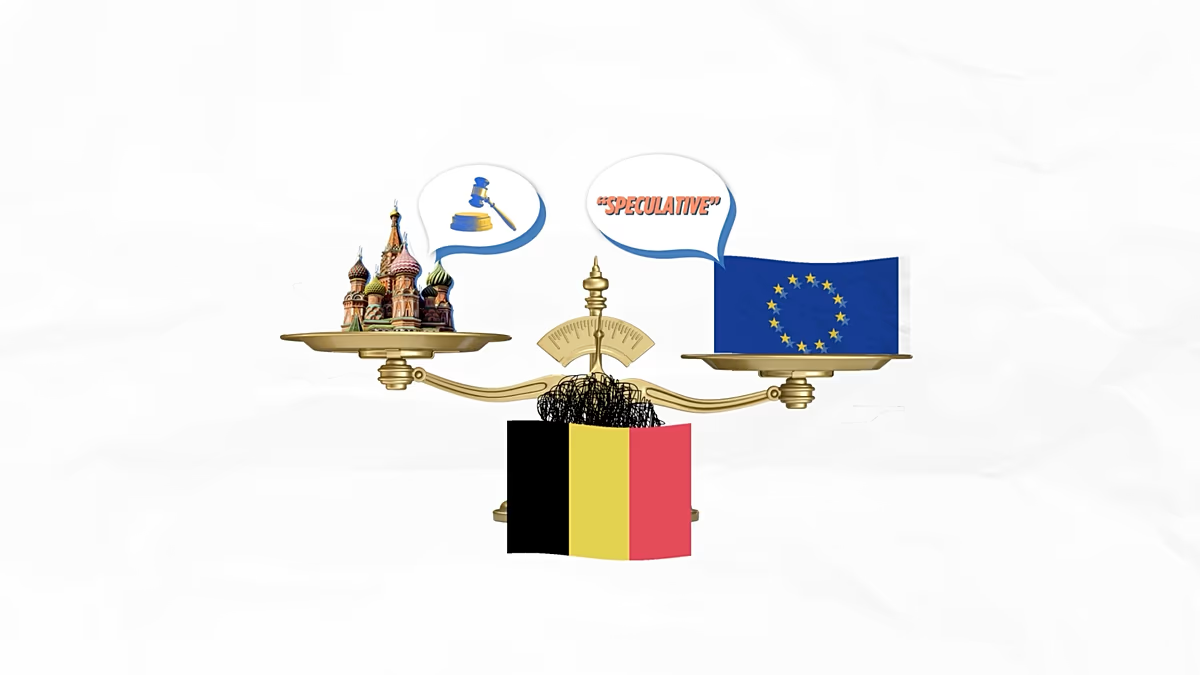

The European Union has moved to indefinitely freeze approximately €210 billion in assets belonging to Russia’s Central Bank, a significant escalation in economic pressure aimed at Moscow. This decision, finalized last week, bypasses the previous requirement for unanimous member state approval every six months to maintain the sanctions. The move comes as EU leaders prepare for a crucial summit this Thursday to discuss further aid to Ukraine and bolster European security amid growing concerns about Russian sabotage. The Russian asset freeze is expected to have far-reaching implications for both Russia and the EU.
The majority of these frozen funds are held by Euroclear, a Belgium-based central securities depository. Previously, maintaining the freeze was vulnerable to vetoes, most notably from Hungary. Now, releasing the assets would require a qualified majority vote *in favor* of Russia, a highly improbable outcome given the ongoing conflict in Ukraine.
Understanding the EU’s Russian Asset Freeze
The EU initially imposed sanctions on Russia’s Central Bank following the full-scale invasion of Ukraine in February 2022. These sanctions aimed to limit Russia’s ability to finance the war effort by restricting access to its foreign reserves. However, the six-month renewal requirement created ongoing uncertainty and allowed individual member states to exert disproportionate influence.
To overcome this hurdle, the EU invoked an “emergency clause” within its treaty framework. This clause allows for a shift to majority voting in areas typically requiring unanimity when faced with an existential crisis. According to EU officials, the escalating security threats and the need to support Ukraine’s defense justified the use of this mechanism.
Legal Challenges and Concerns
Moscow has already initiated legal action against Euroclear, challenging the legality of the asset freeze. Belgium, as the host country for Euroclear, is reportedly concerned about potential legal risks associated with the move. However, the EU considers these challenges to be largely “speculative” and maintains that the sanctions are legally sound.
The legal basis for the emergency clause is being scrutinized, and some legal experts suggest the case could end up before the European Court of Justice. The outcome of any such challenge remains uncertain, but the EU is proceeding on the assumption that the freeze will hold.
The Link to Ukraine Aid and European Security
The timing of this decision is directly linked to the upcoming EU summit. Leaders are expected to debate and potentially approve a €90 billion aid package for Ukraine, intended to cover the country’s economic and military needs through 2027. This funding is considered vital for Ukraine’s ability to continue resisting Russian aggression.
Additionally, the move reflects growing anxieties within the EU about potential Russian sabotage. Recent incidents, including alleged attacks on critical infrastructure, have raised concerns that Russia may attempt to destabilize European countries. The EU is therefore seeking to strengthen its overall security posture and demonstrate its resolve in confronting Moscow.
Hungary’s Prime Minister Viktor Orbán has strongly criticized the decision, labeling it a “Brusselian dictatorship” and accusing the EU of overstepping its authority. Orbán has consistently advocated for maintaining closer ties with Russia and has previously threatened to veto sanctions measures. His opposition highlights the internal divisions within the EU regarding its approach to the conflict.
The broader implications of this action extend beyond the immediate financial impact on Russia. It signals a potential shift towards a more unified and assertive EU, capable of acting decisively in times of crisis. This could have ramifications for other areas of EU policy, including foreign affairs and defense. The EU’s actions also align with broader international efforts to hold Russia accountable for its actions in Ukraine, including similar measures taken by the United States and other allies. The U.S. State Department provides further information on international support for Ukraine.
Looking ahead, the EU will need to navigate the legal challenges posed by Russia and manage the ongoing tensions with member states like Hungary. The success of the Ukraine aid package and the long-term effectiveness of the Russian asset freeze will be key indicators of the EU’s ability to respond to the evolving geopolitical landscape. Monitoring the developments surrounding the summit and any subsequent legal proceedings will be crucial for understanding the future of EU-Russia relations and the ongoing support for Ukraine.
Stay informed about the latest developments in EU sanctions and international aid efforts by following reputable news sources and official statements from EU institutions.