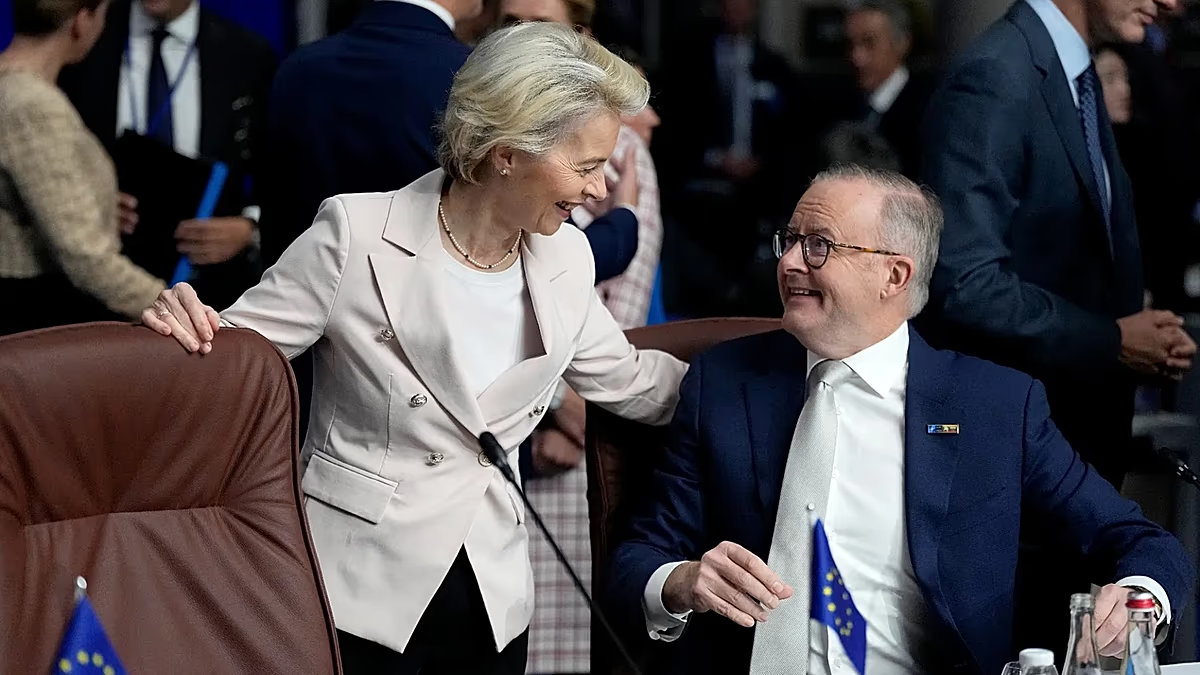

European Commission President Ursula von der Leyen is planning a trip to Australia later this month to finalize a trade agreement with Canberra, sources have revealed. The potential deal aims to strengthen economic ties between the European Union and Australia, following recent trade successes with Mercosur and India. This move comes as the EU seeks to diversify its trade partnerships amid growing geopolitical uncertainty.
The planned visit, expected shortly after the Munich Security Conference on February 15th, hinges on progress in ongoing negotiations led by EU Trade Commissioner Maroš Šefčovič and Australian Trade Minister Don Farrell, who are scheduled to meet in Brussels next week. According to Commission deputy chief spokesperson Olof Gill, substantive progress remains key to confirming the trip. The EU is prioritizing expanding access to global markets and reducing reliance on the United States and China.
Reviving the EU-Australia Trade Agreement
Negotiations for a comprehensive trade agreement between the EU and Australia stalled in 2023 due to disagreements over market access for Australian agricultural products. Canberra had expressed concerns that Brussels was not offering sufficient access for key exports like beef, sheep, dairy, and sugar. These agricultural disputes are common in EU trade talks, as evidenced by the opposition to the Mercosur deal from European farmers.
However, Australia is considered a strategically important partner for the EU. Brussels views Australia as a like-minded nation, offering a valuable opportunity to diversify trade relationships and counter increasingly assertive trade policies from China. The EU is actively working to build resilience in its supply chains and reduce dependence on single markets.
Agricultural Concerns and Ongoing Negotiations
Agriculture remains the primary sticking point in the trade agreement talks. European farmers fear increased competition from Australian agricultural imports, echoing similar concerns raised regarding the Mercosur agreement. The EU must balance the desire for broader trade liberalization with the need to protect its domestic agricultural sector.
Meanwhile, Australia is pushing for greater access to the EU market for its agricultural goods, arguing that it can offer high-quality products at competitive prices. The Australian government believes a successful trade agreement would significantly boost its economy and strengthen its relationship with Europe. The country’s trade ministry has consistently advocated for a mutually beneficial outcome.
Geopolitical Implications of the Deal
The pursuit of this trade agreement aligns with the EU’s broader strategy of diversifying its economic partnerships in a changing geopolitical landscape. As relations with the United States become less predictable and China’s economic influence grows, the EU is seeking to forge stronger ties with countries like Australia. This diversification is seen as crucial for maintaining economic stability and promoting its values on the global stage.
Additionally, a successful deal could signal a commitment to free and fair trade, contrasting with protectionist measures adopted by some other major economies. The EU is positioning itself as a champion of open markets and rules-based trade, seeking to establish new standards for international commerce. More information on EU trade agreements can be found on the European Parliament website.
Looking ahead, the next week will be critical as Šefčovič and Farrell meet in Brussels. The outcome of those discussions will determine whether von der Leyen’s trip to Australia proceeds and, ultimately, whether a long-awaited trade agreement can be finalized. Stakeholders on both sides will be closely watching for signs of progress and potential compromises. Stay informed about developments in EU-Australia trade relations as this deal could reshape economic ties between the two regions.