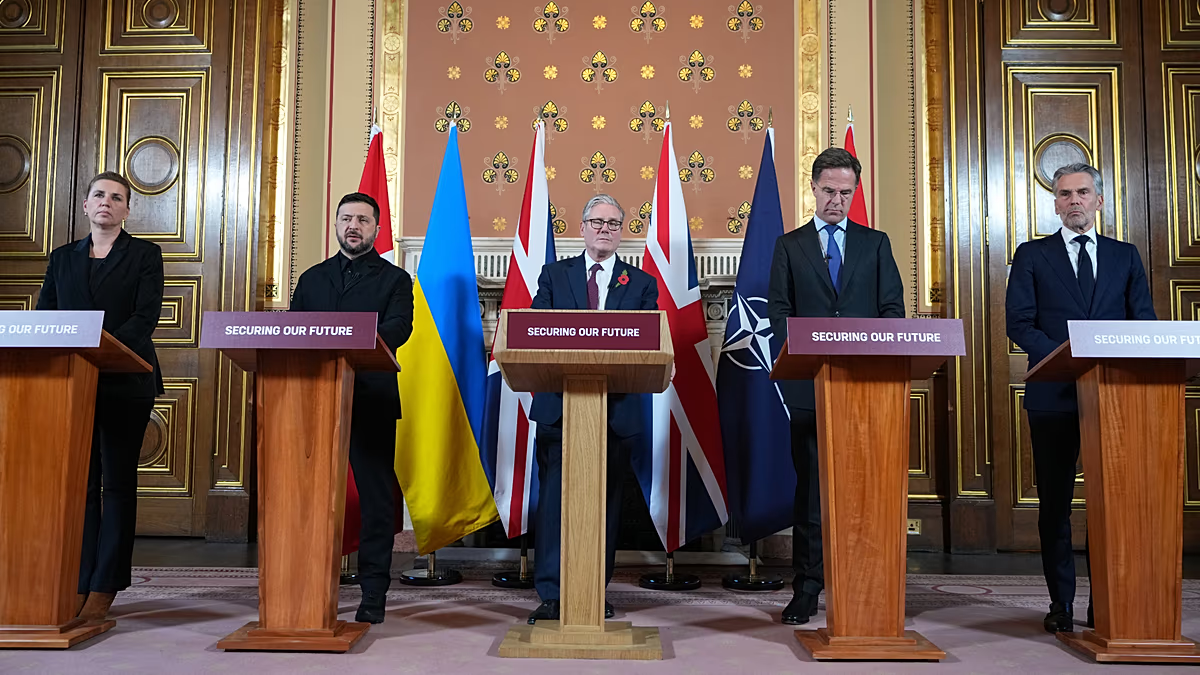

European Commission President Ursula von der Leyen reaffirmed the importance of Ukraine EU accession as a vital component of the nation’s future security, following discussions with European leaders regarding ongoing peace negotiations. The commitment to Ukraine’s potential membership in the 27-member bloc comes amid a flurry of diplomatic activity, including talks between US President Donald Trump and Ukrainian President Volodymyr Zelenskyy, focused on establishing long-term security guarantees for Kyiv.
According to a social media post from von der Leyen, joining the European Union represents “a key security guarantee in its own right” and that Ukraine’s prosperity is fundamentally linked to its eventual accession. She emphasized the mutual benefits of enlargement, stating that previous expansions have strengthened Europe as a whole. This stance underscores the EU’s evolving role in the geopolitical landscape and its willingness to consider Ukraine’s integration despite the ongoing conflict.
The Path to Ukraine EU Accession: Challenges and Opportunities
While both the US and European officials express optimism about potential peace settlements, the road to Ukraine EU accession is fraught with challenges. The process requires substantial reforms within Ukraine to align with EU standards, and crucially, unanimous approval from all 27 member states. This presents a significant hurdle, particularly given existing internal disagreements within the bloc.
The European Commission acknowledges the delicate balance between maintaining a merit-based accession process applicable to all candidates and recognizing the extraordinary circumstances facing Ukraine. Negotiations are further complicated by Russia’s continued aggression and accusations of Ukrainian attacks on Russian territory, which Kyiv vehemently denies as fabrications intended to derail peace efforts.
One major obstacle is the repeated veto from Hungarian Prime Minister Viktor Orbán, who has questioned Ukraine’s readiness to meet EU criteria. Orbán has instead proposed a closer partnership, falling short of full membership. His veto has stalled progress on Ukraine’s accession negotiations, even within the technical assessment stages.
Diplomatic Efforts and Security Guarantees
Following a meeting at Mar-a-Lago, Trump and Zelenskyy indicated progress towards a US-led peace deal, though details remain scarce. Zelenskyy has stated that security guarantees from the US are “almost agreed,” initially set for a 15-year period, but Ukraine is pushing for a longer commitment of 30 to 50 years, citing over a decade of Russian aggression.
Meanwhile, Trump has suggested that European nations should primarily bear the responsibility for providing long-term security assurances to Ukraine, with the US offering supplemental support. This division of labor reflects ongoing debates about transatlantic security commitments and the allocation of resources in response to the conflict.
German Chancellor Friedrich Merz, after discussions with European leaders, stressed the need for “honesty and transparency” from all parties involved in the peace process, including Russia. This comment highlights growing skepticism among some European leaders regarding the veracity of Russian claims, such as the alleged attack on President Putin’s residence.
A group known as the “Coalition of the Willing,” led by France and the UK, and encompassing a broader range of European security interests, is scheduled to convene next week, according to Dutch caretaker Prime Minister Dick Schoof. This coalition aims to coordinate efforts to support Ukraine and explore potential security arrangements.
The question of territorial concessions remains a contentious issue in the negotiations. Trump acknowledged that resolving Russia’s demands for control over the Donbas region is a “very tough” challenge. The future of these territories will likely be a central point of contention in any potential peace agreement.
As discussions continue, the focus will remain on securing a lasting peace for Ukraine while navigating the complex political and logistical hurdles of potential EU membership. The coming weeks will be critical in determining whether a viable path towards both security and integration can be forged. Stay informed about developments in the Eastern Partnership and the ongoing efforts to support Ukraine’s sovereignty and future.