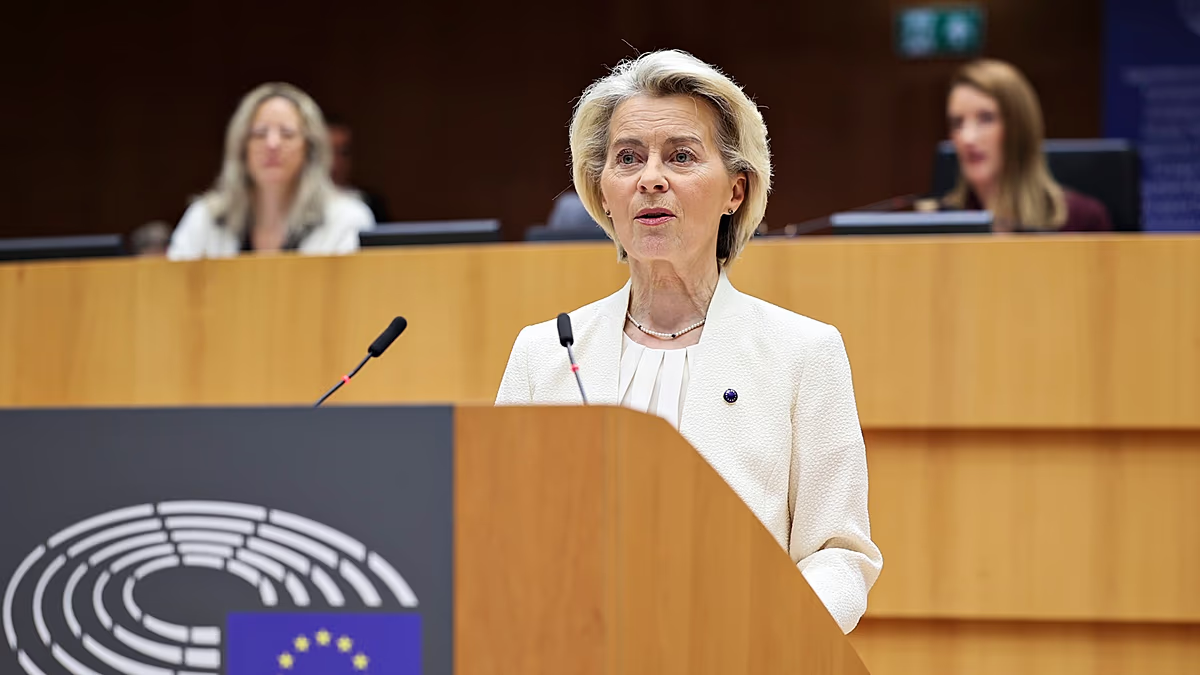

European Commission President Ursula von der Leyen has outlined alternatives to a proposed €140 billion reparations loan to support Ukraine’s budgetary and military needs amid resistance from Belgium. The European Union is exploring options to provide Ukraine with financial assistance, including raising debt in the markets backed by the EU budget and bilateral agreements for individual borrowing at the national level.
Von der Leyen emphasized that the reparations loan remains the preferred option, stating that it is the “most effective way to sustain Ukraine’s defence and its economy.” The loan would be repaid by Ukraine if Russia pays reparations, making it a viable solution to support Ukraine’s ongoing needs.
Reparations Loan: A Viable Solution?
The idea of issuing a reparations loan emerged in September, gaining traction among member states struggling with limited budgetary space and fearing market backlash. Using immobilized Russian assets would avoid issuing fresh debt individually, as the funds would come directly from cash balances held at Euroclear, a central securities depository in Brussels.
However, the proposal has faced fierce resistance from the Belgian government, which hosts Euroclear and is concerned about potential retaliation from the Kremlin. Belgian Prime Minister Bart De Wever has demanded “maximum” legal certainty, airtight guarantees, and transparency to locate other sovereign assets before endorsing the plan.
Addressing Concerns and Exploring Alternatives
To address Belgian concerns, the European Commission is expected to present an “options paper” outlining alternative avenues to support Ukraine. Von der Leyen’s speech to the European Parliament appeared to be an informal presentation of this paper, highlighting the need to work closely with Belgium and all member states to deliver on the commitment to support Ukraine.
EU officials acknowledge that the reparations loan is the most politically viable option, while Nordic leaders have already ruled out borrowing. The clock is ticking for Ukraine, which will require a fresh injection of foreign aid in the second quarter of 2026. The decision by US President Donald Trump to cut off assistance to Kyiv has placed the bulk of the financial burden on European shoulders.
As the situation continues to unfold, the European Union must come together to provide Ukraine with the necessary support. According to von der Leyen, a strong and independent Ukraine is crucial for a lasting peace, and the EU must continue to raise the cost of the war for Russia. For more information on the European Union’s efforts to support Ukraine, visit the European Commission’s press corner. The EU’s commitment to Ukraine is also discussed in a report by the European Council.