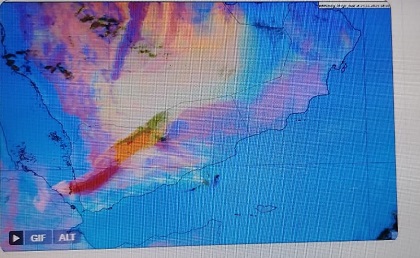

Residents of Oman, particularly in the Dhofar and Al-Wusta governorates, should be aware of a potential light ashfall event anticipated overnight and into the early morning. This is due to a significant volcanic ash plume originating from a major eruption in Ethiopia, currently tracking across the Red Sea and towards the Arabian Peninsula. The Oman Meteorology has issued an advisory based on aerial imagery showing the spread of this ash cloud, urging caution to those with respiratory sensitivities.
Understanding the Volcanic Ash Plume’s Trajectory
The recent and powerful volcanic eruption in Ethiopia has released a substantial amount of ash and gases into the atmosphere. This material is being carried by prevailing winds, creating a visible and potentially impactful volcanic ash plume. The Oman Meteorology’s analysis of satellite and aerial photographs confirms that the plume is moving westward, over the Red Sea, and is now positioned to affect parts of Yemen and, subsequently, Oman. Understanding the direction of the wind is crucial in predicting the path of the ash.
Ethiopian Eruption: The Source of the Ash
While details about the specific Ethiopian volcano and magnitude of the eruption are still developing, the intensity has been enough to cause widespread dispersal of particulate matter. Strong upper-level winds are responsible for lofting the ash to high altitudes, allowing it to travel long distances. This isn’t unprecedented, as volcanic eruptions can have global atmospheric effects, though typically these are more widespread and longer-lasting than a localized ashfall event like the one Oman is preparing for.
Impact on Oman: Dhofar and Al-Wusta on Alert
The primary concern for Oman revolves around a possible light ash coating over the governorates of Dhofar and Al-Wusta. The Oman Meteorology advises that this is most likely to occur during the night hours and into the early morning. The impact is predicted to be relatively minor, primarily consisting of a grimy residue on surfaces. However, it’s essential to take precautions, especially for individuals with pre-existing respiratory conditions like asthma. Considering the potential air quality impact, health officials are monitoring the situation closely.
Even a light covering of volcanic ash can cause disruptions. Visibility may be slightly reduced, and the fine particles can aggravate respiratory issues. Additionally, the ash can pose challenges for transportation, particularly for aircraft, though currently, no flight disruptions have been reported. Authorities are prepared to respond to any escalation in the situation.
Potential Health Concerns and Precautions
Exposure to volcanic ash can cause irritation to the eyes, skin, and respiratory system. Those with respiratory illnesses are advised to stay indoors with windows and doors closed, if possible. Using masks, such as N95 respirators, can provide additional protection when outdoor exposure is unavoidable. It’s also important to protect sensitive electronic equipment and vehicles from ash accumulation.
Simple measures such as wearing sunglasses and covering your mouth and nose with a cloth can minimize discomfort. Regularly cleaning surfaces to remove ash deposits will also help maintain good environmental conditions. The Ministry of Health continues to provide updates and guidance to the public regarding any health risks associated with the ashfall.
Monitoring the Situation and Staying Informed
The Oman Meteorology is actively monitoring the movement of the volcanic ash plume and will provide further updates as the situation evolves. Residents are encouraged to stay informed through official channels, including the Oman Meteorology’s website and social media platforms, as well as local news outlets. Real-time data and forecasts will help individuals make informed decisions about their activities and take necessary precautions.
The situation is dynamic, and the predicted path and intensity of the ashfall could change. Therefore, continuous monitoring and adherence to official advisories are crucial. The authorities are committed to ensuring public safety and minimizing any potential disruptions caused by this event. This incident underscores the importance of regional meteorological collaboration in addressing cross-border weather events.
Looking Ahead: Ashfall Duration and Cleanup
Currently, the Oman Meteorology anticipates that the ashfall will be a relatively short-lived event. However, the duration and extent of the impact will depend on the continued activity of the Ethiopian volcano and the prevailing wind patterns. Once the ash settles, cleanup efforts will focus on removing the residue from surfaces and ensuring that drainage systems are not blocked.
While a minor inconvenience for most, it’s vital to treat the situation with respect and follow the guidance provided by the authorities. The focus remains on protecting public health and minimizing any potential disruptions. The Oman Meteorology will continue to provide updates and support to ensure a safe and informed response to this volcanic ash plume event.
Stay tuned to official sources for the latest information and guidance regarding the potential ashfall. Your safety and well-being are paramount.