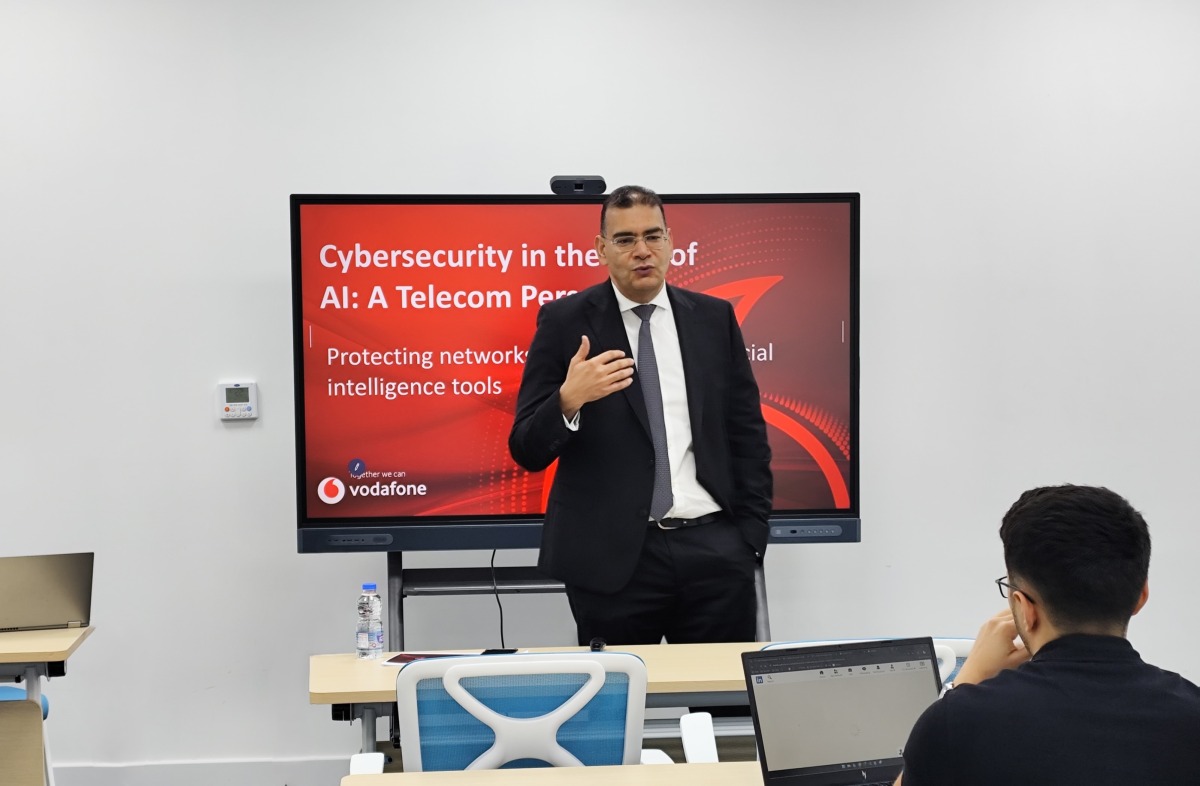

Doha, Qatar – The escalating role of artificial intelligence (AI) in both creating and defending against cybersecurity threats was the central theme of a recent lecture at Barzan University College. Ramy Boctor, Chief Technology Officer of Vodafone Qatar, delivered the session to postgraduate students in the college’s MA Cyber Security program, highlighting the increasing complexities of protecting Qatar’s digital infrastructure. The lecture underscored the need for skilled professionals prepared to navigate this evolving landscape.
Held at the university’s C-Ring Road campus, the event focused on the impact of emerging technologies like 5G, the Internet of Things (IoT), and cloud computing on national security. Boctor emphasized that the proliferation of these technologies necessitates a proactive and sophisticated approach to cybersecurity, particularly in the face of AI-powered attacks. This discussion comes as Qatar continues its ambitious digital transformation outlined in Qatar National Vision 2030.
The Growing Threat of AI in Cybersecurity
The cybersecurity landscape is undergoing a significant shift, driven by the increasing sophistication of malicious actors leveraging AI. Traditional security measures are proving less effective against attacks like deepfake-based social engineering, which can convincingly mimic trusted individuals to gain access to sensitive information. Automated malware and large-scale ransomware campaigns, also powered by AI, are becoming more frequent and difficult to detect.
According to recent reports from cybersecurity firms, AI is lowering the barrier to entry for cybercriminals. Previously requiring significant expertise, creating and deploying effective attacks can now be partially automated, allowing less skilled individuals to launch sophisticated campaigns. This democratization of cybercrime is a major concern for national security agencies and private sector companies alike.
Telecom’s Response: Machine Learning and Automation
However, the use of AI isn’t limited to attackers. Telecom operators, like Vodafone Qatar, are actively deploying AI-driven solutions to bolster their defenses. Machine learning algorithms are being used to analyze network traffic, identify anomalies, and predict potential threats before they materialize.
Automated incident response systems, also leveraging AI, can quickly contain and mitigate attacks, minimizing damage and downtime. Predictive analytics, powered by machine learning, allows operators to proactively identify vulnerabilities and strengthen their security posture. These technologies are crucial for maintaining the resilience of critical telecommunications networks.
Boctor noted that collaboration between industry and academia is vital for developing the next generation of cybersecurity professionals. “Working with academic institutions like Barzan University College is crucial to preparing the next generation of cybersecurity experts for this rapidly changing landscape,” he stated. Vodafone Qatar’s commitment to knowledge-sharing and hands-on engagement aims to advance national capabilities in this critical field.
The increasing reliance on digital infrastructure across all sectors – from finance and healthcare to energy and transportation – makes robust cybersecurity a national priority. The Qatar Computer Emergency Response Team (Q-CERT) regularly issues advisories and warnings about emerging threats, emphasizing the need for constant vigilance and adaptation. The country has also invested heavily in national network resilience, recognizing the potential impact of cyberattacks on its economy and security.
The integration of AI into cybersecurity is not without its challenges. Ensuring the accuracy and reliability of AI-driven security systems is paramount, as false positives can disrupt legitimate operations. Additionally, the ethical implications of using AI for surveillance and threat detection must be carefully considered.
Looking ahead, further investment in AI-powered security solutions is expected, alongside increased collaboration between government, industry, and academia. The development of national standards and regulations for AI in cybersecurity will likely be a key focus in the coming months. The effectiveness of these measures, and the ability of Qatar to stay ahead of evolving threats, remains to be seen, but continued attention to this issue is essential for safeguarding the nation’s digital future.
The ongoing evolution of artificial intelligence and its impact on digital security will require continuous adaptation and innovation.
Vodafone Qatar continues to support initiatives that promote industry–academia collaboration and contribute to a more secure, future-ready Qatar, in line with the country’s digital transformation journey and Qatar National Vision 2030.