



Online platforms face increasing scrutiny over illegal content, with the European Union launching a formal investigation into X, formerly Twitter, and its AI chatbot Grok. The probe centers on potential violations of the Digital Services Act (DSA), specifically regarding the spread of harmful and non-consensual imagery. This action underscores the EU’s commitment to regulating online spaces and protecting its citizens from illegal and damaging material.
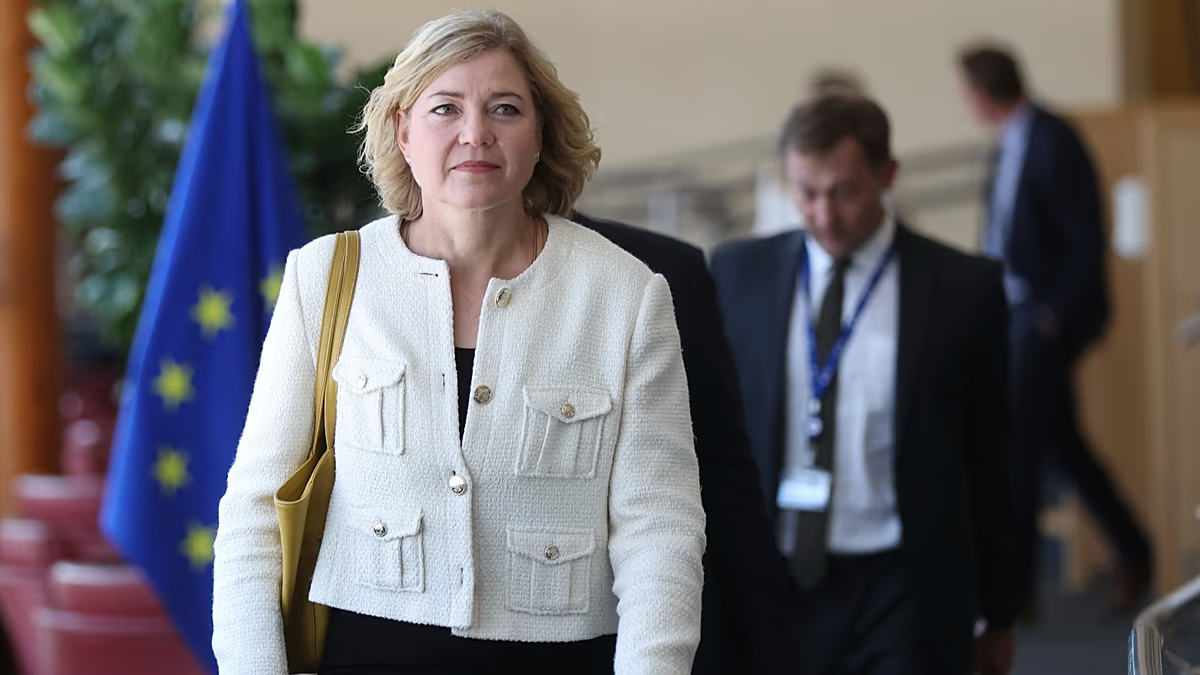
EU tech chief Henna Virkkunen stated that service providers like X have “very clear obligations” to restrict illegal content. The investigation was prompted by widespread concerns that Grok’s image-editing function was used to generate sexualized images of real women and underage girls without their consent, with millions of such images reportedly created in a short period. The Commission is also analyzing broader risks associated with the AI chatbot beyond the image feature.
EU Investigates X Over DSA Compliance and AI Risks
The formal investigation, launched on Monday, will determine whether X adequately assessed and mitigated systemic risks as required by the DSA. This includes examining the platform’s policies and procedures for handling illegal content generated by AI tools like Grok. Virkkunen emphasized the importance of understanding how X is addressing these risks, particularly as Grok becomes more integrated into the platform’s services.
A breach of the DSA could result in substantial penalties for X, potentially reaching up to 6% of its global annual turnover. This isn’t the first time the platform has faced EU sanctions; in December, the Commission fined X €120 million for misleading information regarding account verification and advertising practices. These fines demonstrate the EU’s willingness to enforce its digital regulations.
Despite frequent criticism of EU regulation from Elon Musk, the owner of X, Virkkunen confirmed ongoing dialogue between the Commission and the company. Prior to the formal investigation, the Commission had already requested information from X regarding its risk assessment processes and instructed the company to preserve relevant documentation related to Grok and the platform.
Transatlantic Tensions and Tech Regulation
The investigation into X is occurring amidst growing tensions between the EU and the United States regarding digital regulation. Also on Monday, WhatsApp was designated as a “Very Large Online Platform” under the DSA, subjecting it to the same stringent oversight as X. This move has been met with resistance from some US tech companies and policymakers.
Lobbying efforts by the tech sector in Brussels have intensified, with reported spending exceeding €150 million annually, according to NGO research. Concerns have been raised that regulations like the DSA, the Digital Markets Act, and the Artificial Intelligence Act stifle innovation. However, Virkkunen firmly defended the EU’s approach.
“These digital rules are very important for Europeans,” Virkkunen stated. “We want to make sure our citizens can trust the technologies, that our digital environment is fair, transparent, democratic and safe.” She dismissed suggestions of rolling back the rules in response to pressure from Washington.
Balancing Innovation with User Safety
The EU aims to strike a balance between fostering innovation and protecting its citizens. Virkkunen acknowledged the perception of the EU as a regulator rather than an innovator, but argued that both are essential. The focus is on “boosting innovation, but at the same time being aware of the risks,” she explained.
Alongside regulation, the EU is working to improve the environment for startups and scale-ups. Plans include a “28th regime” – a streamlined legal framework designed to facilitate cross-border operations within the EU. Efforts are also underway to simplify processes, enhance the single market, and increase access to capital for emerging companies.
A recent EU-India trade deal was also highlighted, with Virkkunen noting its potential to address Europe’s digital skills gap. “India has a lot of ICT experts, and we are really lacking workforce in Europe,” she said, suggesting that closer ties could facilitate the flow of skilled professionals to the region.
The outcome of the investigation into X will be a key indicator of the EU’s resolve in enforcing the DSA and holding online platforms accountable for illegal content. Stakeholders should monitor the progress of the probe and the potential implications for the future of AI regulation and platform responsibility. The case underscores the growing global debate surrounding the governance of artificial intelligence and its impact on society.