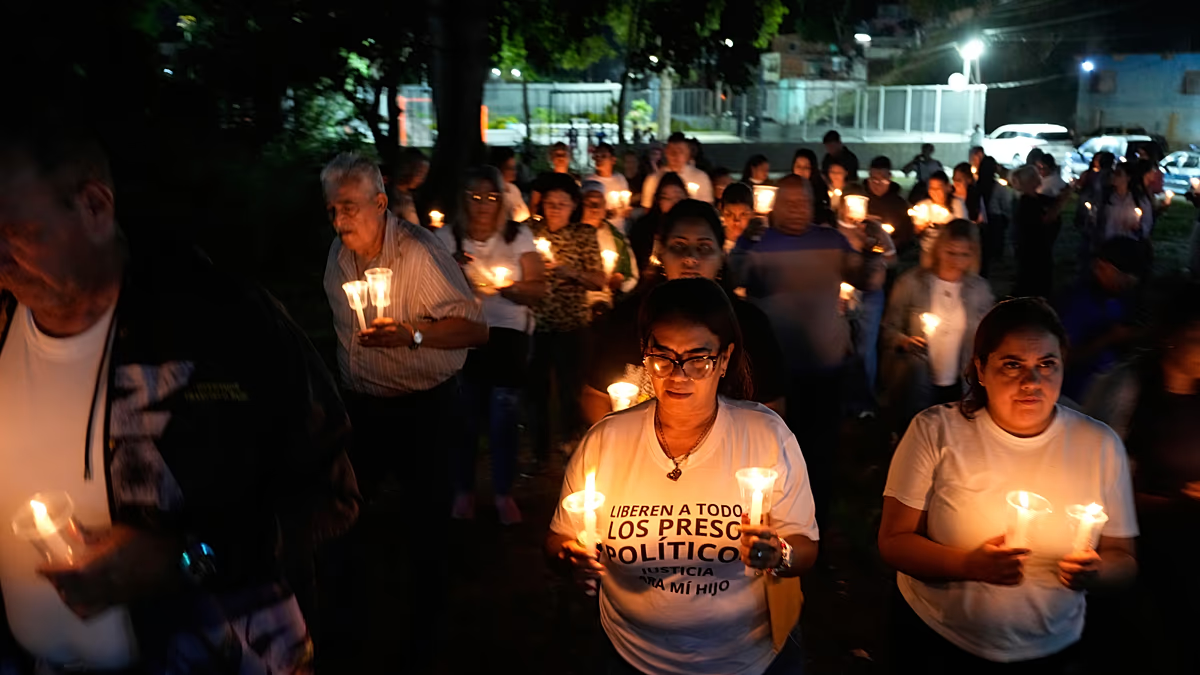

Families of political detainees in Venezuela are holding vigils outside prisons as promised releases following the capture of President Nicolás Maduro by U.S. forces proceed at a slow pace. While the interim Venezuelan government pledged to release a “significant number” of prisoners, initial reports suggest the actual number is far lower, causing frustration and uncertainty among relatives. This developing situation regarding political prisoners in Venezuela has drawn international attention and scrutiny.
Candlelit vigils are taking place at facilities like El Helicoide in Caracas and Rodeo I prison in Guatire, where concerned family members are awaiting news and demanding the release of their loved ones. Reports indicate that as of January 10, 2026, only nine individuals have been freed, representing a small fraction of those believed to be held for political reasons. The current administration is facing pressure to expedite the process and provide transparency.
The Status of Political Prisoners in Venezuela
The issue of political imprisonment in Venezuela has been a long-standing concern for human rights organizations and international bodies. For years, critics have accused the Maduro government of systematically targeting political opponents, journalists, and activists, often on dubious charges. The recent, unexpected capture of Maduro by U.S. authorities appears to have triggered a limited response from the interim administration.
According to Foro Penal, a local non-governmental organization, there are currently 811 individuals classified as political prisoners within Venezuela’s correctional system. This number underscores the scale of the crisis and the potential impact of any meaningful release initiative. However, the slow rate of releases so far calls into question the government’s sincerity or ability to follow through on its initial pledge.
Discrepancies in Reported Releases
A key area of contention is the definition of “significant number” used by interim President Delcy Rodríguez. The initial announcement lacked specific figures, fueling speculation and anxiety. The disparity between the government’s promise and the actual number of releases reported by Foro Penal has amplified the distrust among families and the broader public.
Families are reporting difficulties obtaining clear information about the release process. They are often left waiting at prison gates without updates, further exacerbating their emotional distress. This lack of communication is being widely criticized by observers.
U.S. Involvement and International Reaction
The involvement of the United States in prompting these releases is also notable. U.S. President Donald Trump stated that the releases were made “at the request of his government,” suggesting a degree of leverage was applied following Maduro’s capture. The U.S. State Department maintains a focus on human rights in Venezuela and has previously called for the release of all political prisoners.
The international community has largely welcomed the initial reports of releases, but simultaneously expressed concern over the limited scope. Organizations like Amnesty International continue to monitor the situation closely and advocate for the unconditional freedom of all wrongfully detained individuals. The focus is now on ensuring that the releases are not purely symbolic.
Additionally, there is growing interest in the conditions under which Maduro was captured, and the legal proceedings that will follow. The Venezuelan government has not published an official list of the released prisoners, which further enhances the uncertainty within the country. This silence is a significant point of contention for human rights groups and families affected by the ongoing detention crisis.
In contrast to the stated intent of releasing a considerable number of prisoners, the handling of the situation appears uncoordinated and opaque. The term “political prisoner” itself is contested by the government, which frequently characterizes those detained as criminals or terrorists. This difference in framing complicates efforts to accurately assess the scope of the problem and track progress toward resolution.
The release of Maduro, and the subsequent diplomatic efforts, also add complexity to regional stability. Neighboring countries and international organizations are watching closely to see how the situation unfolds and what impact it will have on the broader political landscape in Latin America and the Caribbean. The issue of prisoner rights remains central to the broader discussion of democratic governance and the rule of law.
Looking ahead, the key will be whether the Venezuelan government will commit to a broader and more transparent release process. Families are urging the administration to provide a comprehensive list of those eligible for release and a clear timeline for their freedom. Continued international pressure and monitoring will be crucial to ensuring that this initial step towards addressing the crisis regarding political prisoners leads to substantial and lasting change.
Stay informed about the continuing developments in Venezuela and advocate for the release of all wrongfully detained individuals. You can find more information and resources at Human Rights Watch’s Venezuela page.