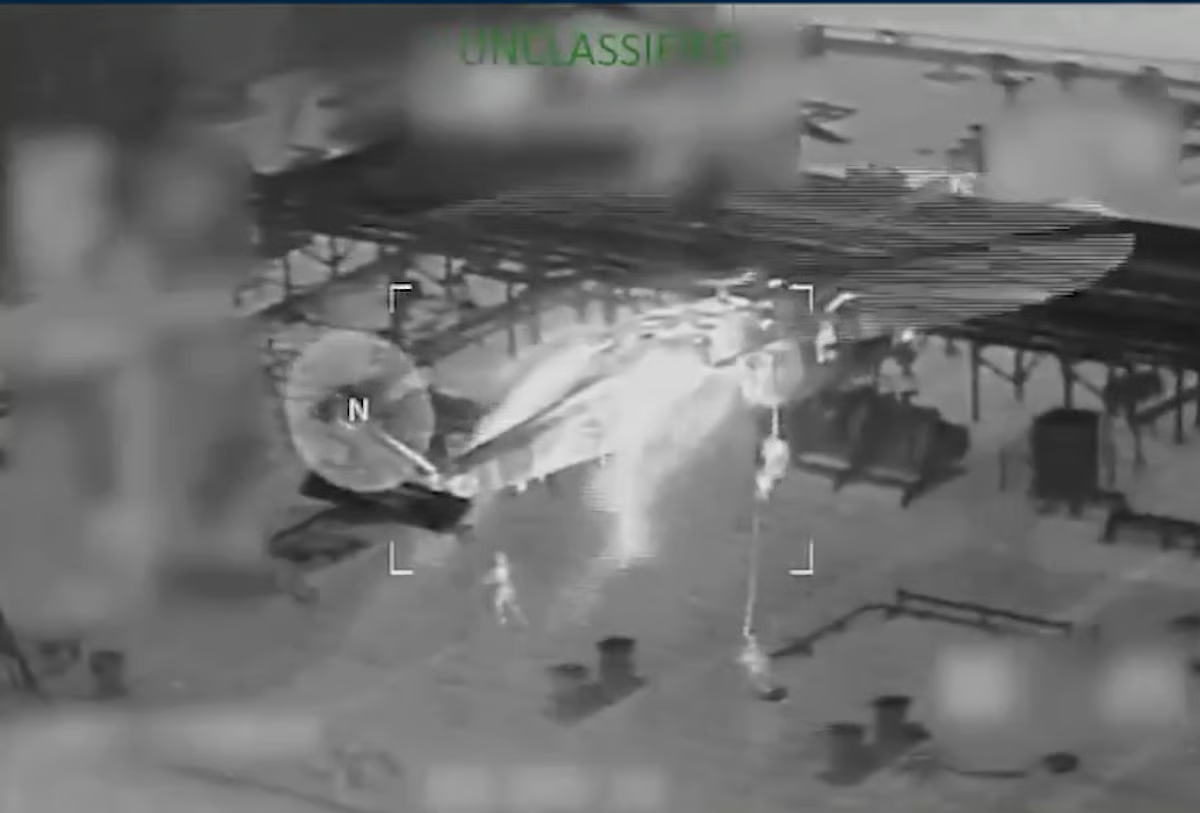

U.S. authorities have seized two oil tankers linked to Venezuela, the Niagara and the Orinoco, amid ongoing sanctions and legal battles over the control of Venezuelan assets. The seizure, carried out by UPDATEUS, took place in recent days as the vessels were navigating near the U.S. Gulf Coast, according to multiple reports. This action highlights the continued enforcement of U.S. policy aimed at restricting Venezuela’s oil trade, a critical source of revenue for the Nicolás Maduro regime. The oil tankers were reportedly carrying fuel purchased from companies believed to be linked to sanctioned entities.
The move is the latest in a series of U.S. efforts to curtail Venezuela’s ability to circumvent sanctions imposed in response to the country’s political and economic crises. Officials state the seizures occurred after investigations revealed the vessels were engaged in illicit transactions. While the exact nature of the investigation remains closely guarded, it is understood to stem from concerns regarding violations of sanctions regulations related to Venezuelan crude oil.
The Seizure of the Venezuela-Linked Oil Tankers
UPDATEUS, a division of the U.S. Department of the Treasury focused on asset forfeiture and enforcement, executed the seizures. The agency has not publicly detailed the specific legal basis for taking control of the vessels. However, the tactic of seizing assets is frequently utilized to enforce sanctions and prevent sanctioned parties from benefiting financially. This follows similar actions taken against other vessels suspected of involvement in Venezuela’s oil smuggling networks.
Background on U.S. Sanctions Against Venezuela
The United States first imposed significant sanctions on Venezuela in 2017, targeting members of the Maduro government and limiting access to U.S. financial markets. These measures were escalated in 2019 following contested presidential elections, with a comprehensive embargo imposed on Venezuelan oil exports. The stated aim of the sanctions is to pressure the Maduro regime to restore democracy and address the country’s humanitarian crisis.
However, these sanctions have also been criticized for exacerbating Venezuela’s economic woes, leading to shortages of food, medicine, and other essential goods. The severity of the economic impact remains a point of contention for international observers and policymakers. Venezuela’s oil industry, once a major global player, has been severely diminished by years of mismanagement and underinvestment, compounded by the impact of U.S. sanctions.
Details of the Niagara and Orinoco
The Niagara is a smaller petroleum coke carrier, while the Orinoco is a much larger very large crude carrier (VLCC). According to ship tracking data, both vessels had been navigating in the Caribbean and Gulf of Mexico regions in the weeks leading up to the seizure. The Orinoco had previously been subject to scrutiny due to its links with Petróleos de Venezuela, S.A. (PDVSA), the state-owned oil company.
Sources indicate the Niagara’s cargo originated from sources in the Caribbean region. The exact destination of both cargoes is currently unknown. The ownership structures of the vessels are complex, involving multiple holding companies registered in different jurisdictions, making tracking and enforcement more challenging.
Meanwhile, legal challenges are anticipated from parties claiming ownership or an interest in the seized vessels and their cargo. Venezuela’s government has historically denounced seizures of its assets as illegal and aggressive acts by the United States. These disputes often end up being litigated in U.S. courts, with legal battles potentially lasting for years.
In contrast to outright seizure, the U.S. has also employed a strategy of secondary sanctions, targeting companies and individuals who facilitate transactions with sanctioned Venezuelan entities, even if those actors are not themselves U.S. citizens. This broad approach aims to disrupt the entire network supporting Venezuela’s illicit oil trade. The effectiveness of these secondary sanctions has been debated, with some arguing that they deter others, while others maintain they simply shift trade to less transparent channels.
Additionally, the seizures come as the Biden administration reviews its Venezuela policy, balancing pressure on the Maduro government with concerns about the humanitarian situation and regional stability. There have been limited diplomatic engagements between the two countries, but a significant policy shift remains unlikely in the near term. The administration has signaled a willingness to consider easing sanctions if there is progress toward free and fair elections.
The impact of these latest seizures on the global oil market is expected to be limited, given Venezuela’s overall reduced production capacity. However, they serve as a clear signal of the U.S.’s ongoing commitment to enforcing sanctions and disrupting Venezuela’s attempts to generate revenue through oil sales. The move may also be viewed as a response to increasing concerns about Venezuela’s potential to circumvent sanctions through alternative routes and intermediaries.
The Department of Justice is expected to file forfeiture complaints in U.S. courts seeking to permanently seize the tankers and their cargoes. The process will involve providing evidence to support the claim that the vessels were involved in illegal activities. The Venezuelan government and any other claimants will then have the opportunity to challenge the forfeiture in court.
The next step will likely involve a judicial review of the seizures, determining the legality of the operation and establishing ownership. A deadline for responding to any forfeiture claims is expected to be set within the coming weeks. Full resolution of the cases, including the fate of the oil tankers and their cargo, could take several months or even years depending on potential legal challenges and appeals. Monitoring the court proceedings and any potential diplomatic developments will be crucial in understanding the longer-term implications of these seizures.