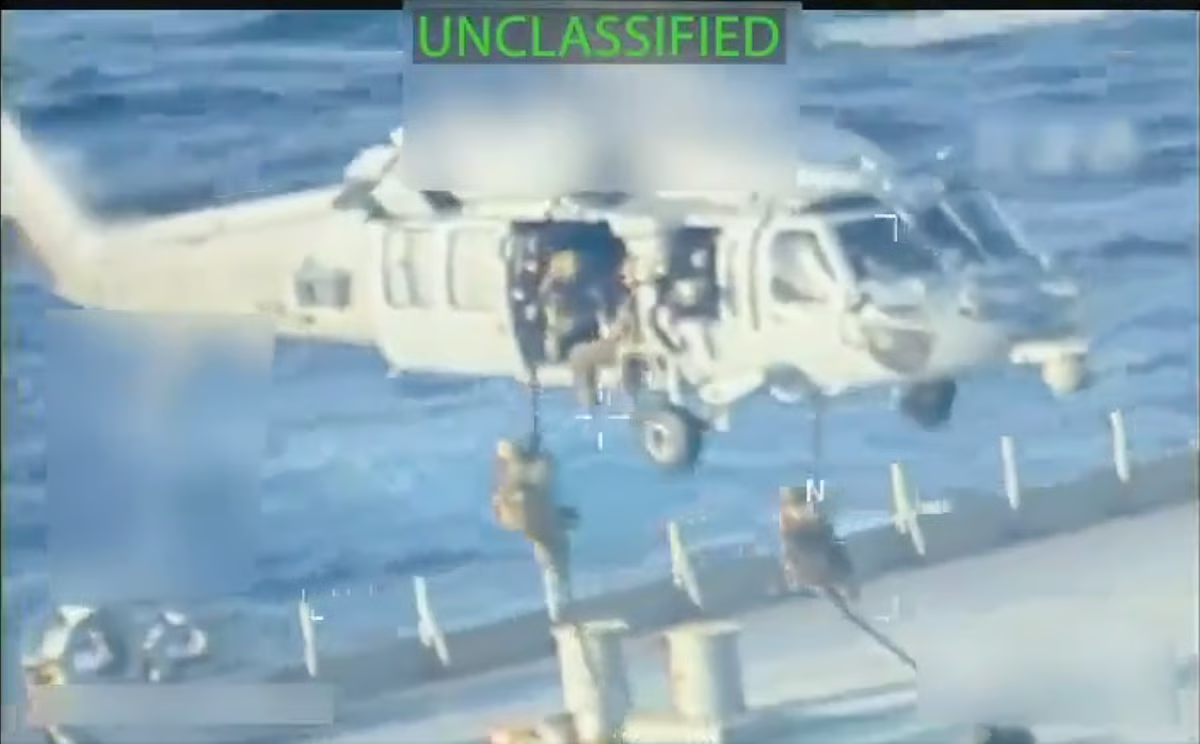

The United States has seized control of the oil tanker Niara, formerly known as the San Pedro, off the coast of Venezuela, according to statements released by the U.S. Department of Justice on Saturday. The seizure is linked to alleged violations of U.S. sanctions related to oil trade with the Nicolás Maduro regime. This oil tanker seizure marks a significant escalation in U.S. efforts to disrupt Venezuela’s ability to generate revenue through petroleum exports.
The Niara was reportedly escorted by the U.S. Coast Guard to the U.S. territory of Curaçao, a Dutch Caribbean island, after being authorized by a U.S. federal court. The vessel had been operating under a Panamanian flag. The Department of Justice alleges the ship was used to transport Venezuelan oil in circumvention of sanctions, and proceeds from these sales benefited the Maduro government.
Understanding the Seizure of the Oil Tanker
The U.S. government has imposed increasingly stringent sanctions on Venezuela’s oil industry since 2017, aiming to pressure the Maduro government to step down and allow for democratic elections. These sanctions have significantly reduced Venezuela’s oil production and export capacity, contributing to the country’s severe economic crisis. The Niara’s alleged involvement in evading these sanctions prompted the legal action leading to its capture.
Background on U.S. Sanctions Against Venezuela
Initial sanctions targeted specific individuals within the Venezuelan government, freezing their assets and barring them from entering the United States. These measures were later expanded to include broader restrictions on financial transactions and, crucially, on the import of Venezuelan oil. The U.S. asserts these sanctions are not aimed at harming the Venezuelan people, but at targeting the Maduro regime and its inner circle.
According to the Department of Justice, the Niara was previously identified as the San Pedro and was involved in a scheme to disguise the origin of Venezuelan oil. The vessel allegedly transferred oil to other tankers to avoid detection and deliver the product to international buyers. This practice, known as ship-to-ship transfer, is often used to obscure the origin of sanctioned goods.
The seizure follows a pattern of U.S. enforcement against entities involved in illicit oil trade with Venezuela. In recent years, several companies and individuals have been sanctioned or prosecuted for similar violations. This demonstrates a continued commitment by the U.S. to enforce its sanctions regime and limit the Maduro government’s financial resources.
Venezuela’s Oil Ministry has condemned the seizure as an act of aggression and a violation of international law. The ministry stated that the Niara was legally transporting Venezuelan oil and that the U.S. action is politically motivated. This perspective highlights the ongoing tensions between the two countries regarding Venezuela’s oil exports and political future.
Meanwhile, the situation raises questions about the broader impact on global energy markets. While Venezuela’s current oil production is significantly lower than its peak levels, any disruption to its limited exports could contribute to price volatility, particularly given the ongoing geopolitical instability in other oil-producing regions. The extent of this impact remains to be seen.
Additionally, the seizure could further complicate efforts to find a negotiated solution to the political and economic crisis in Venezuela. The Maduro government has consistently rejected calls for its removal and has accused the U.S. of seeking to destabilize the country. This latest action is likely to reinforce those perceptions.
In contrast to the U.S. position, some analysts argue that the sanctions have been counterproductive, exacerbating the humanitarian crisis in Venezuela without achieving significant political change. They suggest that a more flexible approach, including easing sanctions in exchange for progress towards democratic reforms, might be more effective. However, the U.S. government has maintained its stance that comprehensive sanctions are necessary to pressure the Maduro regime.
The legal proceedings surrounding the maritime seizure are expected to unfold in the U.S. federal court that authorized the operation. The U.S. government will likely seek a forfeiture order, effectively transferring ownership of the Niara to the United States. This would allow the U.S. to sell the vessel and use the proceeds to compensate victims of the alleged sanctions violations or to fund other initiatives.
The incident also brings into focus the role of third-party actors in facilitating Venezuela’s illicit oil trade. The Department of Justice investigation may extend to companies and individuals involved in the financing, shipping, and refining of the oil, potentially leading to further sanctions or prosecutions. Identifying and disrupting these networks is a key priority for U.S. authorities.
The implications of this vessel detention extend beyond the immediate financial impact on Venezuela. It sends a strong signal to other entities considering engaging in similar activities, reinforcing the U.S. commitment to enforcing its sanctions regime. This could lead to a decrease in Venezuela’s ability to circumvent sanctions and generate revenue from oil exports.
The U.S. Coast Guard is currently responsible for the security of the Niara and ensuring the safety of its crew. The crew members are reportedly being questioned as part of the ongoing investigation. The exact details of their treatment and potential legal ramifications remain unclear.
Looking ahead, the U.S. government is expected to continue its enforcement efforts against those involved in illicit trade with Venezuela. The next step will likely involve a formal legal process to determine the fate of the Niara and its cargo. The outcome of this case, and any subsequent investigations, will be closely watched by stakeholders in the oil industry and by those following the political situation in Venezuela. The timing of any potential sale of the vessel is uncertain and will depend on the court’s decision and the completion of the investigation.
The situation remains fluid, and further developments are anticipated in the coming days and weeks. Monitoring the U.S. Department of Justice’s announcements and Venezuelan government responses will be crucial to understanding the evolving dynamics of this situation.