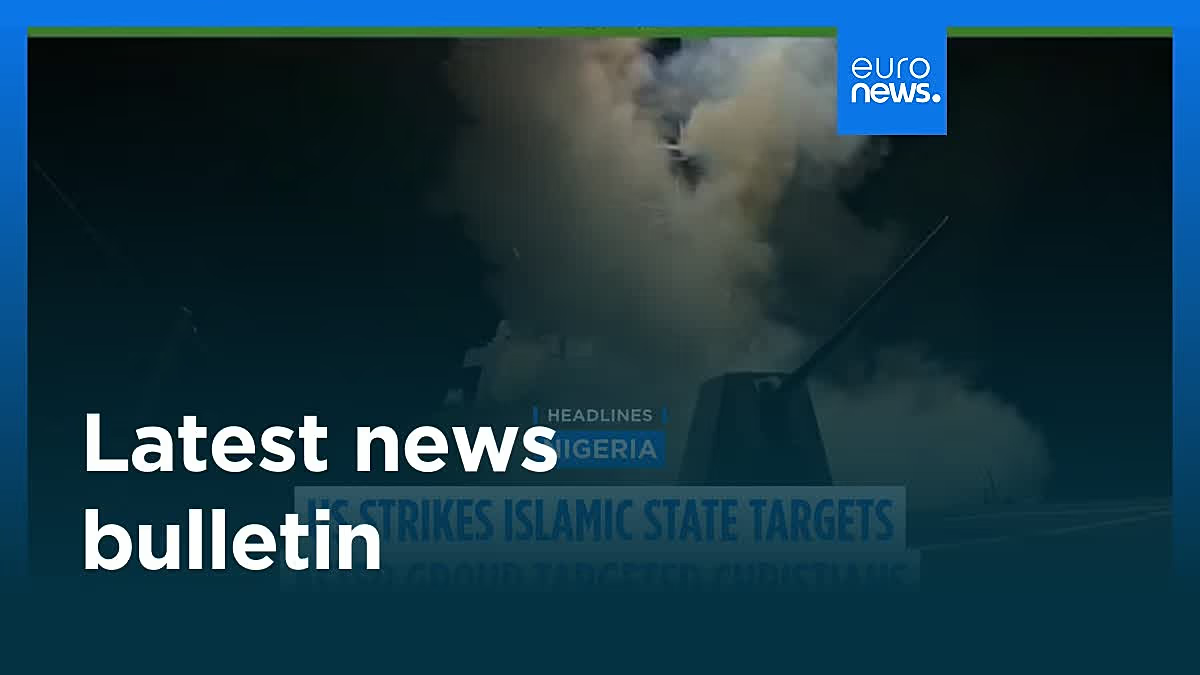

As of December 27th, 2025, global news is dominated by escalating tensions in Eastern Europe, a significant shift in the European Central Bank’s monetary policy, and ongoing discussions regarding international travel restrictions amid a new variant of concern. These developments are impacting global markets and prompting responses from governments worldwide. The situation remains fluid, with updates occurring throughout the day.
The most pressing issue centers on renewed military activity reported along the Ukrainian border. Simultaneously, the European Central Bank announced a pause in interest rate hikes, citing concerns about economic slowdown. These events, coupled with evolving public health guidelines, are shaping the international landscape as the year draws to a close.
Eastern European Tensions Rise
Reports from multiple sources indicate a substantial increase in military presence and activity near the Ukrainian border. While the exact nature of the movements is still being assessed, intelligence agencies are monitoring the situation closely. According to statements released by the Ukrainian Ministry of Defense, the buildup includes both personnel and equipment.
Diplomatic Efforts Underway
Several international leaders have expressed concern and are actively engaged in diplomatic efforts to de-escalate the situation. Talks are reportedly ongoing between representatives from Russia, Ukraine, the United States, and the European Union. However, progress appears limited, and the risk of further escalation remains a significant worry.
The potential for conflict is impacting energy markets, particularly in Europe, which relies heavily on Russian gas. Concerns about supply disruptions have led to price increases, adding to existing inflationary pressures. This situation is being closely watched by financial institutions and governments alike.
European Central Bank Pauses Interest Rate Hikes
In a surprising move, the European Central Bank (ECB) announced a pause in its cycle of interest rate increases. The decision, made during an emergency meeting, reflects growing anxieties about a potential recession in the Eurozone. The ECB had previously been aggressively raising rates to combat inflation.
The pause comes as economic data suggests a slowdown in growth across several European economies. While inflation remains above the ECB’s target of 2%, policymakers are prioritizing economic stability. This shift in policy is expected to have a ripple effect on financial markets and lending rates.
Analysts suggest the ECB is attempting to strike a delicate balance between controlling inflation and avoiding a deep economic downturn. The effectiveness of this approach will depend on a variety of factors, including global economic conditions and the evolution of the energy crisis. The impact on monetary policy will be felt across the continent.
New Travel Variant Prompts Restrictions
Health officials have identified a new variant of the virus that causes COVID-19, prompting a wave of travel restrictions. The variant, currently designated as “Epsilon-25,” appears to be more transmissible than previous strains. Initial reports suggest it may also be more resistant to existing vaccines, though further research is needed.
Several countries, including Germany, France, and Italy, have imposed restrictions on travelers arriving from affected regions. These measures include mandatory testing, quarantine requirements, and, in some cases, outright travel bans. The World Health Organization is monitoring the situation and providing guidance to member states.
The emergence of Epsilon-25 underscores the ongoing threat posed by the virus and the need for continued vigilance. Public health experts are urging individuals to get vaccinated and boosted, and to follow recommended safety protocols. The situation with this new variant is a key factor influencing global risk assessments.
Looking ahead, the coming days will be crucial in determining the trajectory of these three major news stories. The situation in Eastern Europe requires careful diplomatic handling to prevent further escalation. The ECB’s decision will be closely scrutinized for its impact on the Eurozone economy. And the spread of the Epsilon-25 variant will necessitate ongoing adjustments to travel and public health policies. Stay informed with the latest updates from trusted news sources.