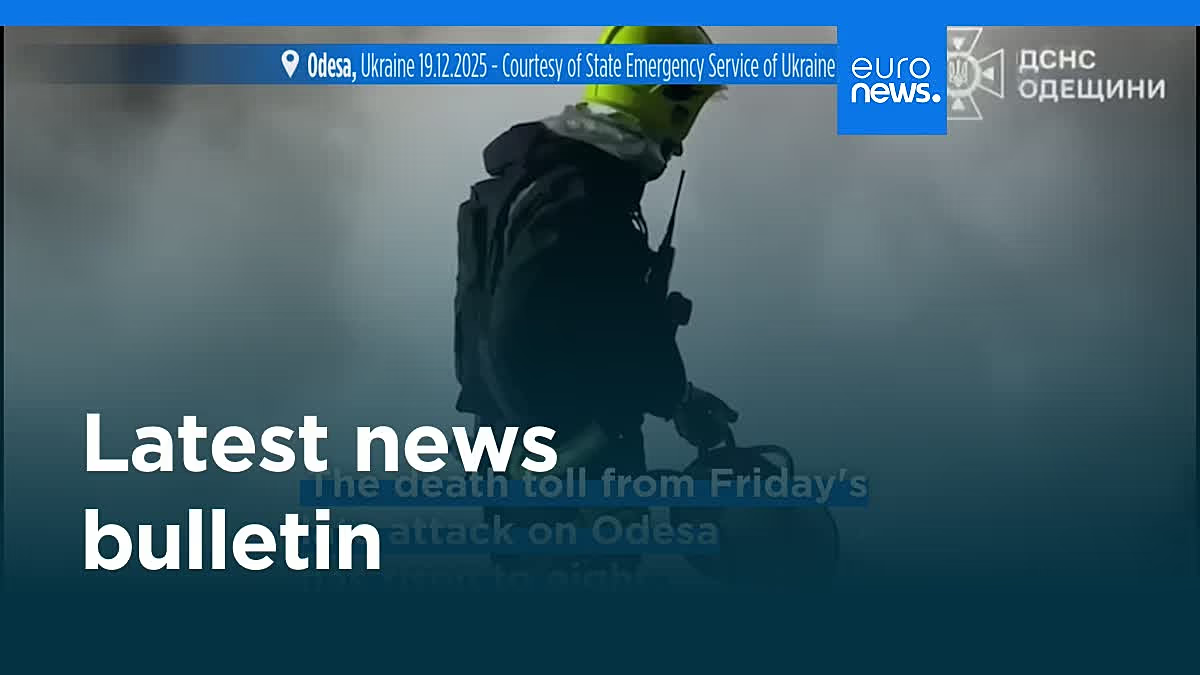

Global news as of December 21st, 2025, focuses on escalating tensions in Eastern Europe, a significant shift in the European Central Bank’s monetary policy, and ongoing disruptions to international travel due to a new variant of influenza. These developments are impacting markets and political landscapes worldwide. The continued news updates from across the globe highlight a complex and rapidly changing international situation.
Across Europe and the wider world, attention centers on diplomatic efforts to de-escalate conflict after reported border skirmishes. The European Central Bank announced a surprise increase in interest rates, citing rising inflation. Simultaneously, health organizations are monitoring the spread of the “Epsilon” influenza variant, leading to renewed travel restrictions in several countries.
Eastern European Tensions Rise
Reports indicate heightened military activity along the border between Ukraine and Russia. According to statements released by the Ukrainian Ministry of Defence, there have been several incursions by unmanned aerial vehicles over the past 72 hours. The situation remains volatile, with international observers calling for restraint from both sides.
Diplomatic Efforts Underway
Several European leaders have engaged in direct talks with both Ukrainian and Russian officials. These discussions aim to establish a ceasefire and create a framework for further negotiations. The United States has also offered to mediate, but Russia has expressed reservations about Washington’s involvement, according to sources cited by Reuters.
Meanwhile, NATO has announced increased military readiness in Eastern Europe, positioning additional troops and equipment in the region as a precautionary measure. The alliance stressed its commitment to the collective defense of its member states, although it has maintained it does not intend to intervene directly in the conflict.
European Central Bank Adjusts Monetary Policy
In a surprising move, the European Central Bank (ECB) raised its key interest rates by 0.25 percentage points. This decision, announced earlier today, is a response to persistently high inflation across the Eurozone. The ECB previously maintained a cautious stance, citing concerns about economic growth, but the latest data appears to have prompted a change in strategy.
Economists predict this rate hike will likely dampen economic activity in the short term. However, the ECB believes that controlling inflation is paramount to maintaining long-term economic stability. The impact of this change on consumer prices is expected to be felt in early 2026.
Additionally, the Bank of England is also facing pressure to raise interest rates as it grapples with similar inflationary challenges. The divergence in monetary policy between the two central banks is generating debate among financial analysts about the future trajectory of the European economy.
New Influenza Variant Disrupts Travel
Health officials are closely monitoring the spread of the “Epsilon” influenza variant. Early data suggests the variant exhibits increased transmissibility compared to previously circulating strains. Several nations, including Germany and Italy, have reinstated partial travel restrictions for passengers arriving from affected regions.
Vaccine Effectiveness
The report indicates that existing influenza vaccines offer some protection against the Epsilon variant, but their efficacy is reduced. Vaccine manufacturers are working to develop updated vaccines that specifically target the new strain, with initial supplies expected in late February 2026. Public health authorities are urging citizens to receive their annual influenza vaccinations, even with the reduced effectiveness, to mitigate the risk of severe illness.
The World Health Organization (WHO) is assessing the global risk posed by the Epsilon variant and is expected to issue updated guidance shortly. Concerns are growing about the potential for widespread outbreaks during the upcoming winter season. The WHO continues to emphasize the importance of preventative measures, such as mask-wearing and social distancing, particularly in crowded indoor settings.
Looking ahead, the situation in Eastern Europe remains the most pressing concern. The ECB’s decision and the emergence of the new influenza strain introduce further uncertainty into the global economic outlook. Continued news updates will be crucial to understanding the evolving dynamics of these complex issues. Stay informed on these developing stories and their potential impact on your region.
For more in-depth news coverage, please refer to reputable international news organizations. Keeping abreast of current world news is vital in today’s rapidly evolving environment. Monitoring these latest news developments is essential for anyone seeking a clear understanding of global affairs and potential market fluctuations. These recent news events will undoubtedly shape the geopolitical landscape for months to come.