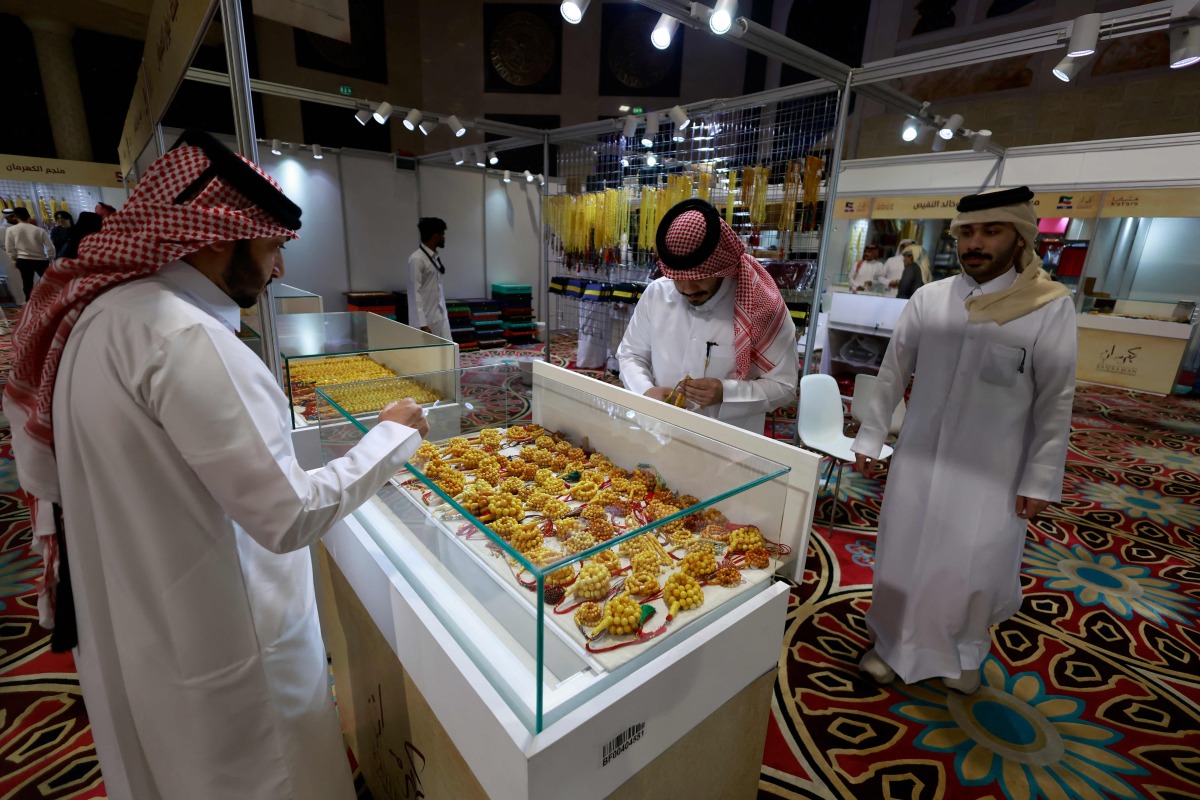

Doha, Qatar – The sixth annual Katara International Kahraman Exhibition opened Tuesday at Katara Hall, showcasing a diverse collection of amber products from around the globe. The event, running through January 16, features 82 booths with exhibitors from 13 countries, making it the largest iteration to date and a key event for the international amber trade. Visitors are exploring new designs and appreciating the craftsmanship of this fossilized tree resin.
The exhibition’s opening day drew significant crowds eager to view the luxury goods and artifacts crafted from amber. Participants from across the Gulf Cooperation Council (GCC) and beyond lauded the event as a vital platform for both commerce and the appreciation of this unique material.
Largest Katara Kahraman Exhibition Attracts International Attention
This year’s Katara International Kahraman Exhibition represents a substantial expansion of the event, attracting exhibitors from Qatar, Saudi Arabia, Kuwait, Bahrain, the United Arab Emirates, Lithuania, China, Iraq, Türkiye, Syria, Germany, Poland, and Latvia. The increased participation highlights the growing global interest in amber and its various applications, from jewelry to religious artifacts.
Daniel, a Chinese exhibitor, noted the importance of the Katara event compared to others he’s attended in Poland, the UAE, China, and Armenia, citing strong regional demand. Similarly, Salah, representing a Qatari company, observed growth in both exhibitors and customers, as well as a broader range of products available this year.
The Value of Amber
The price of amber pieces varies considerably based on several factors. According to Salah, a strand of amber prayer beads, known as a Misbaha, can range from approximately QR1,500 to QR30,000, depending on the quality, shape, color, and overall characteristics of the stone. These factors contribute to the unique value assigned to each piece.
Kuwaiti participant Mahmed Al Zaid, attending for the first time, expressed his surprise at the high quality and quantity of amber on display. He described the exhibition as a leading platform for the GCC region, noting a stronger-than-expected international presence.
Understanding Amber: A Fossilized Treasure
Amber is formed from the fossilized resin of ancient trees, hardening over millions of years. Unlike traditional gemstones, it is an organic substance, making it lightweight and often warm to the touch. A distinctive characteristic of amber is its ability to preserve natural inclusions, such as plant matter and even small insects, offering a glimpse into prehistoric life.
The process of transforming raw amber into finished products is meticulous. It typically involves sorting by size, transparency, and color, followed by cleaning, shaping, and polishing. Artisans may employ carving or turning techniques to create uniform beads for prayer beads, and heat treatment can sometimes be used to enhance the color, though collectors often prioritize natural, untreated specimens. Related materials like Baltic amber are particularly sought after.
The Baltic region is renowned as the primary source of amber globally, particularly around the Baltic Sea. However, deposits are also found in Eastern Europe, Eurasia, Asia, and the Middle East, each exhibiting unique variations in color, hardness, and appearance due to differing geological histories. The unique properties of amber contribute to its appeal in jewelry and collectible art.
The exhibition showcases a diverse array of luxury items and artifacts crafted from rare amber, including antique Polish prayer beads and unique handicrafts. The event provides a valuable opportunity to learn about the origins, processing, and cultural significance of this fascinating material.
As the Katara International Kahraman Exhibition concludes on January 16th, organizers will likely assess the feedback from exhibitors and visitors to plan for the 2027 event. Future editions may focus on expanding the educational component of the exhibition, highlighting sustainable sourcing practices, and attracting an even wider range of international participants. The continued growth of the event will depend on maintaining its reputation as a premier showcase for high-quality amber and fostering connections within the global trade community.