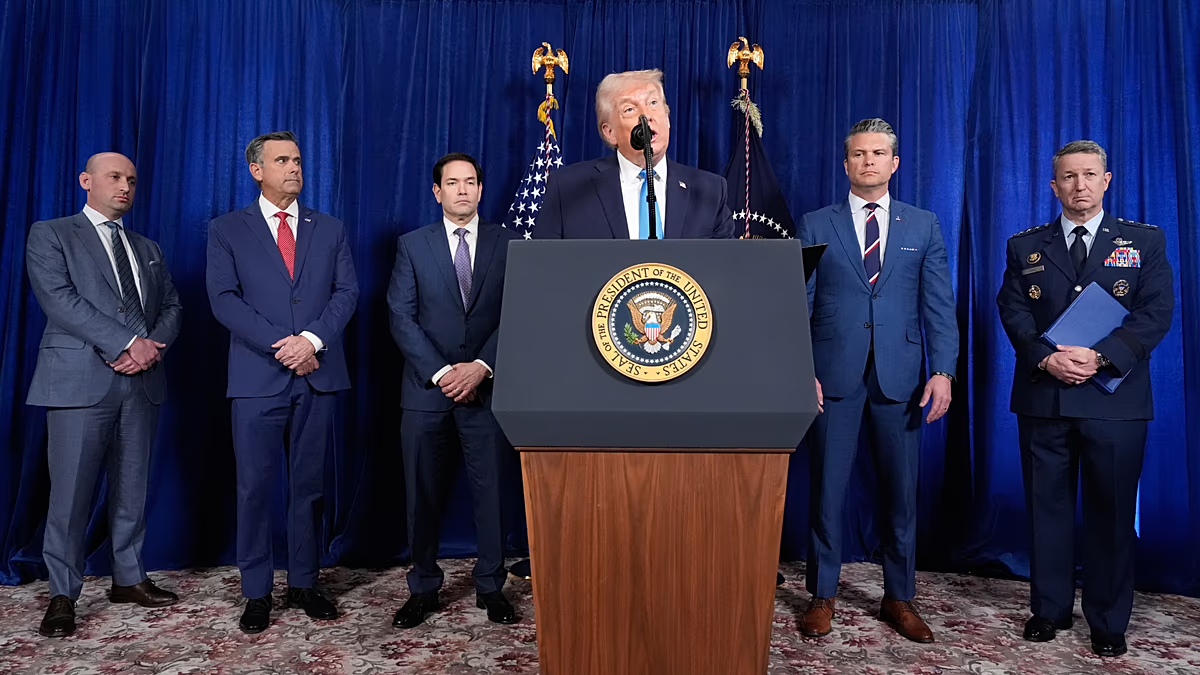

Recent statements from former US President Donald Trump suggest a potential shift in US foreign policy, with Cuba emerging as a renewed point of focus. Trump characterized the island nation as a “failing nation” while hinting at a more assertive approach during a recent public appearance. This comes as Secretary of State Marco Rubio signaled a willingness to adopt a stricter stance towards Havana, potentially reversing some of the limited diplomatic openings of recent years.
The remarks, made on January 3, 2026, indicate a possible hardening of US policy toward Cuba after a period of relative ambiguity. While details remain scarce, the pronouncements have prompted speculation about potential new sanctions or restrictions on travel and commerce. The timing of these statements is notable, occurring amidst ongoing economic challenges within Cuba and broader geopolitical tensions.
The Potential for a New US-Cuba Policy
Trump’s comments represent a departure from some of the Obama-era policies that sought to normalize relations with Cuba. However, the former president had previously reversed many of those changes during his first term, reinstating stricter regulations and limiting engagement. This latest indication suggests a continuation, or even escalation, of that earlier approach.
Rubio’s Role and Congressional Support
Secretary of State Rubio’s concurrent signaling of a tougher stance adds weight to the possibility of policy changes. Rubio, a long-time critic of the Cuban government, has consistently advocated for a more forceful US response to perceived human rights abuses and political repression on the island. His support is crucial, as any significant policy shift would likely require Congressional approval.
Additionally, the current political climate in Washington may favor a more hawkish approach to Cuba. A growing number of lawmakers from both parties have expressed concerns about the Cuban government’s actions, increasing the likelihood of bipartisan support for stricter measures.
In contrast, some analysts argue that a purely confrontational approach could be counterproductive, potentially exacerbating the economic hardship faced by the Cuban people and further isolating the country. They suggest that a more nuanced strategy, combining pressure with engagement, might be more effective in promoting positive change. The Council on Foreign Relations provides further background on US-Cuba relations.
Economic Implications for Cuba
A renewed tightening of US sanctions could have significant economic consequences for Cuba, which is already grappling with a severe economic crisis. The country relies heavily on tourism and remittances, both of which could be negatively impacted by stricter US policies. The report indicates that shortages of essential goods, including food and medicine, are already widespread.
Meanwhile, the Cuban government has consistently blamed the US embargo for its economic woes, arguing that it hinders the country’s development and prevents it from accessing vital resources. They maintain that the embargo is a violation of international law and a major obstacle to improving the lives of ordinary Cubans.
The potential for increased economic pressure also raises questions about the humanitarian impact of any new US policies. Critics argue that sanctions often disproportionately harm vulnerable populations, exacerbating existing inequalities and hindering access to basic necessities. Human Rights Watch has documented the impact of sanctions on civilian populations in various countries.
The situation is further complicated by Cuba’s close ties with other nations, including Russia and China. Any significant shift in US policy could potentially drive Cuba closer to these geopolitical rivals, further complicating regional dynamics. The evolving relationship between Cuba and these global powers is a key aspect of the broader Cuba situation.
Looking ahead, the coming weeks and months will be crucial in determining the future of US-Cuba relations. Observers will be closely watching for any concrete policy announcements from the administration and for signs of how the Cuban government will respond. The evolving foreign policy landscape and the ongoing economic challenges in Cuba will undoubtedly shape the trajectory of this complex relationship. Continued monitoring of developments in US-Cuba relations is recommended to understand the full implications of these recent statements.