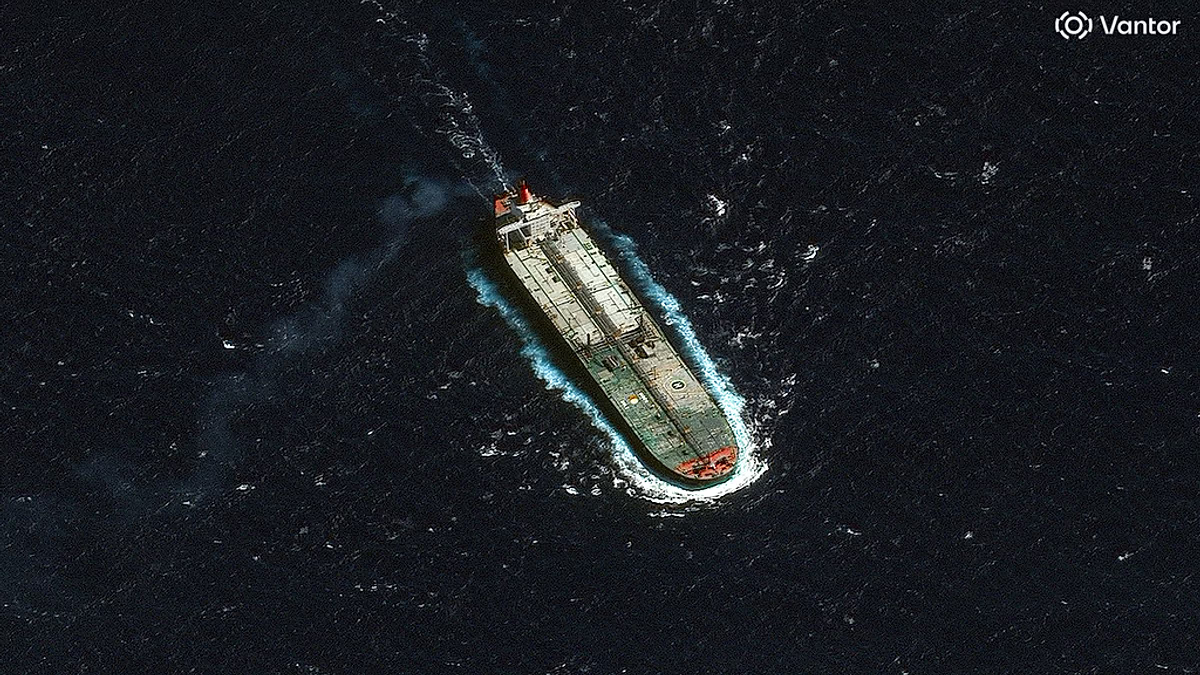

Venezuela’s National Assembly approved legislation Tuesday criminalizing actions that disrupt the nation’s commerce and navigation, specifically targeting the seizure of oil tankers. The bill, passed rapidly with minimal debate, introduces potential fines and lengthy prison sentences for individuals involved in activities deemed detrimental to Venezuela’s economic interests. This move is a direct response to escalating pressure from the United States, which has been seizing vessels believed to be part of Venezuela’s oil-smuggling network.
The legislation, awaiting President Nicolás Maduro’s signature, aims to protect both domestic and foreign entities engaged in trade with Venezuela. It comes amid a heightened geopolitical climate surrounding Venezuelan oil exports and accusations of illicit activity. According to reports, the US has already seized two oil tankers in recent months and is actively pursuing a third.
Venezuela Responds to US Sanctions with New Anti-Piracy Law
The approved measure defines prohibited acts as “piracy, blockades or other international illegal acts” against commercial entities operating within Venezuela’s maritime zones. Penalties could reach up to 20 years in prison, alongside substantial financial penalties. The bill also mandates the executive branch to develop incentives and protective mechanisms for businesses facing threats related to these illegal activities.
The US government asserts that these seized tankers comprise a “shadow fleet” utilized by Venezuela to circumvent existing economic sanctions. President Donald Trump announced a broad “blockade” targeting any oil tanker subject to US sanctions that either departs from or is destined for Venezuela, demanding the return of assets previously seized from US oil companies operating in the country.
US Justification for Tanker Seizures
Speaking at a United Nations Security Council meeting convened at Venezuela’s request, US Ambassador Mike Waltz characterized the sanctioned tankers as the “primary economic lifeline” for Maduro’s administration. He further alleged that proceeds from oil sales fund the “Cartel de Los Soles,” a group accused of narco-terrorism.
Waltz stated that the US intends to “impose and enforce sanctions to the maximum extent” to deprive Maduro of resources used to support the alleged cartel. This stance reflects a broader US strategy of targeting Venezuela’s oil industry to pressure the government towards political concessions. The US has long maintained that Maduro’s government is illegitimate and has called for free and fair elections.
However, Venezuelan officials condemn the tanker seizures as a violation of international law and an act of aggression. They argue that the US actions are exacerbating the country’s already dire economic situation and hindering its ability to provide essential goods and services to its population. The Venezuelan government maintains its oil exports are legitimate and comply with international regulations.
The rapid passage of this law underscores the Venezuelan government’s determination to counter US pressure and safeguard its oil industry, a crucial source of revenue for the nation. The legislation’s broad scope raises questions about its potential impact on legitimate shipping activities and international trade relations.
The situation remains fluid, with the potential for further escalation. The international community will be closely watching whether President Maduro signs the bill into law and how the US responds. Further developments in the seizure of oil tankers and the enforcement of sanctions will likely shape Venezuela’s economic and political landscape in the coming months. Stay informed about the evolving dynamics of US-Venezuela relations and the implications for global energy markets.