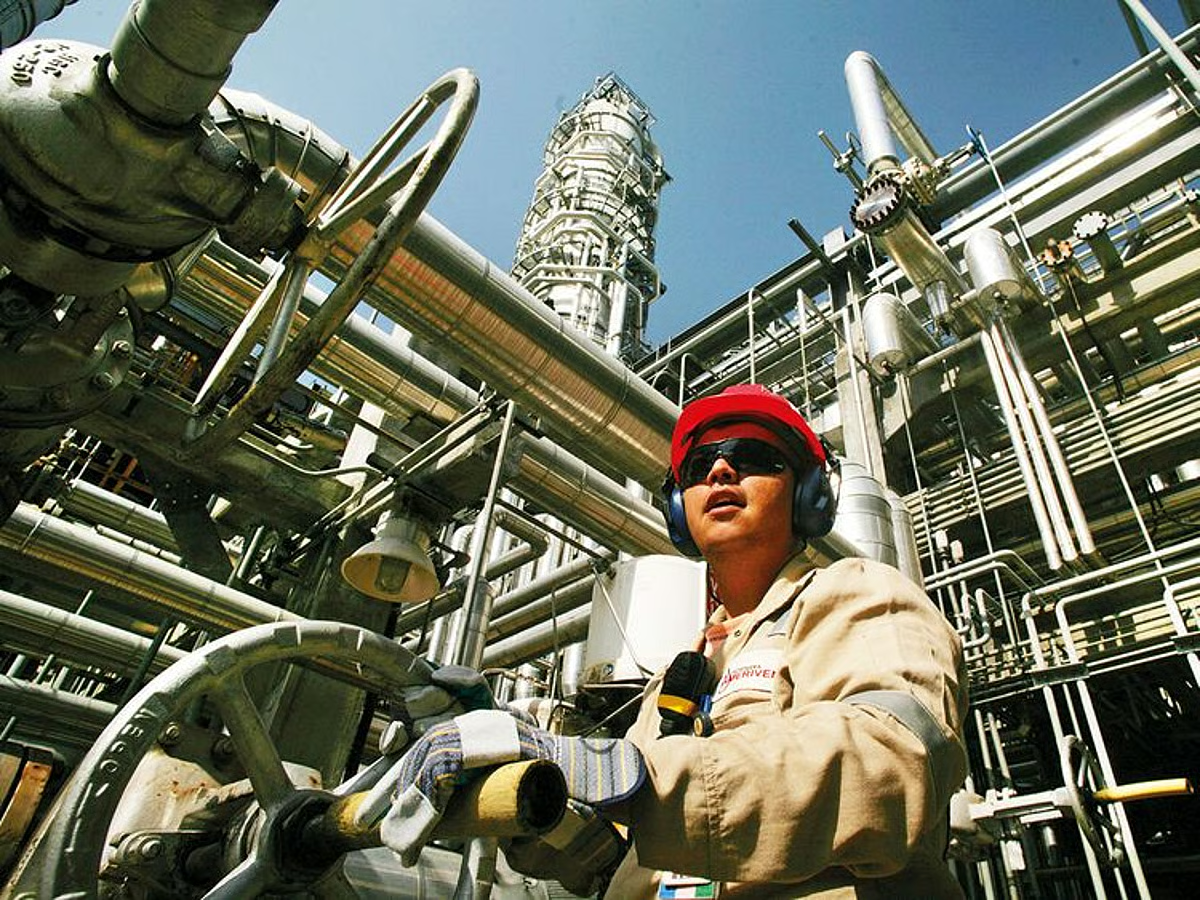

Venezuela has begun a significant overhaul of its oil sector, announcing plans to allow foreign companies to directly invest in exploration and production projects. The move, revealed in late May 2024, marks a substantial departure from previous policies and aims to revitalize the country’s struggling energy industry. This opening is a key component of the Maduro administration’s efforts to boost economic recovery amid ongoing sanctions and a prolonged economic crisis.
The announcement follows months of signals from Caracas indicating a willingness to attract foreign capital and expertise. The changes were formally detailed by Oil Minister Pedro Tellechea, outlining a new regulatory framework designed to be more appealing to international oil companies (IOCs). The initiative impacts all areas of the Venezuelan oil industry, from the Orinoco Belt to offshore exploration in the Caribbean Sea, and represents a major shift in the country’s approach to energy development.
Revitalizing Venezuela’s Oil Sector: A New Approach
For years, Venezuela’s oil sector has been crippled by underinvestment, mismanagement, and U.S. sanctions imposed in response to political and human rights concerns. Production plummeted from a peak of over 3 million barrels per day in the early 2000s to around 700,000 barrels per day in recent years, severely impacting the nation’s economy, which is heavily reliant on oil revenue. The previous model, involving joint ventures with state-owned Petróleos de Venezuela, S.A. (PDVSA), proved increasingly ineffective.
The New Regulatory Framework
The new regulations, according to the Ministry of Oil, eliminate the requirement for foreign companies to form joint ventures with PDVSA. Instead, companies can now operate independently, retaining 100% ownership of their projects and profits. This is a significant change from the previous system, which often involved bureaucratic delays and disputes over control.
Additionally, the government has streamlined the process for obtaining licenses and permits, aiming to reduce red tape and accelerate project development. Tax incentives and royalty reductions are also being considered to further attract investment. The Ministry has indicated a focus on attracting companies with proven technological capabilities and a commitment to responsible environmental practices.
Impact of U.S. Sanctions
While the opening of the oil sector is a positive step, the impact of U.S. sanctions remains a critical factor. Although the U.S. granted a six-month license in October 2023 allowing limited oil and gas transactions with Venezuela, contingent on democratic progress, the future of that license is uncertain. The Biden administration has signaled it may not renew the license if it deems insufficient progress has been made towards free and fair elections, scheduled for later in 2024.
However, the Venezuelan government is hoping that increased investment and production will demonstrate its commitment to economic stability and potentially lead to a broader easing of sanctions. The success of this strategy hinges on attracting significant foreign capital and demonstrating a tangible improvement in the country’s political landscape. The current license allows for the import of Venezuelan oil to the U.S. to offset debt, but broader sanctions continue to restrict access to financing and technology.
Challenges and Opportunities in Venezuelan Energy
Beyond sanctions, several challenges remain. PDVSA’s infrastructure is in dire need of repair and modernization after years of neglect. Attracting skilled labor and ensuring the security of operations in certain regions are also concerns. The report indicates that the Orinoco Belt, with its vast heavy oil reserves, presents both significant opportunities and logistical hurdles.
Meanwhile, the potential for offshore exploration in the Caribbean Sea is attracting interest from several international companies. These projects require substantial investment and specialized expertise, but could significantly boost Venezuela’s oil production. The country also possesses substantial natural gas reserves, which remain largely untapped, representing another potential avenue for investment and development. Petroleum resources are central to Venezuela’s economic future.
In contrast