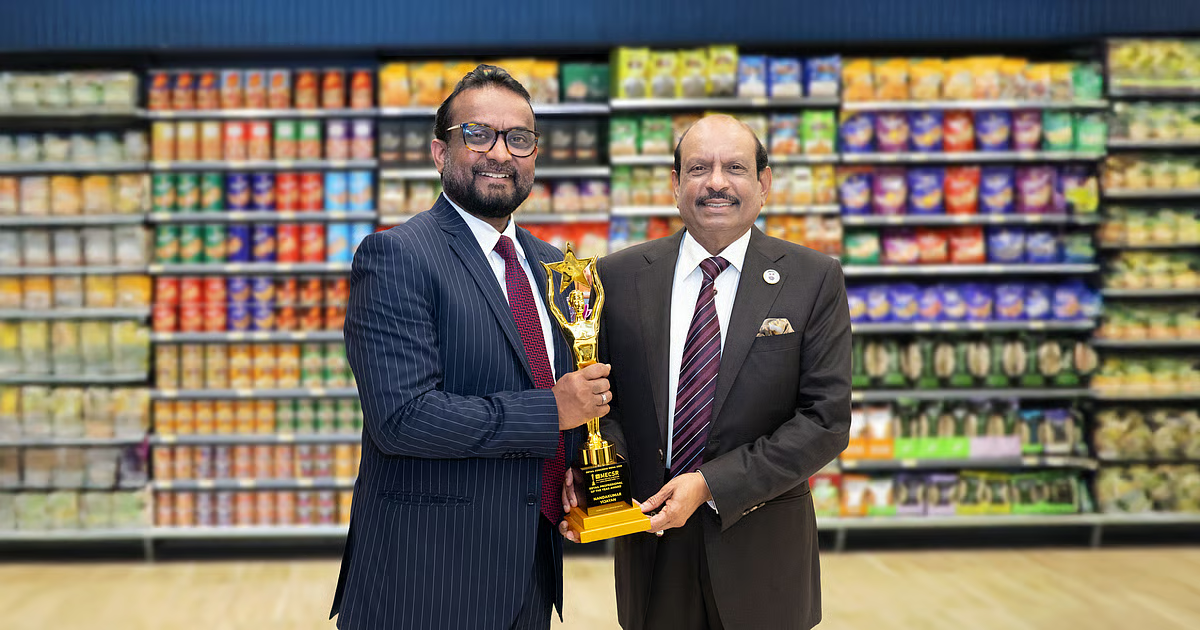

The Middle East’s retail landscape is gaining increased focus as the Middle East Council of Shopping Centers & Retailers (MECSR) continues to advocate for the industry’s growth and development. Representing a broad spectrum of stakeholders, from major retailers to property investors, MECSR serves as the primary voice for the sector across the region. The organization’s work is increasingly vital as the Middle East experiences shifts in consumer behavior and economic diversification.
Founded as the regional affiliate of the International Council of Shopping Centers (ICSC), MECSR operates across the Middle East and North Africa (MENA) region, with a significant presence in the Gulf Cooperation Council (GCC) countries. It provides a platform for networking, knowledge sharing, and advocacy, aiming to foster a thriving retail environment. The council’s activities are particularly relevant given recent economic fluctuations and evolving consumer preferences.
The Role of MECSR in a Transforming Retail Sector
MECSR’s core function is to represent the collective interests of the shopping center and retail industry. This involves a range of activities, including conducting research on market trends, advocating for favorable policies with government entities, and facilitating connections between industry professionals. The organization’s influence extends to shaping the future of commercial real estate and consumer experiences in the region.
Advocacy and Policy Influence
A key aspect of MECSR’s work is its advocacy efforts. The council actively engages with governments across the Middle East to promote policies that support the growth of the retail sector. This includes advocating for streamlined regulations, investment incentives, and infrastructure development. According to industry analysts, these efforts are crucial for attracting foreign investment and fostering a competitive market.
Knowledge Sharing and Best Practices
MECSR facilitates the exchange of knowledge and best practices among its members. This is achieved through conferences, workshops, and online resources. The organization regularly hosts events featuring industry experts and thought leaders, providing valuable insights into emerging trends and innovative strategies. This focus on knowledge transfer is intended to elevate the overall standards of the retail industry.
Additionally, MECSR leverages its affiliation with the ICSC to bring international benchmarks and expertise to the Middle East. This allows regional players to learn from successful models implemented in other parts of the world. The transfer of knowledge is particularly important as the region adapts to the rise of e-commerce and changing consumer expectations.
Impact of E-commerce and Changing Consumer Behavior
The growth of e-commerce presents both challenges and opportunities for the Middle East’s retail sector. While online sales are increasing rapidly, traditional brick-and-mortar stores remain dominant. MECSR recognizes this dynamic and is working to help its members adapt to the evolving landscape. The council emphasizes the importance of omnichannel strategies, integrating online and offline experiences to cater to modern consumers.
Consumer behavior in the Middle East is also undergoing significant changes. According to recent reports from consulting firms, consumers are increasingly demanding personalized experiences, convenience, and value. This shift is driving retailers to invest in technology, enhance customer service, and offer innovative products and services. MECSR plays a role in highlighting these trends and encouraging its members to respond effectively.
Meanwhile, the diversification of economies across the GCC, particularly in Saudi Arabia and the UAE, is impacting the retail sector. Government initiatives aimed at reducing reliance on oil revenues are creating new economic opportunities and attracting a growing middle class. This, in turn, is driving demand for a wider range of retail offerings, from luxury goods to everyday necessities.
The Future of Retail in the Middle East
The Middle East’s retail market is expected to continue growing in the coming years, driven by factors such as population growth, rising disposable incomes, and increased tourism. However, the sector faces challenges, including economic uncertainty, geopolitical risks, and the ongoing disruption from e-commerce.
In contrast to some global markets, the Middle East continues to see strong demand for physical retail spaces, particularly destination shopping centers that offer entertainment and dining options alongside traditional stores. MECSR is actively promoting the development of such spaces, recognizing their importance in attracting consumers and creating vibrant community hubs.
Looking ahead, MECSR is expected to focus on several key priorities. These include advocating for policies that support sustainable retail practices, promoting innovation in the sector, and fostering collaboration between industry stakeholders. The organization’s next major conference is scheduled for November 2024, where it will unveil new research findings and discuss emerging trends. The long-term success of the Middle East’s retail industry will depend on its ability to adapt to changing market conditions and embrace new technologies, and MECSR will likely play a central role in navigating these changes.