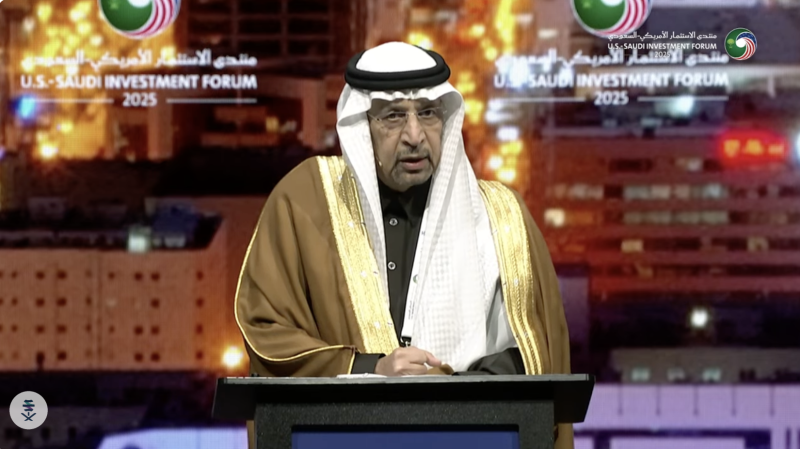

Washington D.C. – A major US-Saudi investment forum kicked off in Washington on Wednesday, with Saudi Minister of Investment Khalid Al-Falih announcing the anticipated signing of “groundbreaking business agreements worth hundreds of billions of dollars.” The forum, a continuation of economic collaboration dating back to 2017, aims to strengthen the already substantial economic ties between the two nations and diversify Saudi Arabia’s economy under its Vision 2030 plan.
The event, held at a time of evolving geopolitical dynamics, features addresses from both Saudi Crown Prince Mohammed bin Salman and US President Joe Biden, signaling the high-level importance placed on the partnership. Discussions are expected to cover a wide range of sectors, moving beyond the traditional energy focus to include technology, infrastructure, and defense cooperation.
Strengthening US-Saudi Economic Ties Through Investment
The US has long been the largest foreign investor in Saudi Arabia, with approximately 25% of all international investment originating from American companies, according to Al-Falih. Saudi Arabia, in turn, is a significant investor in the US, making it a key recipient of outbound Saudi capital. This reciprocal relationship forms the foundation of the current forum’s ambitions.
Government Agreements Pave the Way
Prior to the forum’s opening, several strategic government-to-government agreements were signed at the White House, covering critical areas such as defense, artificial intelligence, supply chain resilience, and mineral resources. These agreements are designed to streamline collaboration and reduce bureaucratic hurdles for private sector companies seeking to engage in joint ventures. The U.S.-Saudi Strategic Framework on Investment Acceleration is also expected to play a key role in facilitating faster investment approvals.
The forum builds on previous engagements, including President Trump’s initial visit to Saudi Arabia in 2017 and a subsequent state visit last May. These visits, the ministry stated, have already yielded substantial commitments, particularly in the technology sector. The current forum aims to translate those commitments into concrete projects and further expand the scope of cooperation.
Vision 2030 and Economic Diversification
Saudi Arabia’s Vision 2030 is a central driver of the increased investment opportunities. The ambitious plan seeks to diversify the Saudi economy away from its reliance on oil, fostering growth in sectors like technology, finance, and tourism. Al-Falih highlighted the significant economic gains already achieved under Vision 2030, noting that GDP, domestic investment, and foreign direct investment have all doubled since its launch.
Furthermore, annual foreign direct investment flows into the Kingdom have quadrupled, creating a stable and high-growth environment for investors. This expansion of the investment landscape is attracting interest from a broader range of American companies, beyond those traditionally involved in the energy industry. The focus on emerging technologies, such as artificial intelligence, is particularly noteworthy.
The forum’s theme, “Leadership for Growth,” reflects the shared ambition of both countries to drive economic expansion and innovation. Participants will engage in plenaries, workshops, panels, and roundtables designed to foster dialogue and identify new areas for collaboration. The emphasis is on leveraging the private sector to realize the full potential of the US-Saudi partnership.
Beyond the economic benefits, officials emphasize the long-standing people-to-people connections between the US and Saudi Arabia. Dating back to 1933, these ties have fostered academic, professional, and cultural exchanges, contributing to a deeper understanding and stronger relationships between the two nations. These connections are seen as vital for sustaining long-term cooperation and driving innovation.
The anticipated agreements span multiple sectors, including sustainable infrastructure, renewable energy, and digital transformation. While specific details of the deals remain undisclosed, the scale of the projected investment suggests a significant commitment from both sides. The forum also aims to address challenges related to global supply chains and promote greater economic security.
Looking ahead, the success of the forum will be measured by the concrete outcomes of the signed agreements and the subsequent flow of investment into both countries. The implementation of the U.S.-Saudi Strategic Framework on Investment Acceleration will be a key indicator of progress. Analysts will be watching closely to see how these initiatives contribute to Saudi Arabia’s economic diversification goals and the broader geopolitical landscape.
The next steps involve finalizing the details of the announced agreements and establishing clear timelines for implementation. Monitoring the impact of these investments on job creation and economic growth in both countries will be crucial. Any shifts in global energy markets or geopolitical tensions could also influence the future trajectory of this important economic partnership.