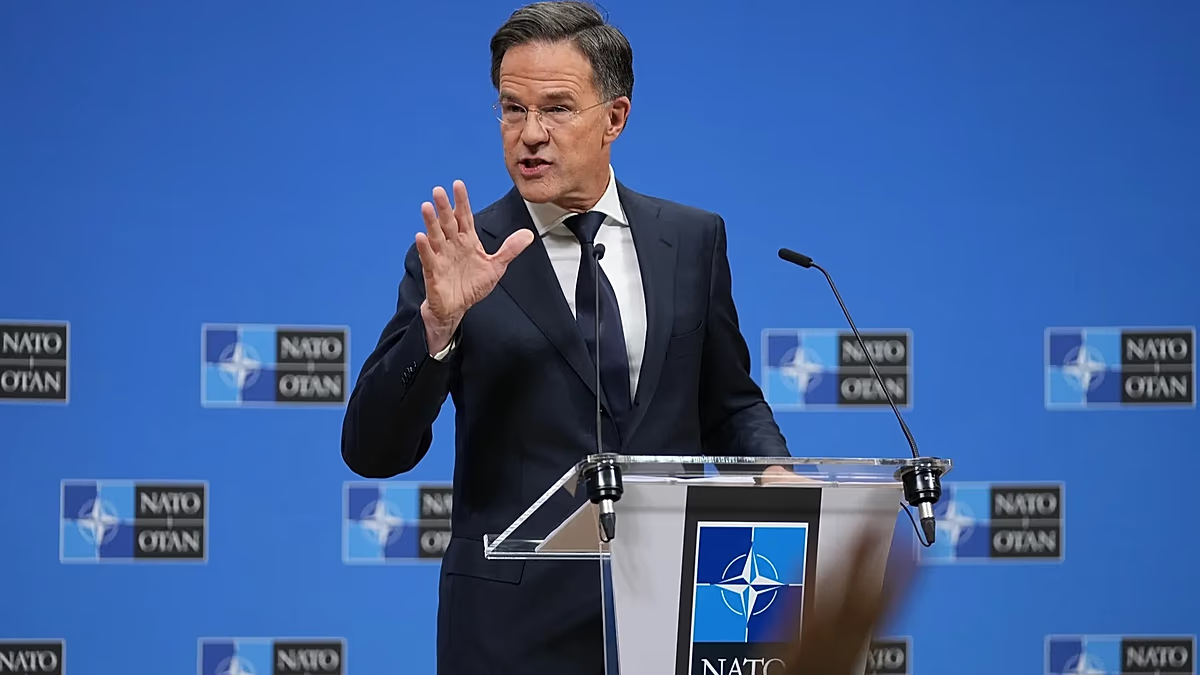

NATO allies are mobilizing financial support to ensure a continued supply of military aid to Ukraine, aiming to reach $5 billion in commitments by year-end. This push comes after the United States paused additional military funding due to domestic political considerations. Secretary General Mark Rutte expressed confidence on Wednesday that the alliance is on track to meet this goal through a coordinated purchasing initiative.
The initiative, known as the Prioritised Ukraine Requirements List (PURL), was launched in July to leverage existing US stockpiles of weaponry and equipment. Over 20 nations have already pledged contributions, with recent announcements from Canada, the Netherlands, Norway, Poland, and Germany totaling over €614 million. Australia and New Zealand, while not NATO members, have also joined the effort.
Securing Ukraine’s Defense: The Role of PURL and Allied Contributions
PURL allows allies to pool resources and purchase US-made military aid to Ukraine, circumventing the recent hold in direct US deliveries. According to Rutte, the program is gaining momentum, with commitments nearing the $5 billion target for 2025. He anticipates continued strong support, projecting commitments of around $1 billion per month, potentially reaching $15 billion or more for the entirety of 2026.
The need for sustained assistance is critical. Ukraine estimates it requires at least €83 billion over the next two years to fund its military operations. European nations are expected to bear the largest portion of this financial burden, supplementing the PURL initiative.
Uneven Burden Sharing Sparks Concerns
While the overall commitment is growing, concerns are emerging regarding the distribution of financial responsibility. Lithuanian Foreign Minister Kęstutis Budrys voiced frustration that a disproportionate share of the support is coming from Nordic, Baltic, German, and Polish countries. He emphasized the importance of “sharing the burden” more equitably among all allies.
Some nations, like Italy and France, are opting to provide European-made equipment rather than contributing to PURL purchases. This preference, while supporting European defense industries, has drawn criticism from those advocating for a unified approach focused on immediate Ukrainian needs. The differing approaches highlight the complexities of coordinating international aid.
The current situation reflects a broader shift in the dynamics of military support for Ukraine. With uncertainty surrounding future US aid packages, European allies are stepping up to fill the gap. This transition requires careful planning and coordination to ensure a consistent flow of essential resources to the Ukrainian armed forces.
The effectiveness of PURL will depend on continued participation and increased contributions from all NATO members. The initiative aims to streamline the procurement process and deliver equipment quickly, but it requires sustained financial commitment and political will. The long-term implications of this shift in aid distribution remain to be seen, but it underscores the growing importance of European self-reliance in supporting Ukraine’s defense.
Looking ahead, the focus will be on securing pledges for 2026 and beyond. Continued monitoring of allied contributions and a renewed push for equitable burden sharing will be crucial. The international community will also be watching for any changes in the US position on Ukraine aid. Stay informed about developments in this critical situation by following reputable news sources like NATO’s official website.
The ongoing conflict in Ukraine has significant geopolitical ramifications, and the provision of military assistance is a key factor in shaping the outcome. Understanding the evolving dynamics of this support is essential for anyone following the situation.