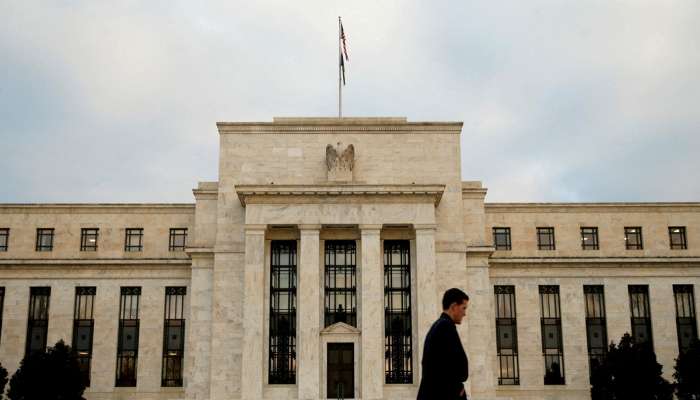

The United States Federal Reserve recently implemented its third consecutive interest rate cut, a move designed to bolster a slowing economy and navigate persistent inflation. This latest reduction of 0.25 percentage points brings the federal funds rate to a range of 3.5% to 3.75%, the lowest it’s been in over three years. The decision, while anticipated, arrives amidst economic uncertainty fueled by a recent government shutdown and signals a cautious approach to future monetary policy.
Understanding the Latest Federal Funds Rate Cut
This cut marks a total reduction of 0.75 percentage points throughout 2023, reflecting the Fed’s growing concern over weakening economic indicators. Despite delays in key government data releases due to the shutdown, the Fed has been closely monitoring trends in job growth and inflation. Data from ADP revealed a concerning loss of 32,000 jobs in November, adding pressure to the labor market and influencing the Fed’s decision.
The primary goal of lowering the federal funds rate is to make borrowing cheaper for both businesses and consumers. This, in turn, is intended to stimulate economic activity, encouraging investment, hiring, and spending. Lower rates can translate to reduced costs for mortgages, car loans, and business loans, providing a potential boost to various sectors.
Assessing the Economic Landscape
The Fed’s decision wasn’t made in a vacuum. The economic picture is complex, with inflation remaining above the Fed’s 2% target, even as growth slows. The Personal Consumption Expenditures (PCE) index, the Fed’s preferred measure of inflation, is projected to ease to 2.4% in 2024, down from an estimated 2.9% in 2025.
Economic growth is forecast to improve to 2.3% in 2026, while unemployment is expected to hold steady at 4.4%. However, these projections are subject to change, and the Fed emphasized its commitment to “carefully assess incoming data, the evolving outlook and the balance of risks” when considering future adjustments to the federal funds rate.
A Pause in the Rate Cutting Cycle?
Experts suggest this rate cut may signal an “extended pause” in the Fed’s easing cycle. Ryan Sweet, chief global economist at Oxford Economics, pointed out that monetary policy has limitations in addressing the underlying issues impacting the labor market. He believes the Fed’s tools are not equipped to solve many of the structural problems currently at play.
This perspective is reinforced by the Fed’s own projections, which indicate only one further rate cut is anticipated in 2026. This suggests a more conservative approach moving forward, prioritizing observation and data analysis over aggressive easing. The focus is shifting towards allowing the current lower rates to work their way through the economy.
Dissent Within the Committee & Leadership Transition
Interestingly, the decision to cut rates wasn’t unanimous. Three members of the Federal Open Market Committee (FOMC) dissented, the highest number in six years. Austan Goolsbee and Jeffrey Schmid favored maintaining the existing rate, while Stephen Miran advocated for a more substantial cut of 0.5 percentage points. This internal disagreement highlights the differing views on the appropriate course of action given the current economic conditions.
Additionally, the timing of this move coincides with an upcoming leadership transition at the Federal Reserve. Jerome Powell’s term as chair ends in May 2026, and former President Trump is preparing to nominate his successor. This impending change adds another layer of complexity, as the future direction of monetary policy could be significantly influenced by the new leadership. Jeff Schulze of ClearBridge Investments noted that the current FOMC’s outlook may carry less weight given this imminent shift. Interest rate policy is therefore poised for potential change.
Implications for Consumers and Businesses
The reduction in the federal funds rate has several potential implications. Consumers may see lower interest rates on loans and credit cards, making borrowing more affordable. Businesses could benefit from reduced borrowing costs, encouraging investment and expansion. However, the impact may not be immediate or uniform across all sectors.
Furthermore, the dissenting votes within the FOMC suggest that the path forward is not without uncertainty. The Fed will need to carefully balance the risks of stimulating the economy too aggressively versus the risk of allowing inflation to remain elevated. Monitoring key economic indicators, such as employment figures and inflation data, will be crucial in guiding future decisions. The overall economic outlook remains a key factor.
In conclusion, the Federal Reserve’s latest rate cut represents a measured response to a slowing economy and persistent inflation. While intended to stimulate growth, the decision was not without internal debate and comes amidst a period of economic uncertainty and leadership transition. The Fed’s commitment to data-driven decision-making will be paramount as it navigates the evolving economic landscape and determines the future trajectory of interest rate policy. Stay informed about these developments to understand how they may impact your financial decisions.