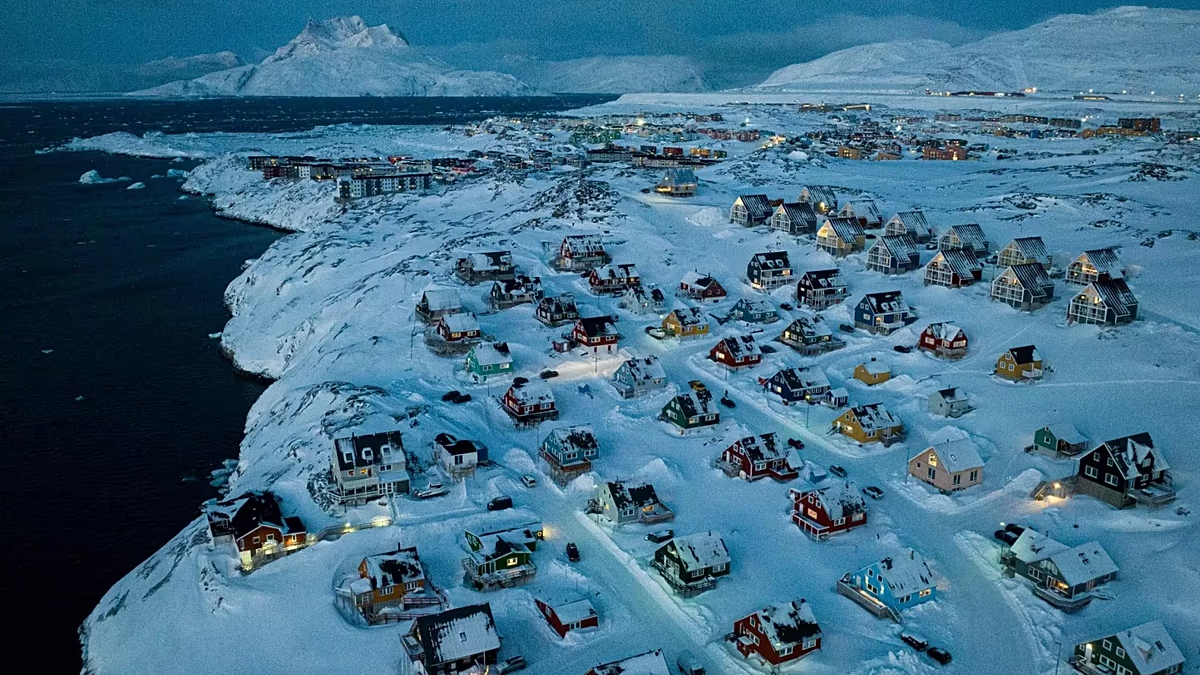

Denmark is facing renewed pressure from the United States concerning Greenland, with recent statements from President Donald Trump raising concerns about a potential attempt to annex the territory. The situation escalated after Trump reiterated his desire for the U.S. to acquire Greenland, citing national security interests. This has prompted a strong rebuke from Denmark’s Prime Minister, who warned such actions would jeopardize decades of transatlantic security cooperation.
The latest comments follow Washington’s increased intervention in Venezuela and highlight worries about the U.S.’s strategic ambitions in the Arctic region, which is rich in minerals and opening up due to melting polar ice. Greenland’s strategic importance is further underscored by its position on the shortest missile route between the U.S. and Russia, and the presence of a U.S. military base on the island.
The Dispute Over Greenland Intensifies
Danish Prime Minister Mette Frederiksen has firmly stated that a military attack on Greenland by the United States would represent a catastrophic breakdown in the NATO alliance. According to a TV2 network interview, she emphasized that such an action would effectively end post-World War II security structures. This strong reaction underscores Denmark’s commitment to maintaining its sovereignty over Greenland, despite repeated interest from Washington.
Greenland’s own Prime Minister, Jens-Frederik Nielsen, directly addressed Trump via social media, urging him to cease further pressure and “fantasies of annexation.” He indicated a willingness to engage in dialogue but stressed the necessity of following proper diplomatic channels and adhering to international law. However, the situation remains tense as Trump downplays the controversy, suggesting a resolution may be forthcoming “in about two months.”
U.S. Rationale and Concerns
Trump has justified his interest in Greenland by pointing to perceived security vulnerabilities and the increasing presence of Russia and China in the Arctic. He stated that the United States “needs Greenland from the standpoint of national security” and implied Denmark is unable to properly manage the territory’s resources or strategic value. These statements have been met with skepticism from European leaders and accusations of exaggeration from Greenlandic representatives.
Aaja Chemnitz, representing Greenland in the Danish parliament, accused Trump of “spreading lies” about Chinese and Russian naval activity near the territory’s shores. Reuters reports that these claims have heightened anxieties among Greenland’s population. The Chinese Foreign Ministry also responded, urging the U.S. to refrain from using the “so-called China threat” to justify its actions.
Meanwhile, the events have sparked a wider debate about U.S. foreign policy and its relationship with NATO allies. Trump’s recent actions in Venezuela, including the detention of President Nicolás Maduro in New York, have mirrored a pattern of assertive geopolitical maneuvering that has unnerved European capitals. This assertive approach is fueled by the desire to secure resources, such as Venezuela’s oil reserves, emphasizing economic factors alongside perceived national security concerns.
European Solidarity with Denmark
The European response to the escalating situation has been overwhelmingly supportive of Denmark. EU foreign policy spokesperson Anitta Hipper affirmed the bloc’s commitment to defending the territorial integrity of its member states. Similar statements of solidarity came from leaders across Europe, including the United Kingdom, France, Finland, Sweden, and Norway.
British Prime Minister Keir Starmer underscored that the future of Greenland rests solely with its people and the Kingdom of Denmark. France’s foreign ministry reiterated that international borders cannot be altered by force. This unified front presents a clear message of opposition to any unilateral action by the United States, reinforcing the importance of international law and diplomatic solutions. The Associated Press notes widespread bewilderment in Copenhagen regarding Trump’s continued remarks.
The situation is further complicated by a recent social media post by Katie Miller, a former Trump aide and wife of senior advisor Stephen Miller, depicting Greenland in the colors of the U.S. flag with the caption “SOON.” This action was swiftly condemned as disrespectful by both Nielsen and Frederiksen, further fueling the diplomatic tensions.
Looking ahead, the focus will be on whether the U.S. administration will continue to publicly pursue its interest in Greenland. Denmark’s ambassador to Washington has emphasized the existing security cooperation between the two nations, urging a continued partnership. Observers will be closely watching for any signs of de-escalation or a shift in the U.S.’s approach to the Arctic region.