






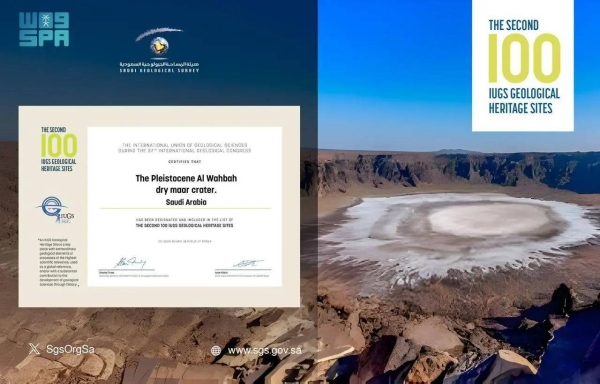

Al-Wahbah Crater, located in Harrat Kishb, Saudi Arabia, has been selected as one of the top 100 geological heritage sites in the world for the year 2024 by UNESCO and the IUGS. The nomination of the crater came after an evaluation by a committee of 89 international experts, who chose it from 174 nominated sites submitted by 64 countries. This recognition highlights the unique geological features of Al-Wahbah Crater, which is considered one of the largest dry volcanoes in the world.
The crater, also known as the Tamiya Quarry or scientifically as “Maar Volcano,” was formed about 1.1 million years ago and is characterized by a depth of about 250 meters and a diameter of 2.3 kilometers. It is part of a volcanic field that includes 175 small volcanoes ranging in age from two million to a few hundred thousand years. The area covers an estimated 6,000 square kilometers and contains a salt basin or shallow lake formed by the accumulation of rainwater.
Al-Wahbah Crater is an inspiring destination that contributes to promoting geological tourism and developing geological sciences. The bottom of the crater is covered with white sodium phosphate crystals, adding to its unique and captivating beauty. While it was initially believed to be formed by a meteorite, geologists now accept that it is a maar crater, formed by volcanic activity through an underground phreatic eruption.
This recognition of Al-Wahbah Crater as a top geological heritage site showcases the richness and diversity of Saudi Arabia’s geological landscape. It also provides a unique opportunity to spread knowledge in the field of earth sciences and attract visitors interested in exploring the natural wonders of the region. The selection of this site along with others from around the world highlights the importance of preserving and understanding our geological heritage for future generations.
In addition to its geological significance, Al-Wahbah Crater offers visitors a chance to witness the raw power of nature and learn about the forces that shape our planet. The presence of the salt basin and sodium phosphate crystals adds to the allure of the crater, making it a visually stunning and scientifically intriguing destination. By showcasing sites like Al-Wahbah Crater, countries can promote sustainable tourism and conservation efforts while also advancing the field of geological research.
Overall, the selection of Al-Wahbah Crater as one of the top 100 geological heritage sites in the world for 2024 is a testament to the unique and exceptional qualities of this natural wonder. As a site of geological significance and beauty, it provides a valuable opportunity for education, exploration, and appreciation of the Earth’s geological history. With its recognition by UNESCO and the IUGS, Al-Wahbah Crater stands as a testament to the importance of preserving and understanding our planet’s geological heritage for future generations to enjoy and learn from.