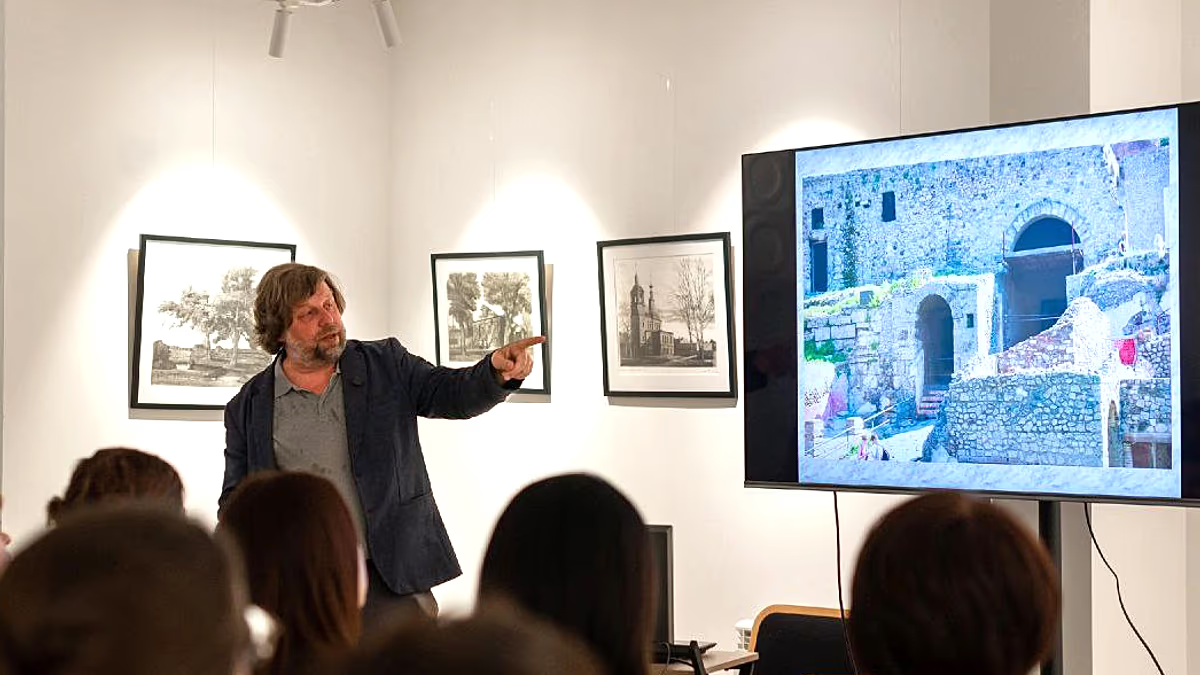

Poland is considering an extradition request from Ukraine for Russian archaeologist Oleksandr Butyagin, accused of illegally excavating archaeological sites in Russian-occupied Crimea. Butyagin, a senior researcher at the State Hermitage Museum in St. Petersburg, was detained in Warsaw on December 4th. Ukrainian authorities allege that his work caused significant damage to Ukrainian cultural heritage, sparking a diplomatic dispute and raising concerns about the preservation of historical artifacts in the region.
The Warsaw District Prosecutor’s Office confirmed receipt of the request, and a Polish court has already placed Butyagin in custody for 40 days, pending a decision on the extradition. He was traveling in Europe on an Italian visa with plans to visit Belgrade when he was apprehended while giving lectures in Poland. His detention has drawn criticism from Russian officials, who claim it is politically motivated.
Allegations of Illegal Excavations in Crimea
Ukraine’s Prosecutor General’s Office formally charged Butyagin in November with conducting unauthorized archaeological work at the ancient city of Myrmekion, near Kerch in Crimea, between 2014 and 2019. According to Ukrainian officials, the excavations were carried out without the necessary permits from Kyiv, and resulted in substantial damage to the site. The Ukrainian security service, the SBU, stated the team removed layers of potentially vital archaeological material.
The estimated damage from these alleged actions exceeds 200 million hryvnia (approximately €4.75 million). The charges specifically relate to illegal search operations at heritage sites and the deliberate destruction or damage of cultural artifacts. If convicted in Ukraine, Butyagin could face a prison sentence of one to ten years.
Historical Context and Site Importance
Myrmekion, founded in the 6th century BCE, was an important ancient Greek colony in the region. Butyagin had led excavations at the site since 1999, prior to the 2014 Russian annexation, unearthing significant finds like coins dating back to the time of Alexander the Great.
Russia’s annexation of Crimea in 2014, which followed its initial involvement in the conflict in eastern Ukraine, was widely condemned internationally as a violation of international law. This annexation directly impacts the legal jurisdiction over archaeological sites and artifacts within the territory, leading to the current dispute. Furthermore, Ukraine asserts Russia has systematically plundered cultural heritage across Crimea since 2014, illegally transporting discoveries to Russian museums and institutions.
However, Russian officials, including presidential spokesman Dmitry Peskov, have dismissed the charges as “legal arbitrariness.” Colleagues within the Russian Academy of Sciences have similarly decried the detention as unjustified. The State Hermitage Museum maintains that all expeditions were conducted in accordance with international standards. These statements highlight the conflicting narratives surrounding archaeological work in Crimea.
The case also highlights the broader concerns surrounding the protection of cultural heritage in conflict zones. International organizations, such as UNESCO, have repeatedly warned about the risks posed to cultural sites during armed conflicts and have called for the safeguarding of these invaluable resources.
The final decision on whether to extradite Oleksandr Butyagin rests with the Polish court. This case sets a precedent for how European nations will address accusations of cultural heritage crimes committed in territories under disputed sovereignty. The outcome will be closely watched by both Ukraine and Russia, and by the international community concerned with the preservation of archaeological sites and the rule of law.
As the 40-day custody period progresses, further developments are expected in the Polish legal proceedings. Updates on Butyagin’s extradition status will undoubtedly affect both the scientific community and the geopolitical landscape surrounding Crimea.