


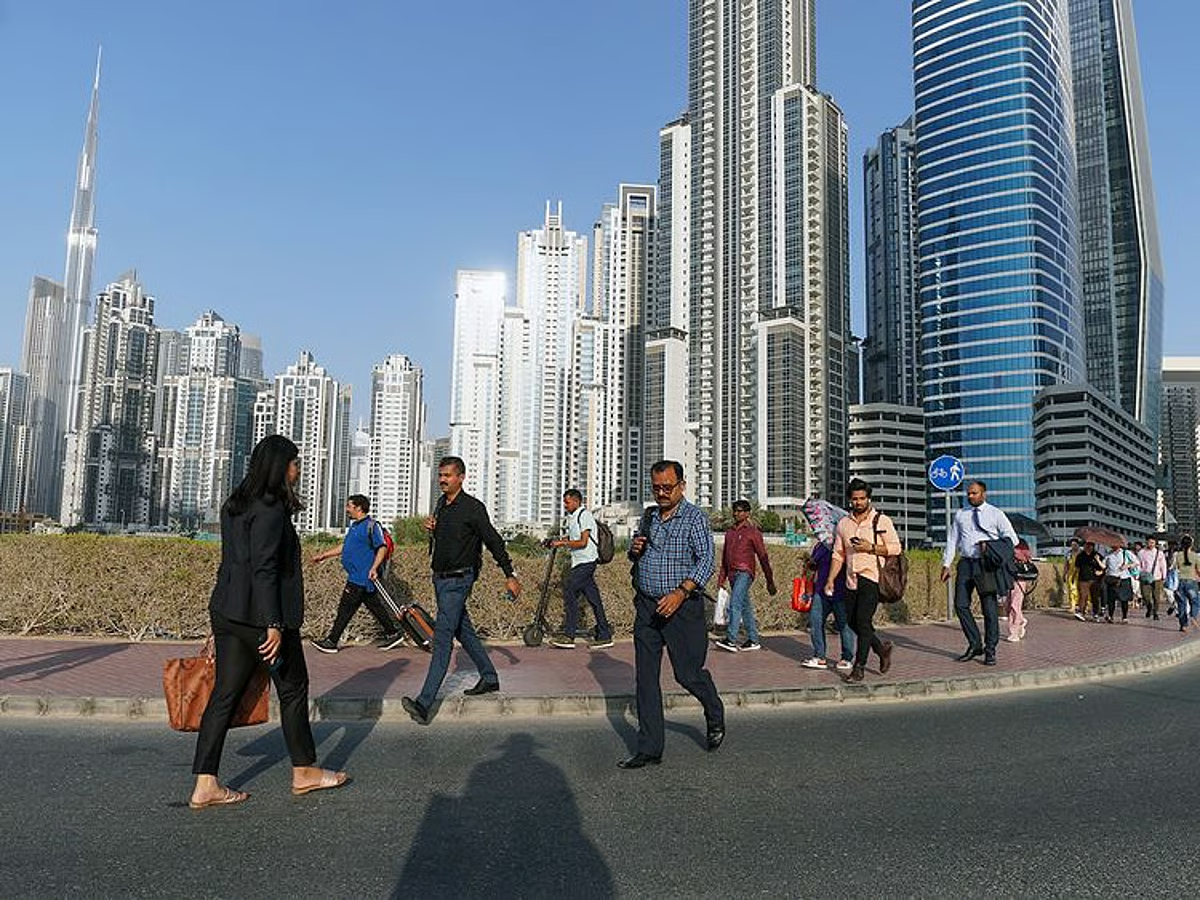

The United Arab Emirates (UAE) labor market is demonstrating robust growth and evolving demographics, according to recent data released by the Ministry of Human Resources and Emiratisation (MoHRE). Figures from the Labor Market Observatory indicate a significant expansion in both the overall workforce and the number of companies operating within the country, alongside increasing representation of women and young workers. These developments reflect the UAE’s ongoing efforts to diversify its economy and attract global talent.
As of late 2025, the UAE’s workforce grew by 12.4% compared to 10.9% in 2024, with a corresponding 7.8% increase in the number of registered establishments. Notably, young workers aged 18-35 now comprise 54.9% of the total workforce, and Emirati employment in the private sector has surged by 377% since the launch of the Nafis program. This growth is underpinned by a series of legislative reforms aimed at creating a more competitive and sustainable employment landscape.
UAE Labor Market: Key Trends and Developments
The positive trends in the UAE’s labor market are attributed to a proactive government strategy focused on economic diversification and attracting skilled professionals. These initiatives align with the nation’s “UAE Vision” and its ambition to become a leading global hub for business and innovation. The reforms implemented since 2021 have been instrumental in fostering a more dynamic and flexible work environment.
One significant aspect of this evolution is the increasing participation of women in the workforce. The data reveals that 17.4% of women now hold leadership positions – as legislators, managers, and business executives – and skilled female workers represent 45.8% of the total female workforce. Furthermore, 36% of private-sector establishments actively contribute to the employment of women, demonstrating a growing commitment to gender equality.
Skills Classification and Workforce Levels
MoHRE classifies labor into nine skill levels based on the International Standard Classification of Occupations (ISCO) established by the International Labour Organization (ILO). These levels range from legislators and senior officials to elementary occupations. Within the UAE private sector, skilled labor is defined as individuals holding qualifications above high school level, duly attested, and earning a minimum monthly salary of AED 4,000 (excluding commissions).
The Ministry’s classification system is designed to support optimal human resources management and skills development, contributing to the overall productivity of the UAE economy. It also provides a framework for defining job descriptions, required qualifications, and career paths for various occupations.
Protective Legislation and Worker Wellbeing
Alongside fostering growth, the UAE has prioritized worker protection and wellbeing through comprehensive legislation. According to MoHRE reports, 99% of workers are now covered by the Wage Protection System, and the same percentage is insured under the Workers’ Rights Insurance Scheme. Additionally, 83% of private-sector employees benefit from unemployment insurance.
Further enhancing worker security, the Ministry has approved four savings funds to support private-sector savings and launched a health insurance package for private-sector workers and domestic helpers starting at AED 320. Compliance with the Heat Stress Protection Policy, implemented for 21 years, remains high at 99% of establishments.
The Role of Artificial Intelligence
The UAE is actively integrating artificial intelligence (AI) into its labor market services. MoHRE has announced a reshaping of its operations leveraging AI outputs, aiming to enhance efficiency, competitiveness, and customer experience. This initiative is in line with the UAE Strategy, which targets 100% reliance on AI for services and data analysis by 2031.
The Ministry believes that AI will be central to elevating government performance, accelerating service delivery, and creating innovative work environments. This strategic direction supports efforts to reduce bureaucracy and reinforce the UAE’s position in the global digital economy. The implementation of AI is expected to streamline processes and provide more targeted support to both employers and employees.
The UAE’s commitment to a modern and inclusive employment landscape is evident in these recent developments. The focus on skills development, worker protection, and technological innovation positions the country as an attractive destination for talent and investment.
Looking ahead, MoHRE plans to continue monitoring these indicators and refining its policies to address emerging challenges and opportunities. The next review of these statistics is scheduled for January 21, 2026. Ongoing factors to watch include global economic conditions, the pace of technological change, and the continued success of Emiratisation initiatives. The long-term impact of AI integration on job creation and skill requirements will also be a key area of focus.