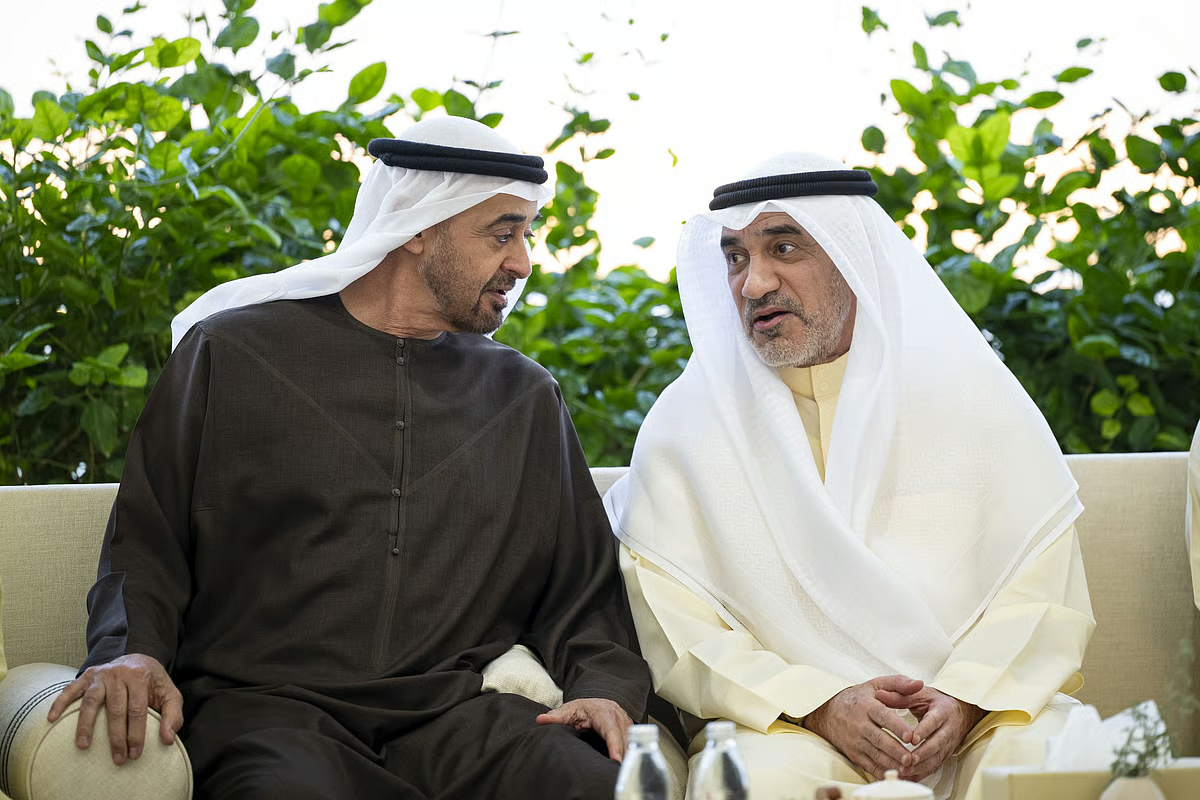

Strengthening regional alliances, a Kuwaiti delegation recently conveyed the Emir of Kuwait’s gratitude to the United Arab Emirates (UAE) President for a UAE-led initiative highlighting the enduring UAE-Kuwait relations. The message, delivered by a high-ranking envoy, emphasized the significance of the initiative launched January 29th, designed to celebrate the historical and cultural connections between the two Gulf states. This expression of appreciation underscores the close diplomatic and economic partnership both nations share.
The delegation’s visit, confirmed by Emirati state news agencies on February 1st, focused on thanking UAE President Sheikh Mohamed bin Zayed Al Nahyan for the initiative recognizing the long-standing ties between the UAE and Kuwait. The initiative involves a series of cultural events, media programs, and diplomatic engagements across both countries. This goodwill gesture comes amidst a period of ongoing regional stability efforts and shared concerns regarding economic diversification.
The Significance of UAE-Kuwait Relations
The relationship between the UAE and Kuwait is one of the most stable and collaborative in the Gulf Cooperation Council (GCC). Both nations share a commitment to regional security and economic integration, evidenced by joint ventures in energy, infrastructure, and finance. This partnership is viewed as a vital component of broader GCC efforts to present a united front on regional and international issues.
Historical Foundations
The historical bonds between the UAE and Kuwait predate the formation of both modern states. Throughout the 20th century, the ruling families maintained close ties, frequently cooperating on matters of trade and security. This foundation of trust has evolved into a comprehensive strategic partnership focused on mutual prosperity and defense cooperation.
Economic Interdependence
Economic ties are particularly strong. Kuwait is a significant investor in the UAE’s economy, and the UAE is a major trading partner for Kuwait. The two countries collaborate on projects aimed at diversifying their economies away from oil dependence, focusing on sectors like tourism, technology, and logistics.
The current initiative to celebrate the relationship is especially noteworthy given recent global economic uncertainty. Strengthening bilateral relationships provides a buffer against external shocks and fosters a conducive environment for continued investment and growth. According to reports from the Kuwait Investment Authority, its investments in the UAE are substantial, demonstrating its confidence in the UAE’s long-term economic viability.
Beyond economics, the UAE and Kuwait maintain close coordination on security matters. The two countries regularly conduct joint military exercises and share intelligence to counter potential threats, including terrorism and regional instability. This cooperation is vital in safeguarding the security of the Persian Gulf region.
The timing of the Emir’s message of appreciation is also important. It followed a period of intense diplomatic activity within the GCC, focused on resolving regional disputes and promoting collaboration. This reflects a broader push for unity and stability in the region, led by key players like Saudi Arabia and the UAE.
However, despite the strong ties, differences in national policy occasionally arise. For example, the two countries have at times adopted divergent approaches to oil production levels, reflecting their unique economic circumstances. These differences are typically managed through diplomatic channels and do not fundamentally undermine the overall partnership.
Meanwhile, the initiative itself is expected to continue throughout February, with events scheduled in several cities across both countries. These events aim to showcase the cultural heritage of both nations, fostering greater understanding and appreciation among their citizens. The Ministry of Culture and Youth in the UAE actively participated in organizing the exhibits.
In contrast to some regional relationships marked by tension, UAE-Kuwait relations have consistently been characterized by mutual respect and collaboration. This is attributed to the shared values, historical bonds, and common strategic interests that underpin the partnership. This cooperative spirit stands as a model for regional integration and stability.
The increased focus on solidifying the UAE-Kuwait relations also sends a signal to other regional and international actors about the strength of the GCC alliance. The display of unity helps to project a more stable and unified image of the Gulf region, potentially attracting further investment and strengthening diplomatic influence. Experts in international relations suggest that this coordinated effort will have a positive impact on the region’s political landscape.
This initiative isn’t solely focused on government-to-government interactions; it also highlights people-to-people connections through cultural exchanges and community events, fostering a deeper understanding and appreciation between Emirati and Kuwaiti citizens. These exchanges are expected to bolster tourism as well.
Looking ahead, the details of future collaborations and potential joint projects are expected to be discussed in upcoming bilateral meetings. While a specific timeline hasn’t been announced, further announcements regarding enhanced economic and security cooperation are likely within the next quarter. Developments in oil policy and regional security will continue to be key areas to watch regarding the evolution of this crucial partnership.