


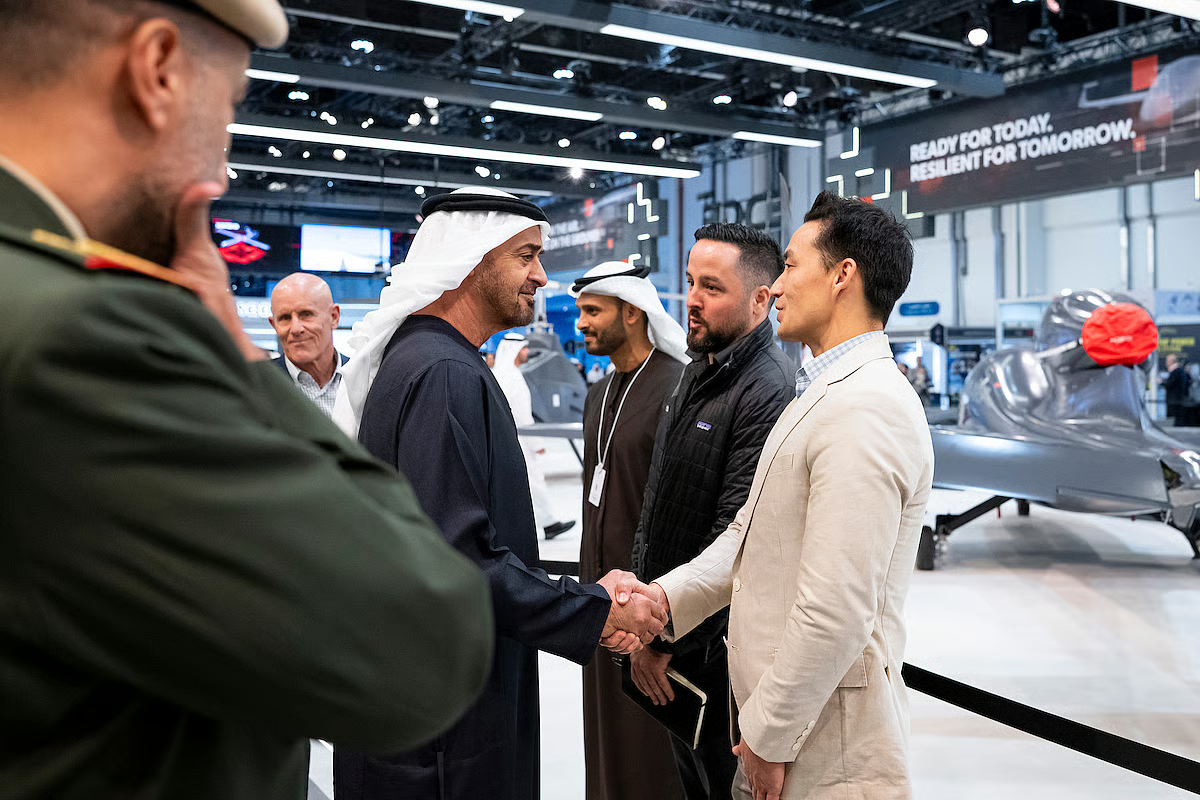

The President of the United Arab Emirates, Sheikh Mohamed bin Zayed Al Nahyan, visited the Unmanned Systems Exhibition & Conference (UMEX) and the Simulation & Training Exhibition & Conference (SimTEX) 2024 in Abu Dhabi on Monday. The high-profile visit underscored the UAE’s commitment to bolstering its defense capabilities and fostering innovation within the rapidly evolving sectors of unmanned systems and military simulation. The events, running from February 26-28, showcase cutting-edge technologies from around the globe.
Sheikh Mohamed toured the exhibition halls, observing demonstrations of advanced drones, robotics, and training simulators. He engaged with representatives from leading international defense companies and UAE-based technology firms, discussing potential collaborations and the future of defense technology. The visit signals strong governmental support for the growth of the UAE’s defense industry and its diversification away from traditional energy sources.
UAE Focuses on Unmanned Systems Advancement
The UAE has increasingly prioritized investment in UMEX-related technologies as part of its broader national security strategy. This focus stems from a recognition of the growing importance of unmanned systems in modern warfare and their potential for civilian applications, including logistics, infrastructure inspection, and emergency response. According to the Ministry of Defence, the UAE aims to become a global hub for unmanned systems research, development, and deployment.
Strategic Partnerships and Technology Transfer
A key aspect of the UAE’s strategy involves forging strategic partnerships with international defense contractors to facilitate technology transfer and build local expertise. Several agreements were announced during UMEX and SimTEX, focusing on joint development projects and the establishment of local manufacturing facilities. These collaborations aim to reduce reliance on foreign suppliers and enhance the UAE’s self-sufficiency in critical defense technologies.
Additionally, the UAE is actively promoting the development of a domestic unmanned systems industry. The Tawazun Economic Council, a government agency responsible for defense procurement and economic diversification, is playing a crucial role in supporting local startups and SMEs involved in the sector. This includes providing funding, mentorship, and access to government contracts.
SimTEX and the Rise of Military Simulation
Alongside UMEX, SimTEX highlights the growing importance of simulation and training in modern military preparedness. The exhibition features advanced training simulators for air, land, and sea operations, allowing military personnel to hone their skills in realistic and safe environments. The use of simulation reduces training costs and minimizes risks associated with live exercises.
The UAE military is investing heavily in virtual reality and augmented reality technologies to enhance the realism and effectiveness of its training programs. These technologies allow soldiers to experience immersive training scenarios that closely replicate real-world combat situations. The Ministry of Defence believes that advanced simulation is essential for maintaining a highly skilled and adaptable military force.
However, the integration of these advanced technologies also presents challenges. Maintaining the cybersecurity of simulation systems and ensuring the accuracy of virtual environments are critical concerns. The UAE is working with international partners to address these challenges and develop robust security protocols.
Meanwhile, the broader regional context influences the UAE’s defense investments. Increased geopolitical tensions and evolving security threats in the Middle East necessitate a strong and technologically advanced military. The UAE views investment in unmanned systems and simulation as a crucial component of its defense posture.
In contrast to traditional defense procurement, the rapid pace of innovation in the unmanned systems sector requires a more agile and flexible approach. The UAE is adopting a more open and collaborative model, encouraging innovation from both established defense contractors and emerging technology companies. This approach aims to accelerate the development and deployment of new capabilities.
The exhibitions also showcased advancements in counter-drone technology, a critical area given the increasing proliferation of small, commercially available drones. Several companies demonstrated systems designed to detect, identify, and neutralize hostile drones, addressing a growing security concern for both military and civilian infrastructure. This focus on defense technology reflects a proactive approach to emerging threats.
The UAE’s participation in international defense exercises and collaborations further strengthens its capabilities. Joint training exercises with partner nations allow the UAE military to test its systems and procedures in realistic scenarios and enhance interoperability. These collaborations are essential for maintaining regional stability and addressing shared security challenges.
The event also saw significant interest in artificial intelligence (AI) applications within the defense sector. Several companies showcased AI-powered systems for autonomous navigation, target recognition, and data analysis. The integration of AI into military simulation and unmanned systems is expected to further enhance their capabilities and effectiveness.
Looking ahead, the UAE is expected to continue investing heavily in unmanned systems and simulation technologies. The next major milestone will be the evaluation of proposals submitted in response to various tenders issued during UMEX and SimTEX. Decisions regarding these contracts are anticipated within the next six to nine months. Further developments in regulatory frameworks governing the operation of unmanned systems are also expected, aiming to balance innovation with safety and security. The long-term impact of these investments remains to be seen, but the UAE’s commitment to becoming a leader in these fields is clear.