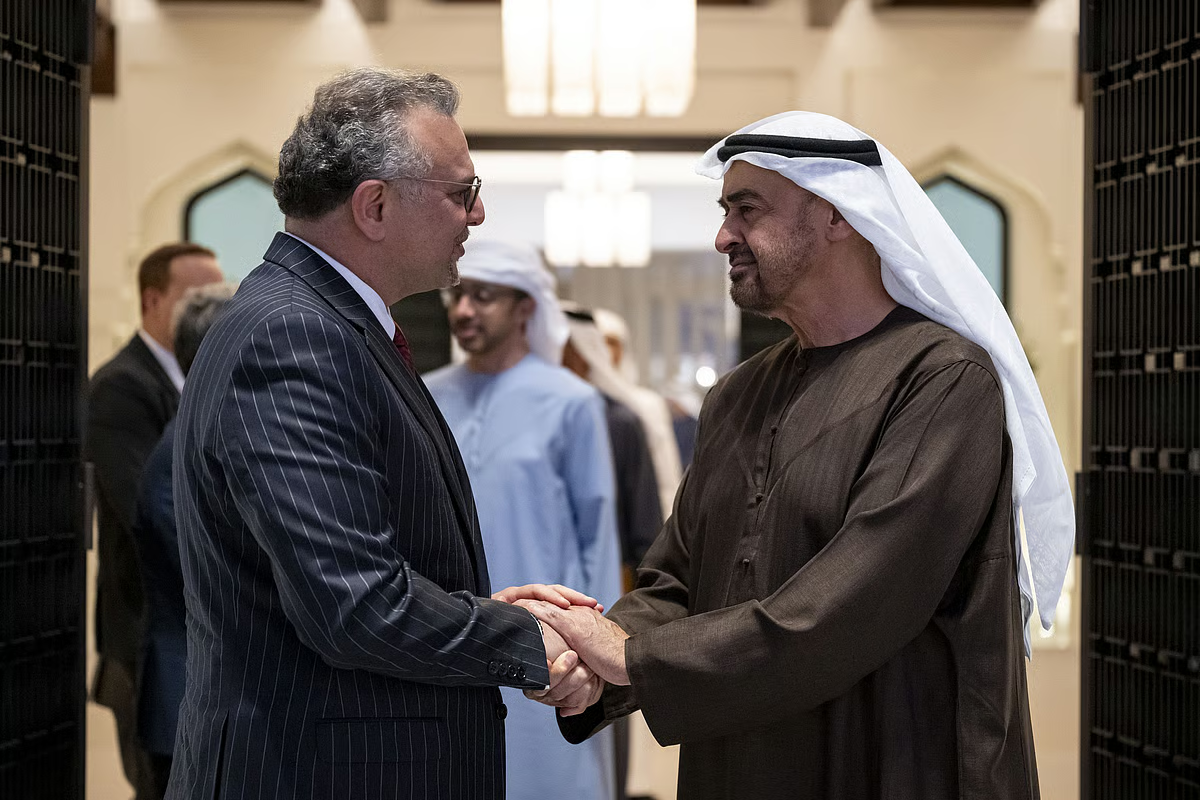

High-level Emirati officials convened a significant meeting in Abu Dhabi this week, focusing on strengthening the United Arab Emirates’ foreign policy and international partnerships. The gathering, attended by key figures including Sheikh Abdullah bin Zayed Al Nahyan, Deputy Prime Minister and Minister of Foreign Affairs, signals a continued emphasis on proactive diplomacy amidst a shifting global landscape. Discussions reportedly centered on regional stability, economic diversification, and the UAE’s role in addressing global challenges.
The meeting, held at an undisclosed location in Abu Dhabi, included Sheikh Hamdan bin Mohamed bin Zayed Al Nahyan, Deputy Chairman of the Presidential Court for Special Affairs; Sheikh Mohammed bin Hamad bin Tahnoun Al Nahyan, Adviser to the UAE President; Sheikh Shakhboot bin Nahyan Al Nahyan, Minister of State; and a number of other senior officials, according to a statement released by the Ministry of Foreign Affairs. While specific details of the agenda remain limited, the presence of such prominent leaders underscores the importance of the topics under consideration. This event comes as the UAE continues to navigate complex geopolitical dynamics in the Middle East and beyond.
Strengthening the UAE’s Foreign Policy Approach
The UAE has consistently pursued an active and independent foreign policy, balancing economic interests with a commitment to regional security. This latest meeting appears to be a continuation of that strategy, with a focus on bolstering existing alliances and exploring new avenues for cooperation. The country has been increasingly assertive in its diplomatic efforts, seeking to mediate conflicts and promote stability in the region.
Regional Stability and Conflict Resolution
Maintaining stability in the Gulf region is a paramount concern for the UAE. The ongoing conflicts in Yemen and Syria, as well as tensions with Iran, present significant challenges. The UAE has been a key player in the Saudi-led coalition in Yemen, and continues to advocate for a political solution to the conflict. The report indicates that discussions likely included strategies for de-escalation and humanitarian assistance.
Additionally, the UAE has been working to normalize relations with several countries in the region, including Israel, as part of the Abraham Accords. This normalization process aims to foster economic cooperation and promote peace and security. However, this approach has also drawn criticism from some quarters, highlighting the complexities of regional diplomacy.
Economic Diversification and Global Partnerships
Beyond security concerns, the UAE is actively pursuing economic diversification to reduce its reliance on oil revenues. This involves investing in sectors such as technology, tourism, and renewable energy. The country is also seeking to strengthen its economic ties with countries around the world, including those in Asia, Africa, and Europe. International relations are crucial to achieving these economic goals.
The UAE’s strategic location and robust infrastructure make it a key hub for trade and investment. The government has implemented a number of policies to attract foreign investment and promote economic growth. These include tax incentives, free trade zones, and streamlined regulations. The Ministry of Economy recently announced plans for further economic reforms to enhance the country’s competitiveness.
Addressing Global Challenges
The UAE has also demonstrated a commitment to addressing global challenges such as climate change and the COVID-19 pandemic. The country has pledged to achieve net-zero emissions by 2050 and is investing heavily in renewable energy projects. It has also been a major donor of aid and vaccines to countries in need. This commitment to global cooperation reflects the UAE’s broader vision of responsible global citizenship.
Meanwhile, the UAE played a prominent role in hosting the COP28 climate summit in Dubai in late 2023, further solidifying its position as a leader in climate action. The summit resulted in several key agreements, including the establishment of a loss and damage fund to help vulnerable countries cope with the impacts of climate change. This event showcased the UAE’s ability to convene international stakeholders and drive progress on critical global issues.
In contrast to some regional actors, the UAE has consistently emphasized a pragmatic and diplomatic approach to foreign affairs. This strategy has allowed the country to maintain positive relationships with a wide range of countries, despite differing political views. This balanced approach is seen as essential for promoting stability and prosperity in the region.
The UAE’s approach to diplomacy is also characterized by a focus on soft power, utilizing cultural exchange programs, humanitarian aid, and economic investments to build relationships and influence. This strategy complements its more traditional diplomatic efforts and enhances its overall international standing. The country’s investments in education and healthcare also contribute to its soft power projection.
The UAE’s international relations are also shaped by its membership in various regional and international organizations, such as the Gulf Cooperation Council (GCC) and the United Nations. These memberships provide platforms for dialogue and cooperation on issues of common concern. The country actively participates in these organizations and contributes to their efforts to address global challenges.
Looking ahead, the UAE is expected to continue to prioritize its foreign policy objectives, focusing on regional stability, economic diversification, and global cooperation. The next major step will likely involve implementing the strategies discussed during this recent meeting, with a particular emphasis on strengthening partnerships and addressing emerging challenges. Monitoring the UAE’s engagement in ongoing regional conflicts and its efforts to promote economic integration will be crucial in assessing the long-term impact of this meeting. The timing of any concrete policy announcements remains uncertain.