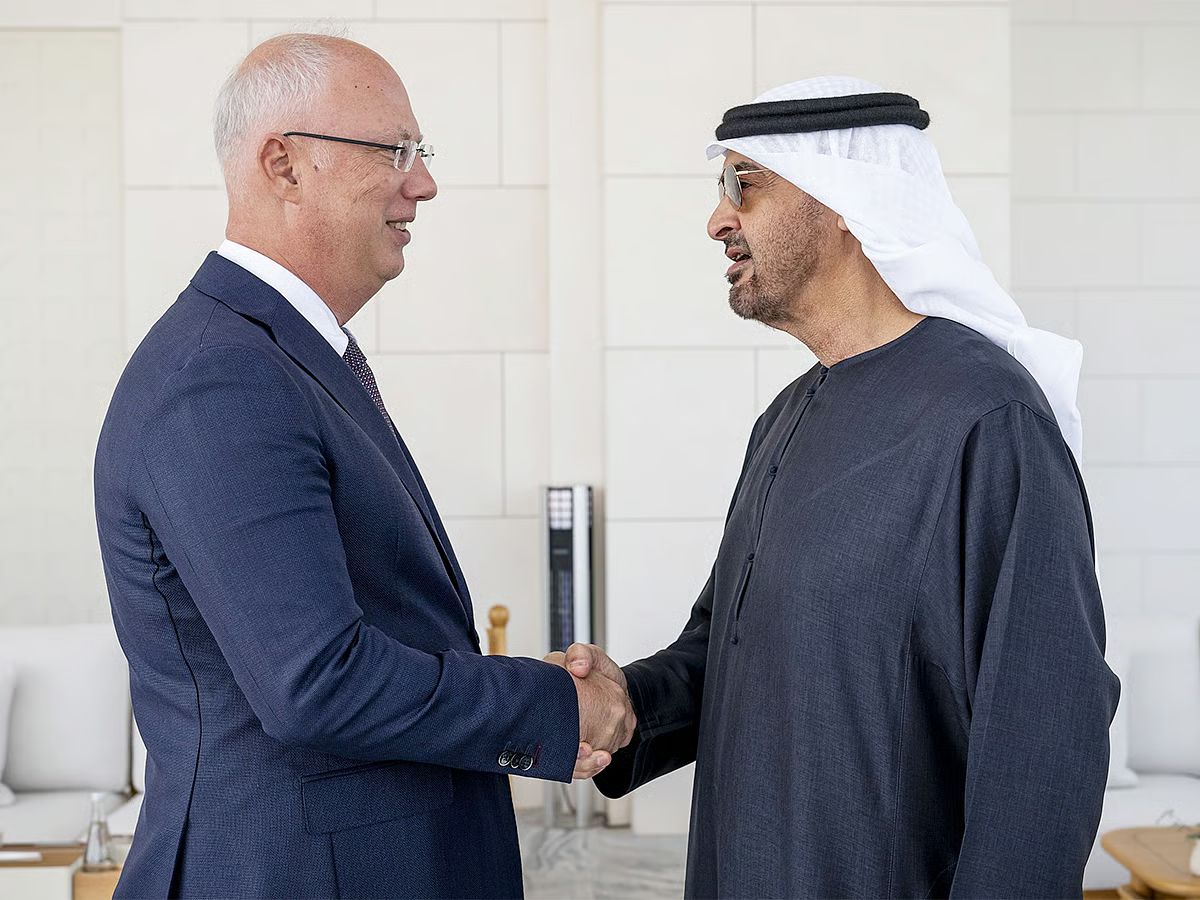

Recent trilateral talks involving the United States, Russia, and Ukraine, hosted by the United Arab Emirates, represent a continuing, though fragile, effort to find a diplomatic path forward in the ongoing Ukraine crisis. Kirill Dmitriev, a representative of the Russian Federation, delivered greetings from President Vladimir Putin to UAE officials and expressed gratitude for facilitating the discussions. The meeting, held discreetly, underscores the persistent search for dialogue despite significant obstacles to a lasting resolution.
The talks, confirmed by multiple sources including statements from the UAE government, took place in Abu Dhabi on an unspecified date this week. While details remain scarce, the participation of representatives from all three nations signals a willingness to maintain communication channels. This engagement occurs against a backdrop of continued fighting in eastern Ukraine and ongoing international efforts to support Kyiv.
The Significance of the Ukraine Crisis Dialogue
The UAE’s role as a neutral host is particularly noteworthy. The country has maintained relationships with both Russia and Western nations, positioning it as a potential mediator. According to diplomatic sources, the UAE offered its facilities to encourage a direct, if preliminary, exchange between parties who have largely communicated through intermediaries since the full-scale invasion began in February 2022.
Background to the Conflict
The current conflict stems from a complex history, including Ukraine’s move towards closer ties with the European Union and NATO, which Russia views as a threat to its security interests. Russia annexed Crimea in 2014 following a revolution in Ukraine, and has supported separatists in the Donbas region of eastern Ukraine for nearly a decade. The escalation in 2022 involved a large-scale military invasion targeting multiple Ukrainian cities.
Western nations have responded with significant economic sanctions against Russia and have provided substantial military and financial aid to Ukraine. However, these efforts have not yet resulted in a cessation of hostilities. The United States and its allies continue to emphasize that any resolution must respect Ukraine’s sovereignty and territorial integrity.
The trilateral meeting in Abu Dhabi represents a departure from the more public diplomatic efforts that have characterized much of the international response to the Ukraine crisis. Previous attempts at negotiation, often involving Turkey or other regional actors, have yielded limited results. However, the discreet nature of these talks suggests a focus on exploring potential areas of compromise without the pressure of public scrutiny.
Dmitriev’s message from President Putin, as reported by Russian state media, emphasized the importance of a negotiated settlement. The Russian government has consistently stated its willingness to engage in talks, but has also maintained that any agreement must address its security concerns. These concerns include guarantees that Ukraine will not join NATO and recognition of Russia’s control over Crimea.
Meanwhile, Ukrainian officials have reiterated their commitment to regaining control over all of its territory, including Crimea and the Donbas region. They have also called for accountability for alleged war crimes committed by Russian forces. This fundamental disagreement over territorial issues remains a major obstacle to any potential breakthrough in negotiations.
In contrast to the direct talks, the United Nations has been actively involved in facilitating humanitarian aid and investigating alleged human rights violations. The UN Secretary-General has repeatedly called for a ceasefire and a return to diplomacy. However, the UN’s efforts have been hampered by Russia’s veto power in the Security Council.
The Role of International Pressure
The ongoing international sanctions against Russia are intended to exert economic pressure and compel the Kremlin to de-escalate the conflict. However, the effectiveness of these sanctions is a subject of debate. Some analysts argue that the sanctions have had a significant impact on the Russian economy, while others contend that Russia has been able to mitigate their effects through alternative trade routes and domestic production.
Additionally, the provision of military aid to Ukraine by Western nations has enabled Kyiv to resist the Russian invasion and reclaim some territory. However, this aid has also been criticized by Russia, which views it as an escalation of the conflict. The debate over military assistance highlights the delicate balance between supporting Ukraine’s defense and avoiding a wider war.
The diplomatic efforts, such as the recent talks in Abu Dhabi, are seen as crucial to preventing further escalation and finding a sustainable solution to the Ukraine crisis. The involvement of the UAE, a country with strong ties to both sides, could potentially facilitate a more constructive dialogue. The situation remains fluid, and the outcome of these talks is uncertain.
The United States State Department has acknowledged the meeting, stating that it supports any initiative that promotes dialogue. However, officials have also emphasized that the U.S. remains committed to supporting Ukraine’s sovereignty and territorial integrity. The U.S. position underscores the challenges facing any potential negotiation process.
Looking ahead, the next steps remain unclear. It is unlikely that a major breakthrough will occur in the immediate future. However, the continuation of these discreet talks suggests a willingness to keep communication channels open. Observers will be watching for any signs of progress, such as the establishment of a more regular dialogue or the agreement on specific confidence-building measures. The long-term resolution of the Ukraine conflict will likely require sustained diplomatic engagement and a willingness from all parties to compromise.