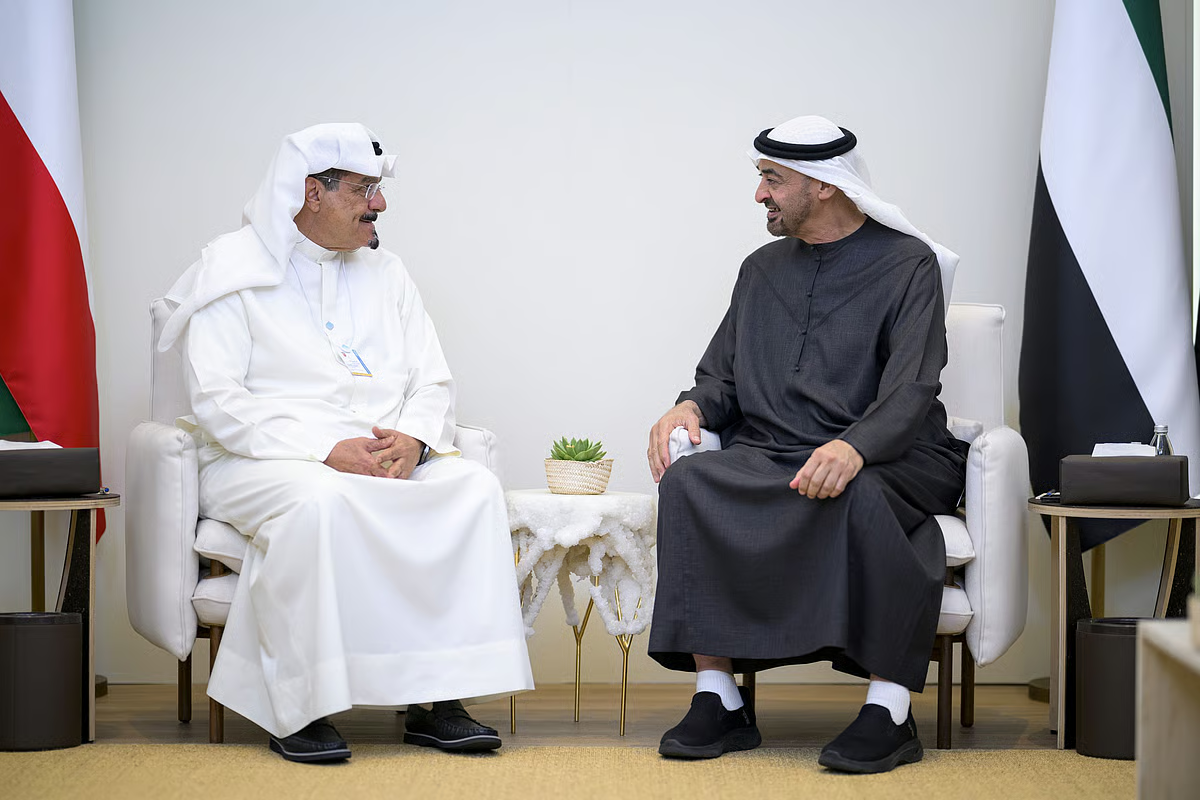

Strengthening ties between the United Arab Emirates and Kuwait was on display this week as Sheikh Ahmad Al Fahad Al Sabah, Kuwaiti Prime Minister, met with UAE President Sheikh Mohamed bin Zayed Al Nahyan in Abu Dhabi. The meeting focused on bilateral relations and regional developments, reaffirming a commitment to cooperation and mutual prosperity. This UAE-Kuwait relations discussion underscores the ongoing diplomatic efforts to foster stability in the Gulf region.
The meeting took place at the Presidential Palace in Abu Dhabi on February 27, 2024, according to the official WAM news agency. Sheikh Ahmad conveyed greetings from Sheikh Mishal Al Ahmad Al Jaber Al Sabah, the Emir of Kuwait, while President Sheikh Mohamed reciprocated with his own well wishes for Kuwait’s National and Liberation Days. This exchange of diplomatic courtesies highlights the close personal relationship between the leadership of both nations.
Deepening UAE-Kuwait Relations Through Diplomatic Engagement
The visit by the Kuwaiti Prime Minister is part of a regular pattern of high-level meetings between the UAE and Kuwait, demonstrating the importance both countries place on maintaining strong bilateral ties. These interactions cover a broad spectrum of areas, including economic cooperation, security coordination, and cultural exchange. The UAE and Kuwait share a common vision for regional stability and prosperity, which informs their collaborative approach to addressing shared challenges.
Economic Partnerships and Investment
Economic ties between the UAE and Kuwait are substantial, with significant investment flowing in both directions. According to data from the Kuwait Investment Authority, the UAE is a key destination for Kuwaiti foreign investment. The two countries are actively exploring opportunities to further enhance economic cooperation, particularly in sectors such as renewable energy, infrastructure development, and tourism.
Additionally, both nations are members of the Gulf Cooperation Council (GCC), which aims to promote economic integration and political coordination among its member states. This membership provides a framework for addressing common economic concerns and fostering regional trade. The GCC’s unified customs union and efforts to establish a common market are expected to further boost economic ties between the UAE and Kuwait.
Regional Security and Stability
The UAE and Kuwait share a common interest in maintaining regional security and stability. Both countries are actively involved in efforts to counter terrorism, combat extremism, and resolve regional conflicts. They collaborate closely on defense matters, including joint military exercises and intelligence sharing.
However, differing perspectives on certain regional issues, such as the ongoing conflicts in Yemen and Syria, occasionally surface. Despite these differences, both countries remain committed to finding peaceful solutions to regional challenges through dialogue and diplomacy. The recent normalization of relations between several Arab states and Israel has also presented a new dynamic in the region, requiring ongoing consultation and coordination between the UAE and Kuwait.
Cultural Exchange and People-to-People Connections
Beyond economic and security cooperation, the UAE and Kuwait also prioritize cultural exchange and people-to-people connections. Numerous cultural events and festivals are held annually in both countries, showcasing their rich heritage and traditions. Educational and academic collaborations are also increasing, with students from Kuwait studying at universities in the UAE and vice versa.
Meanwhile, tourism between the two countries is growing, facilitated by visa-free travel for citizens of both nations. These exchanges foster greater understanding and appreciation between the people of the UAE and Kuwait, strengthening the overall bilateral relationship. The promotion of cultural tourism is seen as a key component of diversifying both economies.
The meeting also touched upon the importance of continued collaboration on addressing global challenges, including climate change and sustainable development. Both the UAE and Kuwait have pledged to reduce their carbon emissions and invest in renewable energy sources. They are also working together to promote sustainable practices in areas such as water management and waste reduction. This commitment to sustainability reflects a shared vision for a more environmentally responsible future.
In contrast to some regional tensions, the consistent dialogue between Abu Dhabi and Kuwait City demonstrates a commitment to de-escalation and collaborative problem-solving. This approach is viewed by many analysts as crucial for maintaining stability in the volatile Middle East. The strong diplomatic ties between the two nations provide a foundation for addressing complex regional issues.
Looking ahead, further discussions are expected to take place in the coming months to explore specific areas of cooperation. A joint committee, established in 2023, is tasked with developing a comprehensive action plan to enhance bilateral cooperation across all sectors. The timeline for the implementation of this plan remains uncertain, dependent on ongoing negotiations and resource allocation. Observers will be watching for concrete outcomes from these discussions, particularly in the areas of investment and security coordination. The strength of Gulf cooperation will continue to be a key factor in regional stability.