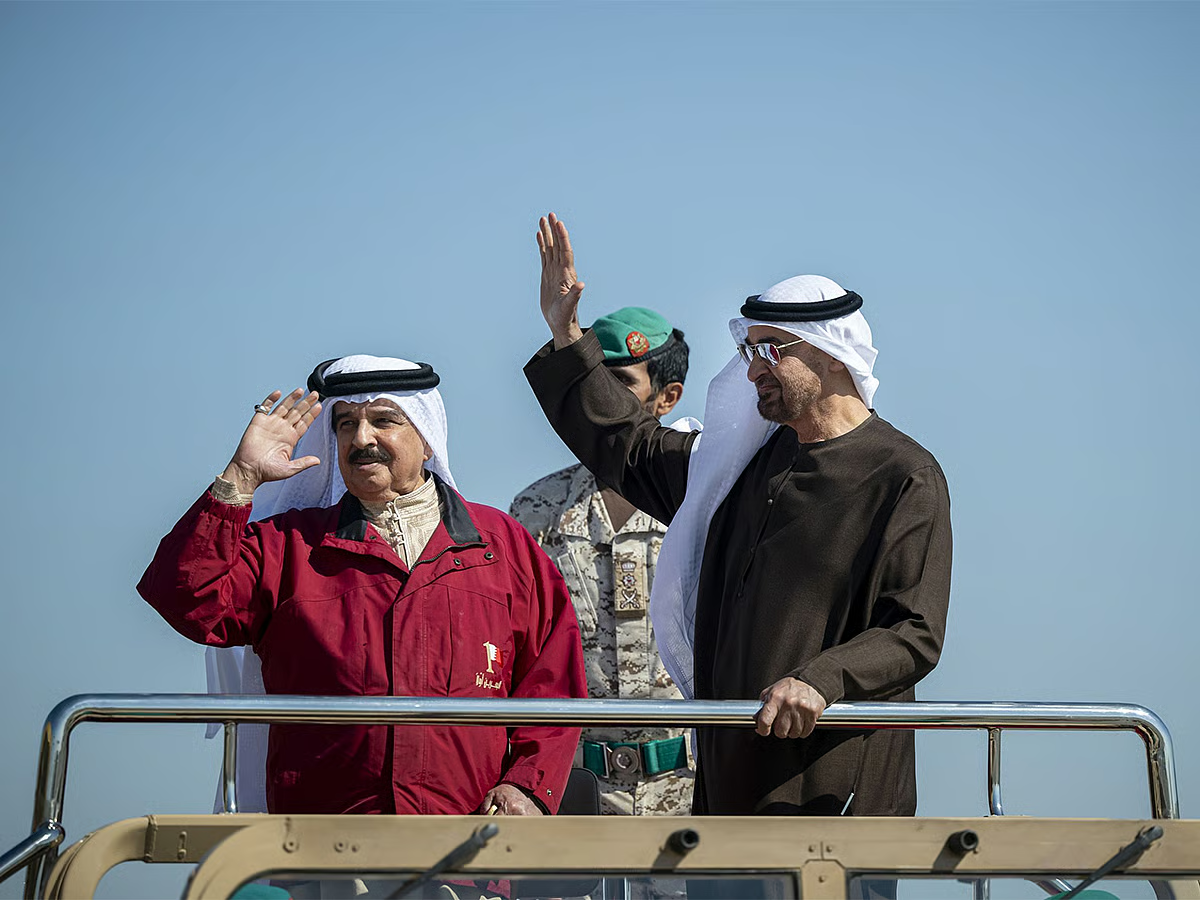

Leaders from the United Arab Emirates and Bahrain observed the conclusion of a joint military exercise, “Island Shield 23,” this week, signaling continued strengthening of defense cooperation between the two Gulf nations. The military exercise, held in the UAE, involved land, air, and naval forces and focused on enhancing joint operational capabilities. The participation of high-level officials underscores the commitment to regional security and interoperability.
The exercise, which commenced on January 22nd and concluded on February 1st, took place across various locations within the UAE, including coastal areas and simulated urban environments. Sheikh Mohamed bin Zayed Al Nahyan, President of the UAE, and King Hamad bin Isa Al Khalifa of Bahrain both attended the final stage of the drills. The event was also attended by senior military officials and defense ministers from both countries, according to state news agencies.
Strengthening Regional Security Through Joint Military Exercises
The “Island Shield 23” military exercise is the latest in a series of collaborative defense initiatives between the UAE and Bahrain. These exercises are designed to improve the ability of the two nations to respond to a range of security challenges, including maritime security threats and asymmetric warfare. The drills aim to standardize procedures and enhance communication between the armed forces of both countries.
Focus Areas of the Drills
The exercise reportedly concentrated on several key areas of military cooperation. These included:
- Joint planning and execution of offensive and defensive operations.
- Coordinated air defense strategies and counter-air capabilities.
- Maritime security operations, including protecting vital shipping lanes.
- Urban warfare tactics and humanitarian aid/disaster relief scenarios.
According to the UAE Ministry of Defence, the exercise utilized advanced military technology and simulated realistic combat situations. This allowed participating forces to refine their skills and test new strategies in a controlled environment. The use of live fire exercises and complex scenarios was intended to maximize the training benefit for all involved.
However, the specific details of the scenarios and the number of personnel involved have not been publicly disclosed. The emphasis on urban warfare suggests a potential focus on preparing for conflicts within populated areas, a growing concern in modern warfare. Additionally, the inclusion of maritime security drills highlights the importance of protecting crucial trade routes in the Arabian Gulf.
The UAE and Bahrain share a close strategic partnership, rooted in their membership in the Gulf Cooperation Council (GCC). Both nations have expressed concerns about regional instability and external interference, particularly from Iran. This shared threat perception has driven increased defense cooperation in recent years. The deepening security ties also reflect a broader trend of GCC nations seeking to enhance their collective defense capabilities.
Meanwhile, the exercise occurred amidst heightened geopolitical tensions in the region. Recent attacks on commercial vessels in the Red Sea and the ongoing conflict in Yemen contribute to a volatile security landscape. The UAE and Bahrain have both been involved in the Saudi-led coalition supporting the Yemeni government against the Houthi rebels. This involvement underscores the importance of maintaining a strong military posture and the ability to respond effectively to regional crises.
In contrast to previous iterations, “Island Shield 23” saw a greater emphasis on integrating advanced technologies, including drones and electronic warfare systems. The report indicates that this reflects a broader modernization effort within both militaries, aimed at enhancing their capabilities in the face of evolving threats. This modernization is also driven by the need to counter asymmetric warfare tactics employed by non-state actors.
The military exercise also serves as a demonstration of the UAE and Bahrain’s commitment to maintaining regional stability. By showcasing their interoperability and readiness, the two nations aim to deter potential adversaries and reassure allies. This display of force is intended to send a clear message that they are prepared to defend their interests and contribute to regional security. The exercise also provides an opportunity to strengthen relationships with other partner nations, fostering a collaborative approach to security challenges.
The increasing frequency and complexity of these joint military exercises, along with growing defense spending in both countries, suggest a long-term commitment to strengthening their security partnership. The UAE and Bahrain have also been actively pursuing arms acquisitions from various international suppliers, further bolstering their military capabilities. This trend is likely to continue as both nations seek to address evolving security threats and maintain their strategic autonomy.
Related to this, the development of a unified defense procurement strategy between the UAE and Bahrain has been discussed in recent years, though no concrete agreements have been announced. Such a strategy could streamline the acquisition process and reduce costs, while also enhancing interoperability. Furthermore, increased intelligence sharing and joint training programs are expected to play a key role in deepening the security cooperation between the two nations. The focus on defense cooperation is a key element of their broader strategic alignment.
Looking ahead, the UAE and Bahrain are expected to continue conducting joint military exercises on a regular basis. The next major exercise is tentatively scheduled for late 2024, though the exact timing and scope remain subject to change. Further details regarding the integration of new technologies and the expansion of training programs are anticipated in the coming months. The evolving geopolitical landscape and the ongoing need to address regional security challenges will likely shape the future direction of their defense cooperation.