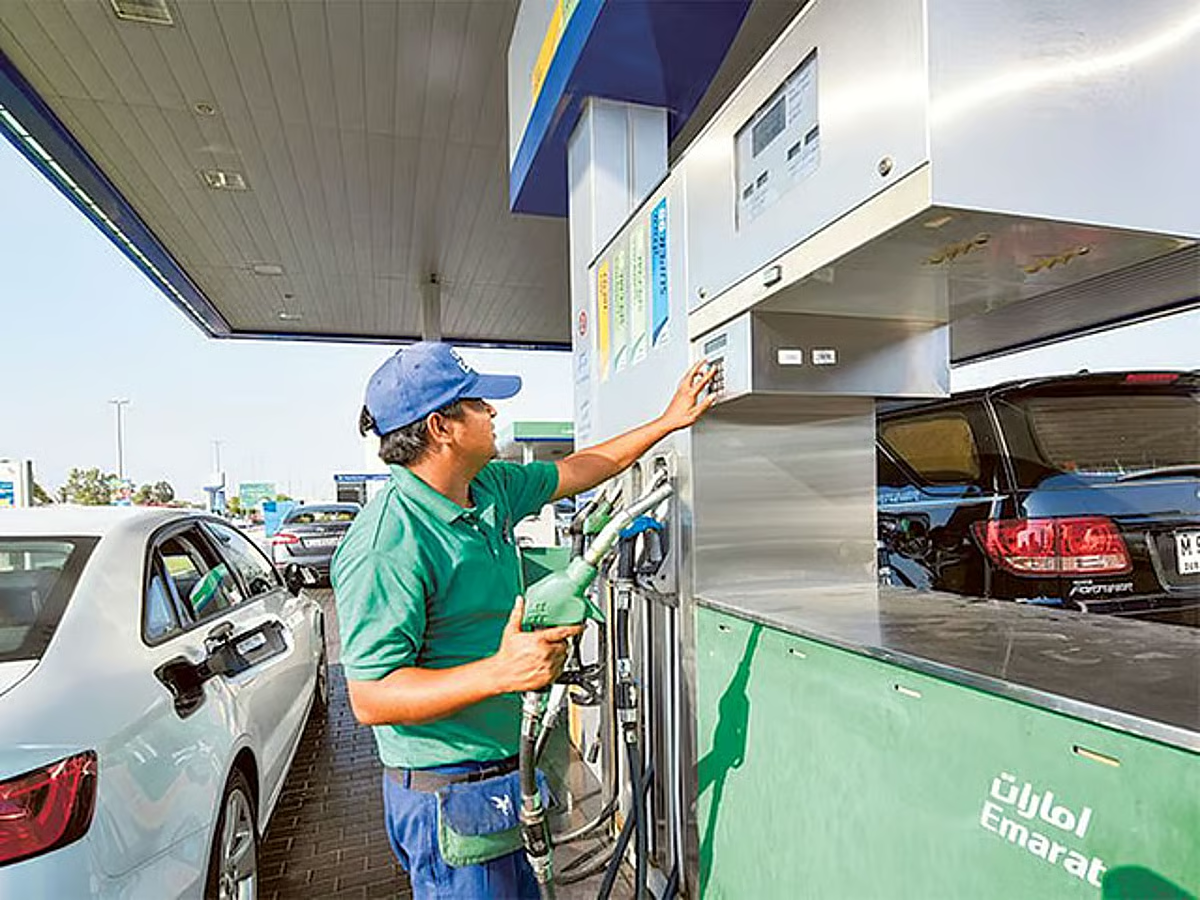

The UAE Ministry of Industry and Advanced Technology announced updated petrol prices for January 2026 today, reflecting adjustments to global oil markets. Prices will rise slightly for all fuel grades, impacting transportation costs and household budgets across the Emirates. The changes take effect on January 1st, 2026, and represent the first price revision of the new year.
The announcement, made via the official WAM news agency, details increases ranging from approximately 2.5% to 3.1% depending on the octane rating. This adjustment follows a period of relative stability in fuel costs throughout late 2025, but aligns with recent upward trends in international crude oil benchmarks. Consumers can expect to pay more at the pump starting next month.
Understanding the January 2026 Petrol Price Changes
The price of Super 98 petrol will increase to AED 3.15 per litre, up from AED 3.07 in December 2025. Special 95 will be priced at AED 3.03 per litre, a rise from AED 2.95. E-Plus 91 will see a smaller increase, moving to AED 2.92 per litre from AED 2.85. Diesel prices will also climb, reaching AED 3.39 per litre, compared to the current AED 3.29.
Factors Influencing the Price Hike
Several factors contributed to the decision to raise fuel prices. According to analysts at the Emirates National Oil Company (ENOC), the primary driver is the Organization of the Petroleum Exporting Countries (OPEC) and its allies’ (OPEC+) continued production cuts. These cuts, aimed at stabilizing global oil supply, have led to a tightening of the market and subsequent price increases.
Additionally, geopolitical tensions in key oil-producing regions continue to exert upward pressure on crude oil prices. Increased demand from recovering economies, particularly in Asia, is also playing a role. The ministry’s pricing committee considers these global benchmarks when determining domestic fuel costs.
The UAE employs a monthly price adjustment mechanism linked to global average prices. This system, introduced in 2015, aims to reflect market realities and reduce the impact of subsidies on the national budget. Prior to 2015, fuel prices were heavily subsidized by the government.
Impact on Consumers and Businesses
The increase in fuel costs will inevitably affect consumers, particularly those reliant on personal vehicles for commuting. Higher petrol prices translate directly into increased transportation expenses for individuals and families. This could lead to adjustments in spending habits and potentially increased demand for public transportation options.
Businesses, especially those in the logistics and transportation sectors, will also feel the impact. Increased diesel prices will raise operational costs for trucking companies, delivery services, and other businesses dependent on fuel. Some businesses may pass these costs onto consumers through higher prices for goods and services.
However, the UAE government has implemented various initiatives to mitigate the impact of fuel price fluctuations. These include investments in public transportation infrastructure, such as the Dubai Metro and Abu Dhabi’s bus network, and promoting energy efficiency measures. The government also continues to explore alternative fuel sources.
In contrast to some other countries, the UAE’s fuel pricing system provides greater transparency and predictability. The monthly adjustments allow consumers and businesses to anticipate changes and plan accordingly. This contrasts with systems where prices are fixed for longer periods, potentially leading to sudden and significant shocks.
The Ministry of Industry and Advanced Technology emphasized its commitment to monitoring global oil markets and adjusting domestic fuel prices in a manner that balances economic considerations with the needs of consumers and businesses. The ministry also highlighted the importance of responsible energy consumption.
The latest price adjustments come amidst ongoing discussions about the long-term future of energy in the UAE. The country is actively investing in renewable energy sources, such as solar and nuclear power, as part of its commitment to diversifying its energy mix and reducing its carbon footprint. This diversification strategy aims to enhance energy security and sustainability.
Meanwhile, the impact of these price changes on inflation remains to be seen. The Central Bank of the UAE will be closely monitoring inflation rates in the coming months to assess the broader economic effects of the fuel price increase. The report indicates that a moderate increase in inflation is anticipated, but the extent will depend on other economic factors.
Looking ahead, the next fuel price announcement is scheduled for February 1st, 2026. The prices will again be determined based on global oil market conditions and the ministry’s pricing committee’s assessment. Uncertainties surrounding geopolitical events and OPEC+ production policies will continue to influence future fuel price trends. Monitoring these factors will be crucial for understanding the direction of petrol prices in the UAE.