


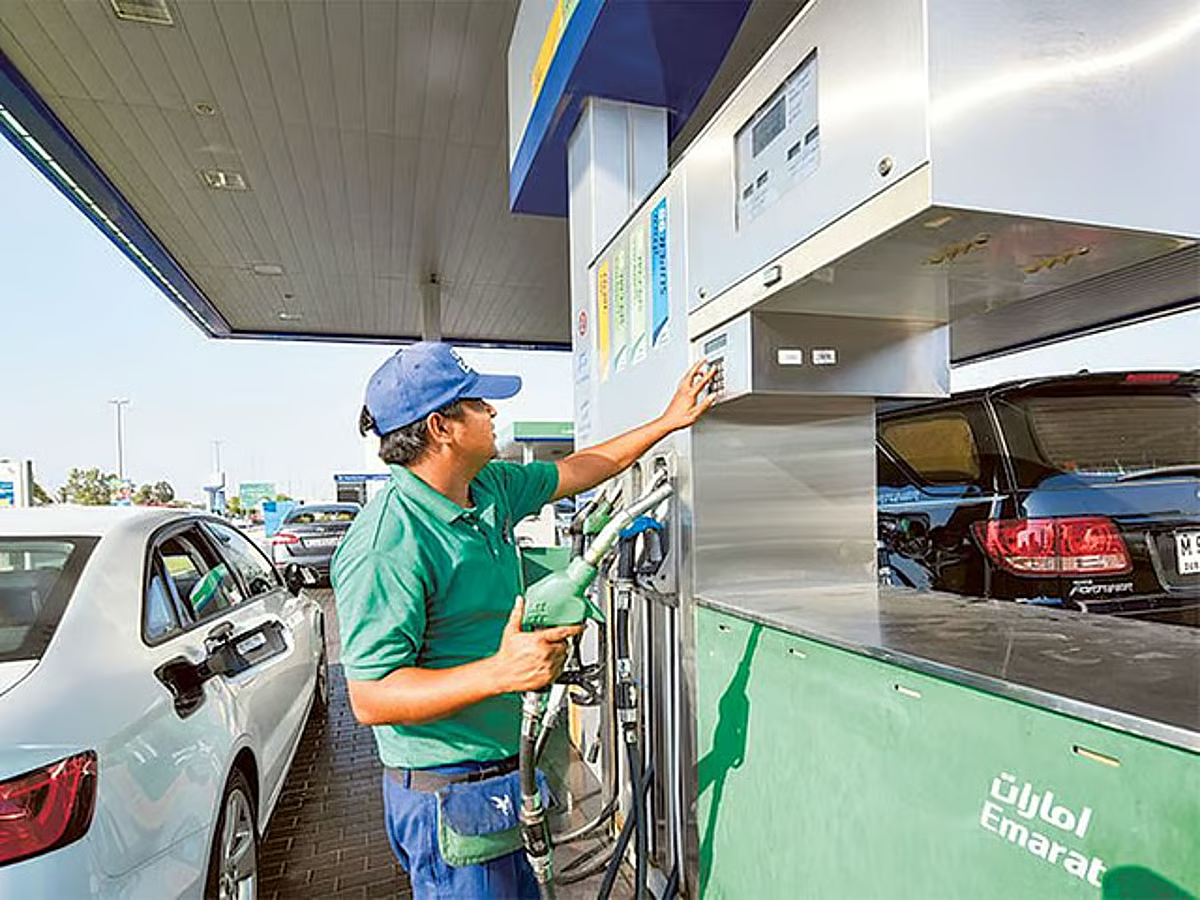

The UAE Ministry of Industry and Advanced Technology announced updated petrol prices for February 2026 today, reflecting adjustments to global oil markets. Prices will rise slightly for all fuel grades, impacting transportation costs and household budgets across the Emirates. The changes take effect on February 1st, 2026, and represent the first price adjustment of the new year.
The announcement, made via the official WAM news agency, details increases ranging from 2.5 fils to 3.8 fils per litre. This adjustment follows a period of relative stability in fuel costs throughout late 2025, but aligns with recent upward trends in international crude oil benchmarks. Consumers can expect to pay more at the pump starting next month.
February 2026 Petrol Prices and the Impact on Consumers
The new petrol prices for February 2026 are as follows: Super 98 will cost AED 3.15 per litre, Special 95 will be priced at AED 3.03 per litre, and E-Plus 91 will be available for AED 2.98 per litre. Diesel prices will also see an increase, rising to AED 3.21 per litre. These figures represent a modest increase compared to January 2026 prices, but are still notable for budget-conscious drivers.
Factors Influencing the Price Adjustment
The UAE’s fuel pricing mechanism is linked to global average prices, determined by Platts. According to the ministry, the February adjustment reflects the recent increase in crude oil prices driven by geopolitical factors and supply constraints. Additionally, seasonal demand and refining costs contribute to the overall price calculation.
The Organization of the Petroleum Exporting Countries (OPEC) and its allies, known as OPEC+, have maintained production cuts throughout 2025, contributing to tighter global supply. These cuts, intended to stabilize prices, have had a ripple effect on fuel costs worldwide. The report indicates that continued adherence to these production levels is expected to maintain upward pressure on oil prices in the short term.
However, economic conditions in major global economies, such as the United States and China, also play a significant role. Strong economic growth typically leads to increased demand for oil, while economic slowdowns can dampen demand and potentially lower prices. The UAE’s pricing committee considers these macroeconomic factors when setting monthly fuel prices.
Impact on Transportation and Logistics
The increase in diesel prices will likely have a more significant impact on the transportation and logistics sectors than the petrol price adjustments. Freight companies and public transportation providers rely heavily on diesel fuel, and increased costs could lead to higher shipping rates and potentially increased fares for commuters. Businesses may need to adjust their operational budgets to account for these rising expenses.
Meanwhile, the slight increase in petrol prices is expected to have a moderate impact on individual consumers. Drivers may see a small increase in their monthly fuel bills, but the overall effect is unlikely to be substantial for most households. However, frequent commuters and those with larger vehicles will feel the impact more acutely. The cost of vehicle ownership, including fuel, remains a key consideration for many residents.
In contrast to some other countries in the region, the UAE maintains a deregulated fuel pricing system. This means that domestic prices are directly linked to global market fluctuations, offering transparency but also exposing consumers to price volatility. The system aims to reflect the true cost of fuel and avoid government subsidies, which can distort market signals.
Long-Term Trends in UAE Fuel Prices
Looking ahead, the future of petrol prices in the UAE remains uncertain. Global oil markets are subject to a wide range of factors, including geopolitical events, economic conditions, and technological advancements. The transition to electric vehicles and other alternative fuels could also influence long-term demand for petrol and diesel.
The UAE is actively investing in renewable energy sources and promoting the adoption of electric vehicles as part of its commitment to sustainability. These efforts are aimed at reducing the country’s reliance on fossil fuels and diversifying its energy mix. Government incentives and infrastructure development are key components of this strategy. The development of charging infrastructure for electric vehicles is particularly important.
Additionally, the UAE is exploring other alternative fuels, such as hydrogen, as potential replacements for traditional petrol and diesel. These technologies are still in their early stages of development, but they hold promise for a more sustainable future. The ministry has indicated ongoing research and development in these areas.
The next fuel price announcement is scheduled for February 28th, 2026, when the Ministry of Industry and Advanced Technology will release the prices for March 2026. Market analysts will be closely monitoring global oil prices and geopolitical developments in the coming weeks to assess the potential direction of future price adjustments. Continued volatility in the global energy market is anticipated.