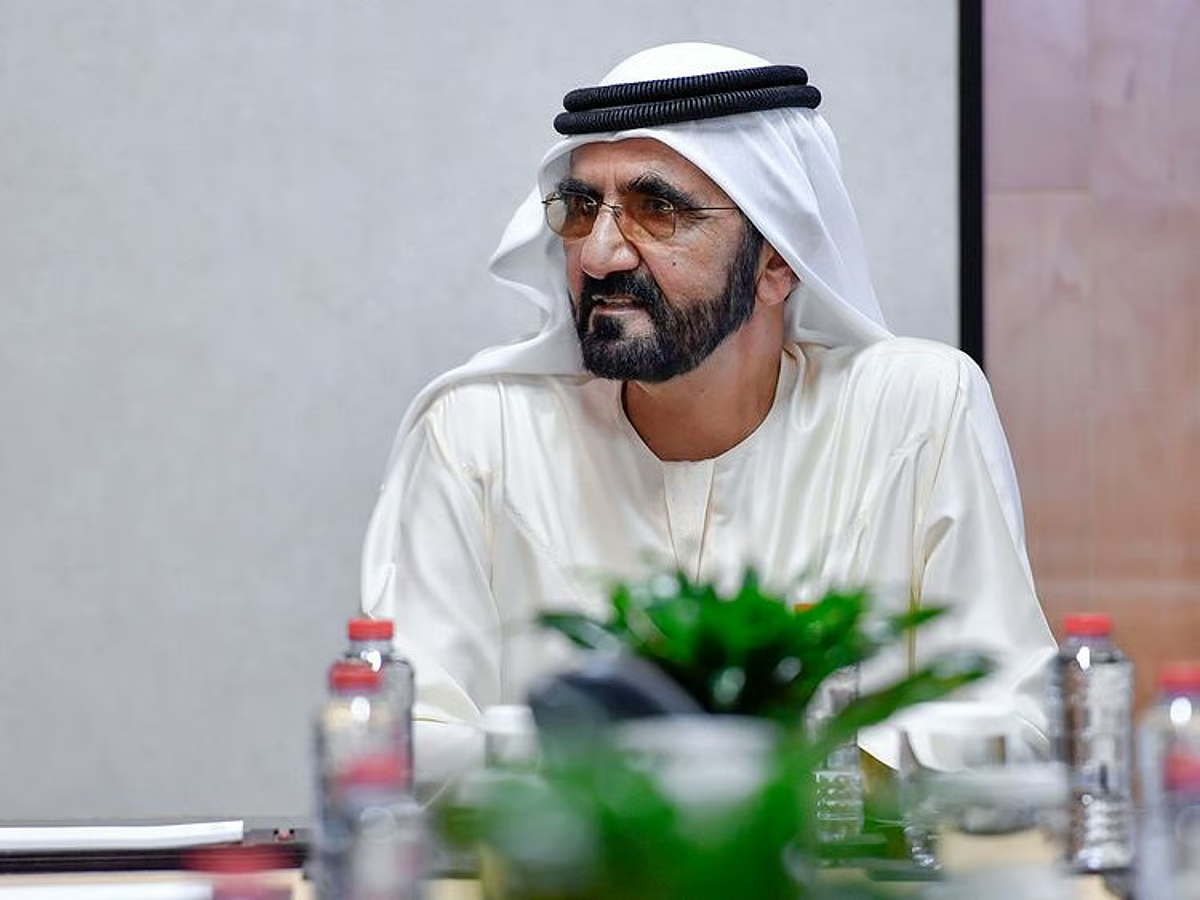

The United Arab Emirates (UAE) leadership has publicly honored Sheikh Mohammed bin Rashid Al Maktoum, the current President and Ruler of Dubai, as he marks 20 years since ascending as the Ruler of Dubai on January 2, 2004. Extensive tributes were paid across the nation, acknowledging his significant contributions to the UAE’s development and global standing. The milestone celebrations highlighted Sheikh Mohammed’s vision for a progressive and diversified nation, and his transformative leadership over the past two decades.
Official commendations came from federal and emirate-level governments, as well as prominent figures in the business and social sectors. Social media platforms also saw an outpouring of support and gratitude under dedicated hashtags, with citizens and residents reflecting on the positive changes experienced during his rule. The commemorations occurred throughout the UAE, with notable events concentrated in Dubai and Abu Dhabi.
Two Decades of Leadership: Honoring Sheikh Mohammed
Sheikh Mohammed bin Rashid Al Maktoum’s two decades as Ruler of Dubai have been characterized by ambitious infrastructure projects, a focus on innovation, and a concerted effort to position the emirate – and by extension, the UAE – as a global hub for trade, finance, and tourism. His leadership has overseen a period of unprecedented economic growth and societal change. This growth has included expansion of the aviation sector, as well as diversification into technology and sustainable energy.
Prior to becoming Ruler, Sheikh Mohammed held various key positions within the UAE government, demonstrating a consistent commitment to public service. He served as Minister of Defence and played a pivotal role in modernizing the UAE Armed Forces. This early experience likely influenced his later focus on strategic planning and national security.
Early Initiatives and Economic Diversification
One of the defining features of Sheikh Mohammed’s initial years in power was an emphasis on economic diversification, lessening the UAE’s dependence on oil revenues. This was achieved through strategic investments in sectors like real estate, logistics, and financial services. The creation of entities like Dubai Holding and the Dubai International Financial Centre (DIFC) were instrumental in this process, according to reports from the Dubai Chamber of Commerce.
Furthermore, Sheikh Mohammed championed policies aimed at attracting foreign investment and fostering a business-friendly environment. Initiatives such as the establishment of free zones offered incentives to international companies, contributing significantly to Dubai’s economic expansion. These actions established Dubai as a competitive player on the world stage.
Infrastructure Development & Global Recognition
Perhaps the most visible aspect of Sheikh Mohammed’s leadership has been the phenomenal growth in infrastructure. Iconic projects like the Burj Khalifa, Palm Jumeirah, and the Dubai Metro transformed Dubai’s skyline and enhanced its global reputation. These undertakings also solidified the UAE’s position as a leader in engineering and construction.
However, infrastructure development extended beyond headline-grabbing projects. Substantial investment was also directed towards improving transportation networks, utilities, and social services, benefiting residents across all sectors. This comprehensive approach to development aimed to enhance the overall quality of life in the emirate.
Social and Cultural Advancement
Sheikh Mohammed’s vision extends beyond economic considerations, encompassing social and cultural advancements. He has consistently promoted tolerance, inclusivity, and the preservation of Emirati heritage. The UAE’s increasingly prominent role in international humanitarian efforts is also viewed as a reflection of his leadership and values.
Additionally, investment in education and healthcare was prioritized. The establishment of world-class universities and hospitals aimed to provide citizens and residents with access to high quality services. The UAE’s national strategy for artificial intelligence also reflects his commitment to technological progress.
The celebrations surrounding the 20-year milestone included the release of historical photographs and videos documenting Sheikh Mohammed’s journey and achievements. These materials were widely shared on official government channels and by media outlets, offering a comprehensive overview of his contributions. The event fostered a sense of national pride and unity across the UAE.
While the celebrations focus on past accomplishments, the UAE continues to navigate a complex global landscape. Challenges such as regional geopolitical instability and fluctuating economic conditions remain. The leadership’s continued commitment to innovation and diversification is seen as crucial for ensuring sustained growth and prosperity.
Looking ahead, the UAE is preparing to host COP28, the UN climate change conference, in late 2023, demonstrating a commitment to sustainability and environmental leadership. The success of this event will be a key indicator of the nation’s continued influence on the international stage. Further details regarding new economic initiatives and long-term strategic plans are expected to be announced in the coming months. The ongoing development of the Abraham Accords also represents a significant aspect of the region’s future, and the UAE’s prominent role within that framework will continue to be closely watched.